.gif)
Description
Parallel Bar Dips are a classic bodyweight compound exercise performed on parallel bars, intensely targeting the lower chest and triceps. Leaning the torso forward increases chest activation, while keeping it upright places maximum load on the triceps. It works the lower fibers of the pectoralis major, triceps, and anterior deltoids simultaneously. Being a bodyweight movement, it requires minimal equipment and builds functional strength. It is a fundamental exercise in calisthenics and frequently used by gymnasts. It also significantly improves shoulder stability and upper body strength. Advanced athletes can make the movement more challenging by adding extra weight (dip belt, weighted vest). When performed regularly, it provides noticeable improvements in lower chest hypertrophy, triceps strength, and overall upper body performance.
Parallel Bar Dips How-To Guide
- 1
Approach the parallel bars and grip them at shoulder width.
- 2
Extend your arms fully to lift your body into the air.
- 3
Cross your legs behind you and lift them slightly (for balance).
- 4
Lean your torso forward at a 30-45 degree angle to target the lower chest.
- 5
Engage your core and pull your shoulders back and down.
- 6
Lower yourself in a controlled manner by bending your elbows.
- 7
Descend until your upper arms are parallel to the floor (a 90-degree angle).
- 8
Push back up by squeezing your lower chest and triceps.
- 9
Your arms should reach full extension at the top position.
Key Points
- ✓The torso should lean forward 30-45 degrees for chest activation.
- ✓Elbows should stay close to the body and not flare out too much.
- ✓Use a full range of motion (upper arms parallel to the floor).
- ✓Shoulders must be kept stable and retracted.
- ✓The core must remain engaged throughout the movement.
Common Mistakes
- ✗Flaring the elbows out completely - increases the risk of shoulder injury.
- ✗Inadequate range of motion - prevents full muscle activation.
- ✗Rolling the shoulders forward - compromises shoulder stability.
- ✗Swinging during the movement - uses momentum and reduces muscle engagement.
- ✗Performing the exercise too fast - leads to a loss of control.
Breathing
Inhale as you lower your body, exhale as you push back up.
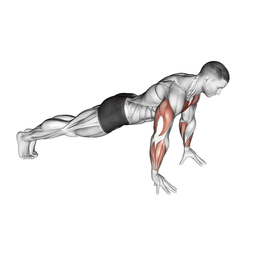
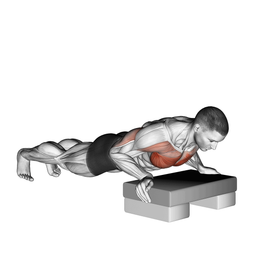
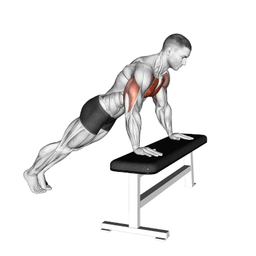
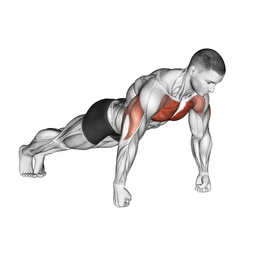
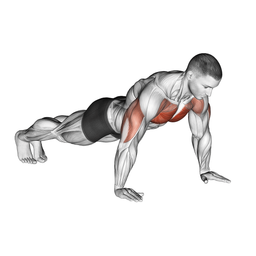
Muscle Activation
Safety
Precautions
- Individuals with acute shoulder injuries should avoid this.
- Those with wrist injuries should proceed with caution.
- Individuals with acute chest muscle injuries should avoid this.
Safety Tips
- Start with an assisted dip machine first.
- Limit the range of motion if shoulder mobility is insufficient.
- Keep your elbows tucked close to your body.
- Stop the exercise if your form breaks down.
- Practice with negative (eccentric) reps first.
Frequently Asked Questions
Which muscles does Parallel Bar Dips work?
Parallel Bar Dips primarily works these muscles: Alt Göğüs, Triceps. It also engages: Ön Omuz, Core kasları.
Is Parallel Bar Dips suitable for beginners?
Parallel Bar Dips is a Intermediate level exercise. Learning difficulty: Moderate.
Can Parallel Bar Dips be done at home?
Parallel Bar Dips usually requires gym equipment, so it can be hard to do at home.
What are common mistakes when doing Parallel Bar Dips?
One of the most common mistakes: Flaring the elbows out completely - increases the risk of shoulder injury.
How many sets and reps for Parallel Bar Dips?
Recommended: 3-4 sets and 6-12 reps.
- ✓Intensely works the lower chest and triceps muscles.
- ✓An upper body compound movement that builds functional strength.
- ✓Improves shoulder stability.
- ✓Requires minimal equipment (just parallel bars).
- ✓A foundational exercise for calisthenics training.
- ✓Allows for progressive overload by adding weight.