.gif)
Description
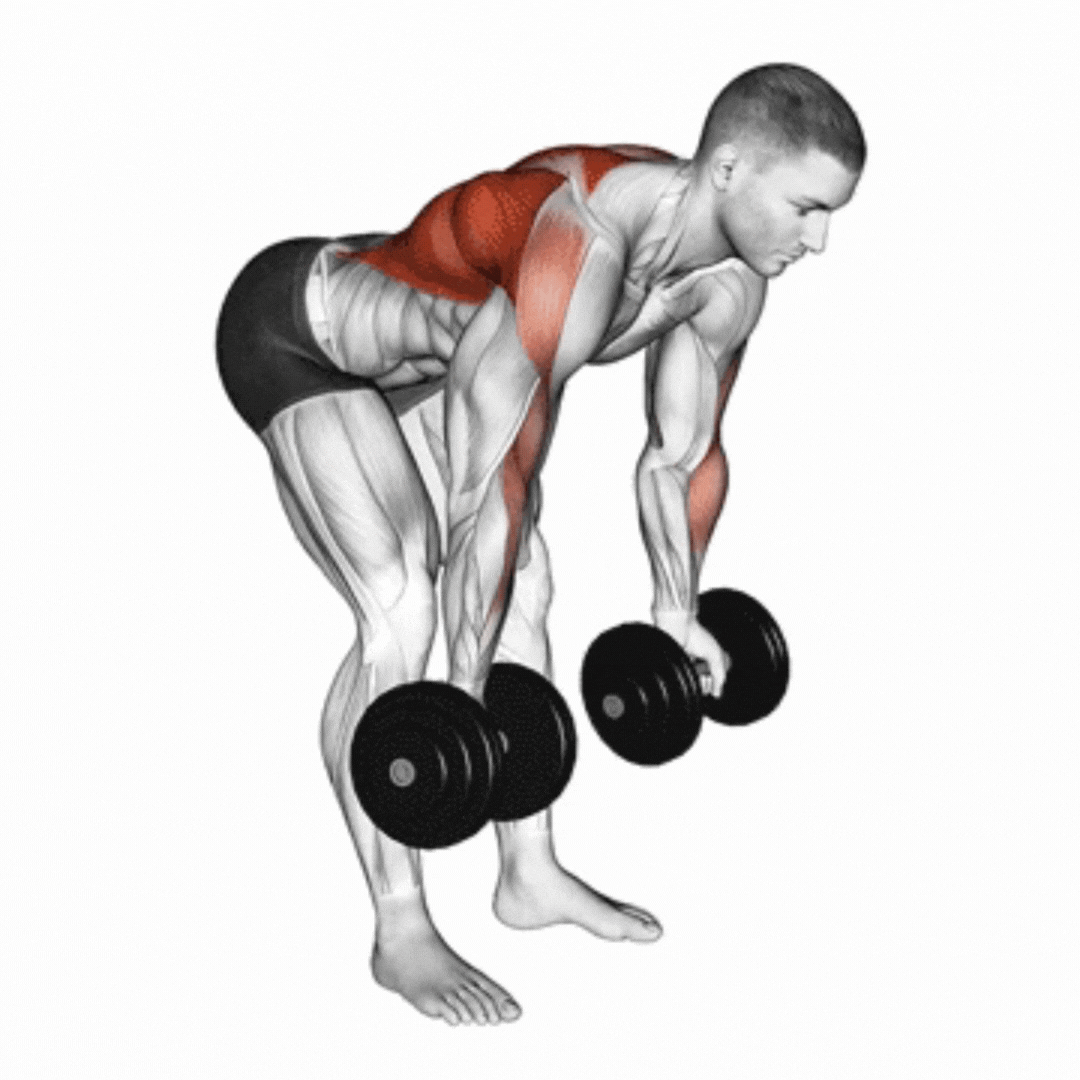
The Dumbbell Deadlift is an effective compound movement performed using dumbbells that works the entire posterior chain. As the dumbbell version of the barbell deadlift, this exercise specifically targets the lower back, gluteus maximus, and hamstrings. Using dumbbells allows for a more natural range of motion and also improves grip strength. It is an ideal alternative for home workouts and serves as an excellent transitional exercise to learn the movement pattern before progressing to the barbell deadlift. It builds functional strength, improves posture, and reinforces the hip hinge pattern used in daily activities. It is also highly beneficial for correcting unilateral muscle imbalances.
Dumbbell Deadlift How-To Guide
- 1
Stand with your feet shoulder-width apart, holding a dumbbell in each hand
- 2
Keep the dumbbells at the sides of your legs with your palms facing your body
- 3
Keep your chest up, pull your shoulders back, and brace your core
- 4
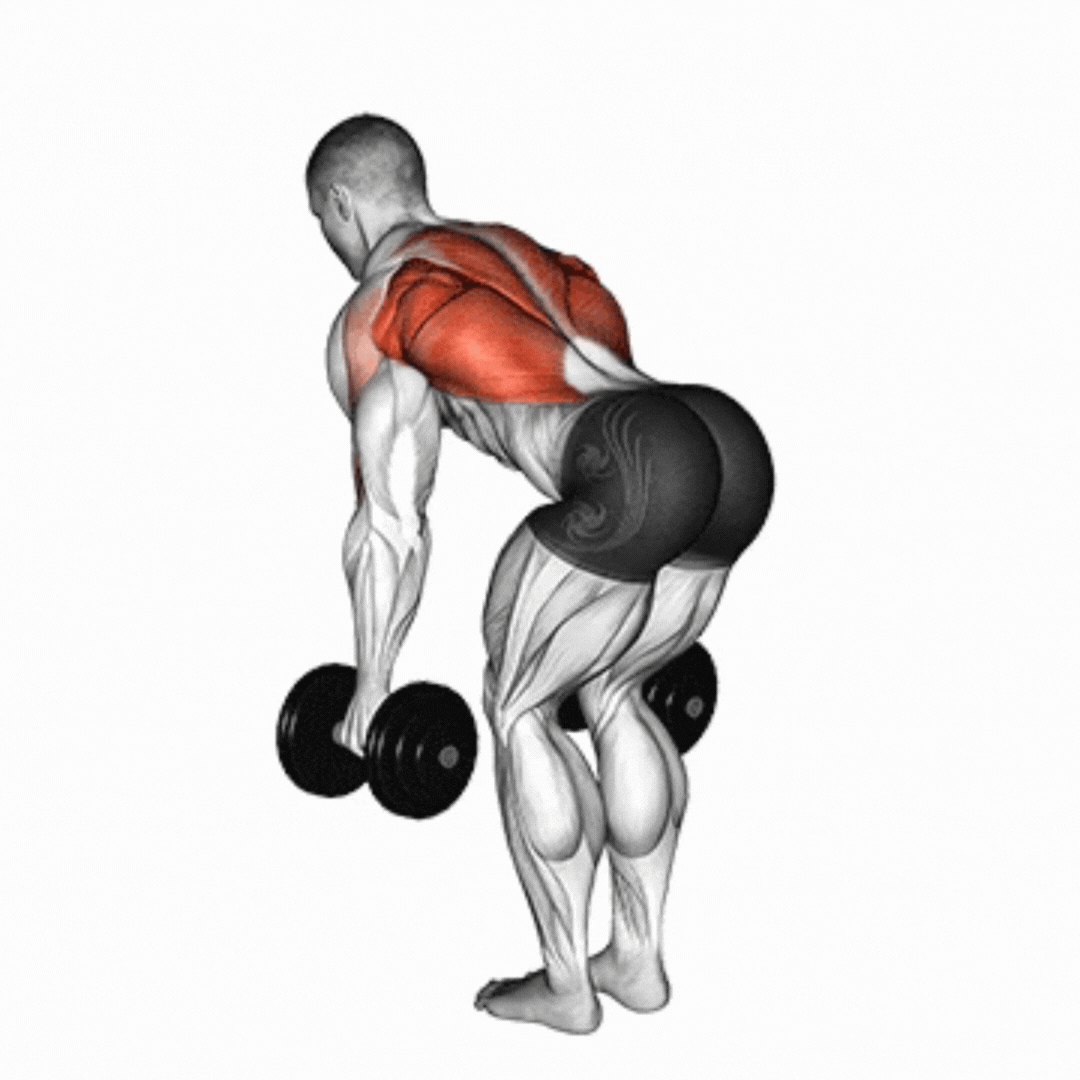
Hinge at the hips by pushing your glutes back, and lower the dumbbells down along your legs
- 5
Keep your knees slightly bent, maintain a straight back, and keep the dumbbells close to your legs
- 6
Lower until you feel a stretch in your hamstrings, bringing the dumbbells just below knee level
- 7
Drive through your heels and squeeze your glutes to stand back up
- 8
At the top position, push your hips forward to reach full extension
Key Points
- ✓The back must be kept straight at all times and never rounded
- ✓The movement should initiate from the hips, not the lower back
- ✓The dumbbells should remain close to the legs throughout the movement
- ✓The hips should reach full extension at the top, but avoid hyperextension
- ✓The core must remain braced throughout the entire movement
Common Mistakes
- ✗Rounding the back - the biggest risk factor for lower back injury
- ✗Holding the dumbbells too far from the body - creates a leverage effect on the lower back
- ✗Bending the knees too much and turning it into a squat - fails to engage the target muscles
- ✗Hyperextending at the top position - damages the spine
- ✗Compromising form with excessively heavy dumbbells - technique should be the priority
Breathing
Take a deep breath and brace your core at the start of the movement, hold your breath or exhale in a controlled manner as you lower the dumbbells, and exhale forcefully as you stand back up.
Muscle Activation
Safety
Precautions
- Individuals with acute lower back pain or a herniated disc should avoid this
- Those with disc issues should get medical clearance
- Individuals with hamstring injuries should limit their range of motion
- Patients with high blood pressure should be careful with breath control
Safety Tips
- Practice your form with light weights first, and increase the weight gradually
- Always keep your core braced to maintain a straight back
- Be controlled when lowering the dumbbells; do not swing them
- Check your form by looking in a mirror or working with a trainer
- Learn the proper breathing routine and core bracing technique
Frequently Asked Questions
Which muscles does Dumbbell Deadlift work?
Dumbbell Deadlift primarily works these muscles: Alt sırt, Gluteus maximus, Hamstring. It also engages: Core kasları, Trapez, Ön kol, Quadriceps.
Is Dumbbell Deadlift suitable for beginners?
Dumbbell Deadlift is a Intermediate level exercise. Learning difficulty: Moderate.
Can Dumbbell Deadlift be done at home?
Yes, Dumbbell Deadlift can easily be done at home.
What are common mistakes when doing Dumbbell Deadlift?
One of the most common mistakes: Rounding the back - the biggest risk factor for lower back injury
How many sets and reps for Dumbbell Deadlift?
Recommended: 3-4 sets and 8-12 reps.
- ✓Strengthens the entire posterior chain
- ✓Develops the lower back muscles through targeted engagement
- ✓Teaches the functional hip hinge pattern
- ✓Improves posture and enhances performance in daily activities
- ✓Improves grip strength
- ✓Corrects unilateral muscle imbalances