BifitBifit
HomeExercisesBecome a Coach
Log In
HOMEEXERCISESBECOME A COACHLOG IN

Language

Legal

Terms of UsePrivacy PolicyDelete Account
BifitBifit

A modern and user-friendly mobile app that makes life easier for fitness enthusiasts. Tracking your workouts and progress is our priority.

Quick Links

  • Home
  • Exercises
  • Become a Coach
  • Download · Google Play
  • Download · App Store

Legal

  • Privacy Policy
  • Terms of Use
  • Support
  • Account Deletion

© 2026 Bifit. All rights reserved.

Designed for a healthy lifestyle

HomeExercisesBoard Chest Press

Board Chest Press

Chest
Lower Chest
Advanced
Compound
3-5Set
3-6Reps
150sRest
3-1-1-0Tempo
Board Chest Press
Animation

Description

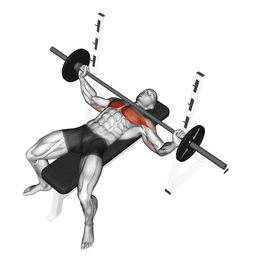
The Board Chest Press is a specialized powerlifting variation of the bench press where the range of motion is shortened by placing a wooden block (board) on the chest. Depending on the height of the board, different phases of the bench press (mid or top) can be targeted. This limited range of motion allows for training with heavier loads and specifically develops bench press lockout strength. It intensely targets the pectoralis major, triceps, and anterior deltoids. It is frequently used by powerlifters for sticking point training. At the same time, because it limits the eccentric phase, it reduces stress on the shoulders and can be used in post-injury rehabilitation. The board height can be adjusted to 1, 2, or 3 boards. When performed regularly, it provides significant improvements in bench press lockout strength and maximum loads.

Step-by-Step Instructions

  1. 1

    Position yourself in the bench press rack and lie flat on your back on the bench

  2. 2

    Have a spotter place the board (1-3 boards) on your chest, or secure it yourself

  3. 3

    The board should typically be 2-6 inches (5-15 cm) high, depending on the number of boards

  4. 4

    Grip the bar with a shoulder-width overhand grip

  5. 5

    Retract your shoulder blades, create a slight arch in your back, and plant your feet firmly on the floor

  6. 6

    Brace your core and unrack the bar

  7. 7

    Lower the bar in a controlled manner toward the board until it touches

  8. 8

    Pause on the board for 1-2 seconds (release tension)

  9. 9

    Push the bar up with an explosive movement

  10. 10

    Elbows should be fully extended at the top position

  11. 11

    Maintain proper form throughout all reps

Key Points

  • ✓The board must be stable on your chest
  • ✓The bar should descend to the board under control; do not bounce it hard
  • ✓Release tension on the board (dead stop position)
  • ✓Apply an explosive upward and controlled downward tempo
  • ✓Shoulder blades must remain retracted
  • ✓A spotter or assistant should hold the board

Common Mistakes

  • ✗Slamming the bar onto the board - causes joint stress
  • ✗Bouncing off the board - defeats the purpose of the exercise
  • ✗Over-arching the back - risk of hyperextension
  • ✗Breaking form with excessively heavy loads - risk of injury
  • ✗Using a board alone without securing it - can be unsafe
  • ✗Using a grip that is too wide or too narrow - alters the target muscle pattern

Breathing

Inhale and brace your core as you lower the bar, hold your breath on the board, and exhale forcefully as you push up.

Muscle Activation

triceps0%
chest0%
front delts0%
upper back0%
core0%

Safety

Precautions

  • Individuals with acute shoulder injuries should avoid this
  • Beginners who have not mastered standard bench press technique should avoid this
  • Individuals with acute lower back pain should be cautious
  • Individuals with wrist injuries should be cautious
  • Individuals with high blood pressure should be cautious

Safety Tips

  • Master the classic bench press technique first
  • Using a spotter is mandatory
  • The board must be sturdy and stable
  • Start with light loads and increase the weight gradually
  • Monitor your form by working with a coach or using a mirror
  • Always perform a thorough shoulder warm-up

Frequently Asked Questions

Which muscles does Board Chest Press work?

Board Chest Press primarily works these muscles: Göğüs, Triceps. It also engages: Ön Omuz, Üst sırt, Core kasları.

Is Board Chest Press suitable for beginners?

Board Chest Press is a Advanced level exercise. Learning difficulty: Hard.

Can Board Chest Press be done at home?

Board Chest Press usually requires gym equipment, so it can be hard to do at home.

What are common mistakes when doing Board Chest Press?

One of the most common mistakes: Slamming the bar onto the board - causes joint stress

How many sets and reps for Board Chest Press?

Recommended: 3-5 sets and 3-6 reps.
Related Exercises

Exercises targeting similar muscle groups

Chest Exercises
Cable Crossover

Cable Crossover

Lower Chest

Incline Dumbbell Fly

Incline Dumbbell Fly

Upper Chest

Decline Dumbbell Fly

Decline Dumbbell Fly

Lower Chest

Cable Low Fly

Cable Low Fly

Upper Chest

Single Arm Cable Crossover

Single Arm Cable Crossover

Lower Chest

Cable Middle Fly

Cable Middle Fly

Lower Chest

Exercise Information

DifficultyAdvanced
Movement TypeCompound
FocusStrength
Injury RiskMedium
Set3-5
Reps3-6
Rest150 seconds
Tempo3-1-1-0
Spotter RequiredYes
Home / Gym
NoYes
Effectiveness4.4 / 5
Popularity5.5 / 10
Learning DifficultyHard

Equipment

barbellbench

Primary Muscles

GöğüsTriceps

Secondary Muscles

Ön OmuzÜst sırtCore kasları

Benefits

  • ✓Increases bench press lockout strength
  • ✓Maximizes triceps strength development
  • ✓Teaches how to push through the bench press sticking point
  • ✓Allows for training with maximal loads
  • ✓Reduces eccentric stress on the shoulders
  • ✓Directly improves powerlifting performance
  • ✓Provides training variety

Goals

PowerStrength
Back to All Exercises
Board Chest Press
Animation

Description

The Board Chest Press is a specialized powerlifting variation of the bench press where the range of motion is shortened by placing a wooden block (board) on the chest. Depending on the height of the board, different phases of the bench press (mid or top) can be targeted. This limited range of motion allows for training with heavier loads and specifically develops bench press lockout strength. It intensely targets the pectoralis major, triceps, and anterior deltoids. It is frequently used by powerlifters for sticking point training. At the same time, because it limits the eccentric phase, it reduces stress on the shoulders and can be used in post-injury rehabilitation. The board height can be adjusted to 1, 2, or 3 boards. When performed regularly, it provides significant improvements in bench press lockout strength and maximum loads.

Step-by-Step Instructions

  1. 1

    Position yourself in the bench press rack and lie flat on your back on the bench

  2. 2

    Have a spotter place the board (1-3 boards) on your chest, or secure it yourself

  3. 3

    The board should typically be 2-6 inches (5-15 cm) high, depending on the number of boards

  4. 4

    Grip the bar with a shoulder-width overhand grip

  5. 5

    Retract your shoulder blades, create a slight arch in your back, and plant your feet firmly on the floor

  6. 6

    Brace your core and unrack the bar

  7. 7

    Lower the bar in a controlled manner toward the board until it touches

  8. 8

    Pause on the board for 1-2 seconds (release tension)

  9. 9

    Push the bar up with an explosive movement

  10. 10

    Elbows should be fully extended at the top position

  11. 11

    Maintain proper form throughout all reps

Key Points

  • ✓The board must be stable on your chest
  • ✓The bar should descend to the board under control; do not bounce it hard
  • ✓Release tension on the board (dead stop position)
  • ✓Apply an explosive upward and controlled downward tempo
  • ✓Shoulder blades must remain retracted
  • ✓A spotter or assistant should hold the board

Common Mistakes

  • ✗Slamming the bar onto the board - causes joint stress
  • ✗Bouncing off the board - defeats the purpose of the exercise
  • ✗Over-arching the back - risk of hyperextension
  • ✗Breaking form with excessively heavy loads - risk of injury
  • ✗Using a board alone without securing it - can be unsafe
  • ✗Using a grip that is too wide or too narrow - alters the target muscle pattern

Breathing

Inhale and brace your core as you lower the bar, hold your breath on the board, and exhale forcefully as you push up.

Back to All Exercises

Related Exercises

Exercises targeting similar muscle groups

Chest Exercises
Cable Crossover

Cable Crossover

Lower Chest

Incline Dumbbell Fly

Incline Dumbbell Fly

Upper Chest

Decline Dumbbell Fly

Decline Dumbbell Fly

Lower Chest

Cable Low Fly

Cable Low Fly

Upper Chest

Single Arm Cable Crossover

Single Arm Cable Crossover

Lower Chest

Cable Middle Fly

Cable Middle Fly

Lower Chest