.gif)
Description
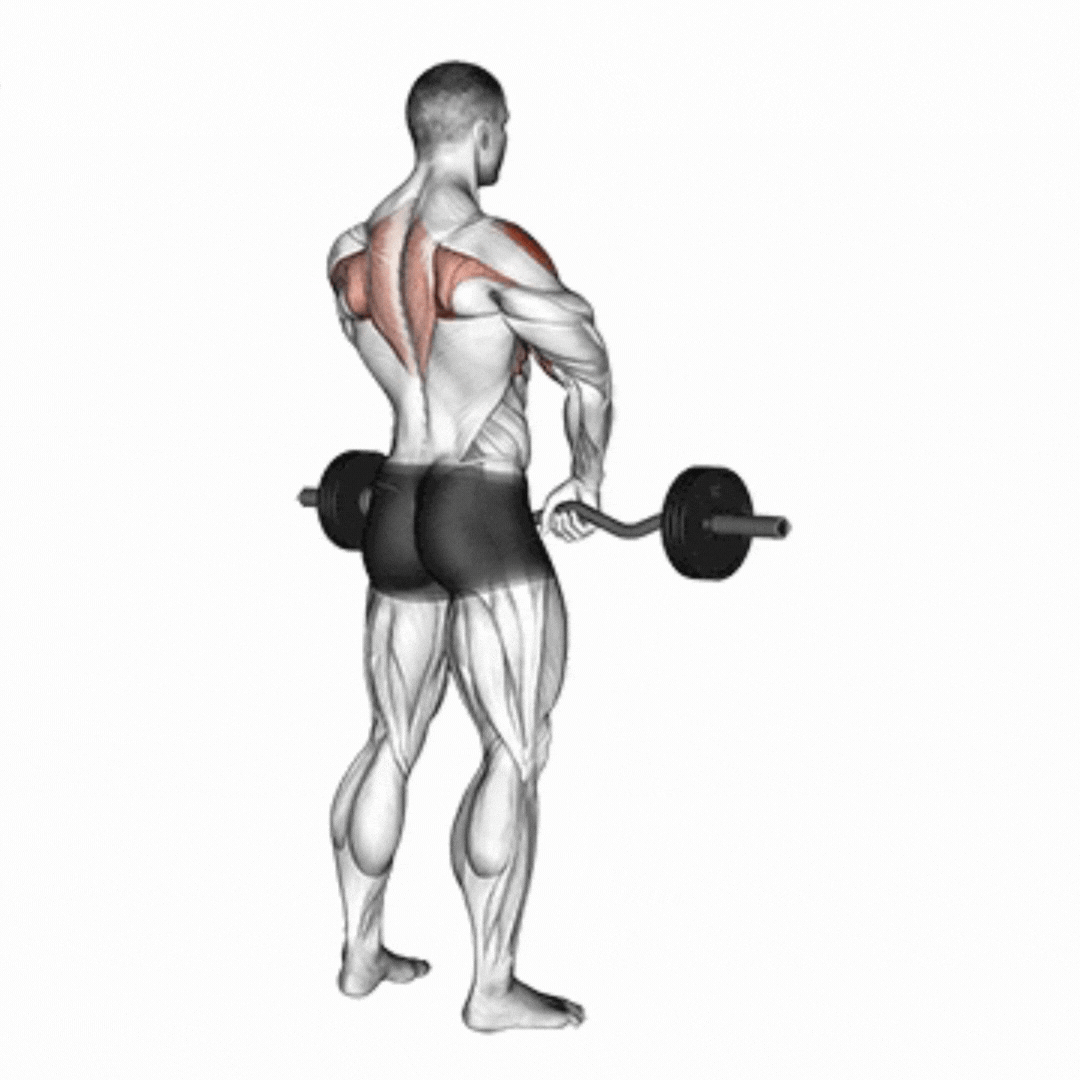
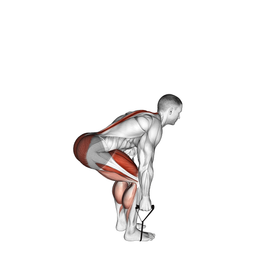
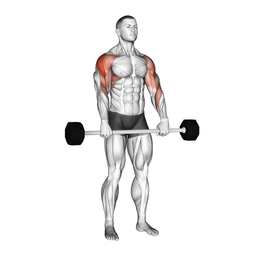
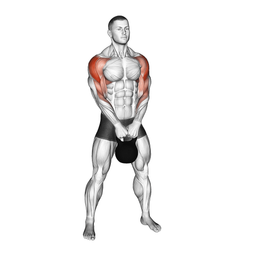
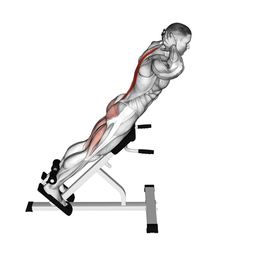
Barbell Rack Pull is a compound exercise that is a deadlift variation and specifically targets the back, glutes, and hamstring muscles. This exercise focuses on the upper portion of the deadlift because the barbell starts from a specific height on a rack rather than from the floor. It is an effective method for strengthening posterior chain muscles, improving deadlift performance, and developing upper back muscles. The range of motion of the movement can be altered by adjusting the rack height, which allows for targeting different muscle groups more effectively. It is an ideal choice for advanced athletes and is used to strengthen the lock-out portion of the deadlift. When performed regularly, it increases upper body strength and posterior chain power.
Barbell Rack Pull How-To Guide
- 1
Adjust the rack to the appropriate height and place the barbell
- 2
Stand in front of the barbell with your feet shoulder-width apart and lean your torso forward
- 3
Grip the barbell with an overhand grip and exhale while lifting the barbell upward using your glutes and hamstring muscles
- 4
At the peak of the movement, bring your torso to an upright position and hold for 1-2 seconds
- 5
Return to the starting position in a controlled manner and inhale
- 6
Keep your back straight throughout the movement and perform the movement using only the posterior chain muscles
Key Points
- ✓Start the barbell from a rack at knee level or slightly above
- ✓Keep your back straight, pull your shoulders back
- ✓Push your hips backward, only straighten the upper torso
- ✓At the end of the movement, squeeze the glutes and upper back muscles and hold for 1-2 seconds
Common Mistakes
- ✗Keeping the back curved - can lead to lower back injury
- ✗Performing the movement with momentum - reduces muscle development
- ✗Using too much weight - causes loss of form and injury
- ✗Not using full range of motion - prevents complete muscle activation
Breathing
Exhale while lifting the weight, inhale while slowly lowering it.
Muscle Activation
Safety
Precautions
- Do not perform if you have a herniated disc or serious lower back problems
- Get medical approval if you have a history of lower back injury
- Those with sciatica pain should be careful
- If you have spinal problems, perform under expert supervision
Safety Tips
- Keep your back straight without collapsing your lower back muscles
- Increase weight gradually, do not make sudden loads
- Always perform with a belt and ensure core activation
- Incorrect form leads to lower back injury, get trainer support if necessary
Frequently Asked Questions
Which muscles does Barbell Rack Pull work?
Barbell Rack Pull primarily works these muscles: Hamstrings, Glutes, Erector spinae. It also engages: Traps, Lats, Forearms.
Is Barbell Rack Pull suitable for beginners?
Barbell Rack Pull is a Intermediate level exercise. Learning difficulty: Moderate.
Can Barbell Rack Pull be done at home?
Barbell Rack Pull usually requires gym equipment, so it can be hard to do at home.
What are common mistakes when doing Barbell Rack Pull?
One of the most common mistakes: Keeping the back curved - can lead to lower back injury
How many sets and reps for Barbell Rack Pull?
Recommended: 4-6 sets and 4-6 reps.
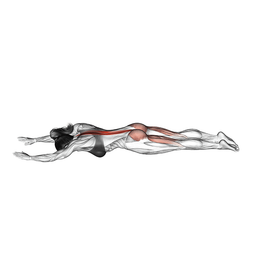
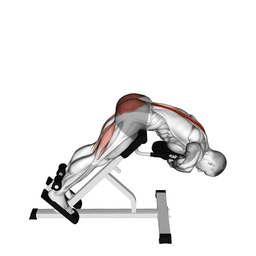
- ✓Strengthens back, glutes, and hamstring muscles
- ✓Intensifies deadlift range of motion
- ✓Develops trapezius and upper back muscles
- ✓Increases fundamental strength for wrestling and powerlifting