BifitBifit
HomeExercisesBecome a Coach
Log In
HOMEEXERCISESBECOME A COACHLOG IN

Language

Legal

Terms of UsePrivacy PolicyDelete Account
BifitBifit

A modern and user-friendly mobile app that makes life easier for fitness enthusiasts. Tracking your workouts and progress is our priority.

Quick Links

  • Home
  • Exercises
  • Become a Coach
  • Download · Google Play
  • Download · App Store

Legal

  • Privacy Policy
  • Terms of Use
  • Support
  • Account Deletion

© 2026 Bifit. All rights reserved.

Designed for a healthy lifestyle

HomeExercisesActive Hang

Active Hang

Back
Lats
Beginner
Isolation
3-4Set
10-30 saniyeReps
45sRest
1-1-1-1Tempo
Active Hang
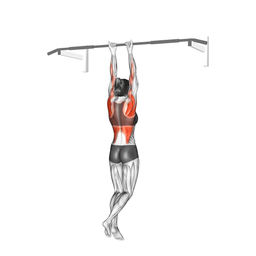
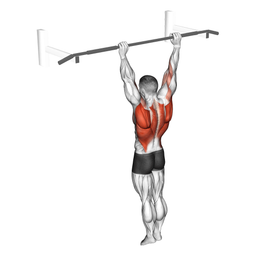
Animation

Description

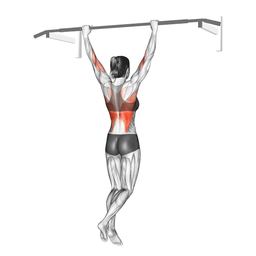
The Active Hang is a movement/hold performed while hanging from a pull-up bar, where the shoulder blades are actively pulled down to isolate the latissimus dorsi (lats). Unlike a passive hang, the shoulder girdle is kept active. It works the lats, lower traps, and shoulder stabilizer muscles. It is a critical exercise for pull-up preparation and grip strength. It also improves shoulder mobility and health. When performed regularly, it provides significant improvements in grip strength, lat activation, and pull-up performance.

Step-by-Step Instructions

  1. 1

    Step up to a pull-up bar and grip it with a shoulder-width overhand grip.

  2. 2

    Let your body hang freely in the air with your arms fully extended.

  3. 3

    Instead of hanging passively, actively pull your shoulder blades down and back.

  4. 4

    Squeeze your lats to pull your body slightly upward (5-10 cm).

  5. 5

    Keep your neck neutral and your chin tucked in.

  6. 6

    Engage your core muscles.

  7. 7

    Hold this active position for 10-30 seconds.

  8. 8

    Maintain control throughout the designated time.

Key Points

  • ✓Shoulder blades must be actively pulled down.
  • ✓The body should be pulled slightly upward.
  • ✓The neck must be kept neutral.
  • ✓Perform an active hang, not a passive hang.
  • ✓Keep the core tight.

Common Mistakes

  • ✗Hanging passively - defeats the purpose of the movement.
  • ✗Shrugging the shoulders up - prevents lat activation.
  • ✗Holding for too long - fatigues the grip unnecessarily.
  • ✗Jutting the neck forward - strains the neck.
  • ✗Swinging - results in a loss of control.

Breathing

Breathe deeply and steadily; do not hold your breath.

Muscle Activation

lower traps0%
lats0%
forearm0%
rhomboids0%
core0%

Safety

Precautions

  • Those with acute shoulder injuries should exercise caution.
  • Those with wrist injuries should exercise caution.

Safety Tips

  • Use a sturdy pull-up bar.
  • Warm up your wrists.
  • Stop the movement when your form breaks down.

Frequently Asked Questions

Which muscles does Active Hang work?

Active Hang primarily works these muscles: Kanatlar, Lats. It also engages: Trapez, Alt Trapez, Romboid, Ön kol, Core kasları.

Is Active Hang suitable for beginners?

Active Hang is a Beginner level exercise. Learning difficulty: Easy.

Can Active Hang be done at home?

Active Hang usually requires gym equipment, so it can be hard to do at home.

What are common mistakes when doing Active Hang?

One of the most common mistakes: Hanging passively - defeats the purpose of the movement.

How many sets and reps for Active Hang?

Recommended: 3-4 sets and 10-30 saniye reps.
Related Exercises

Exercises targeting similar muscle groups

Back Exercises
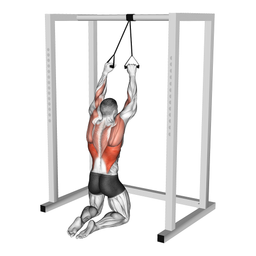
Lever Behind Head Lat Pulldown

Lever Behind Head Lat Pulldown

Lats

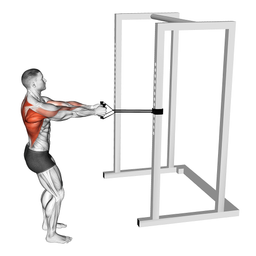
Cable One Arm Pulldown

Cable One Arm Pulldown

Lats

Pull-Up

Pull-Up

Lats

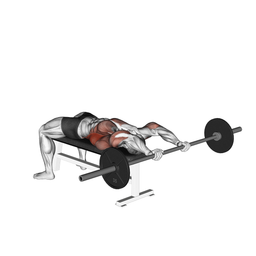
Barbell Decline Bent Arm Pullover

Barbell Decline Bent Arm Pullover

Lats

Close Grip Lat Pulldown

Close Grip Lat Pulldown

Lats

High Row Machine

High Row Machine

Lats

Exercise Information

DifficultyBeginner
Movement TypeIsolation
FocusEndurance
Injury RiskLow
Set3-4
Reps10-30 saniye
Rest45 seconds
Tempo1-1-1-1
Spotter RequiredNo
Home / Gym
NoYes
Effectiveness3.8 / 5
Popularity6.0 / 10
Learning DifficultyEasy

Equipment

pull-up bar

Primary Muscles

KanatlarLats

Secondary Muscles

TrapezAlt TrapezRomboidÖn kolCore kasları

Benefits

  • ✓Ideal preparation for pull-ups.
  • ✓Increases grip strength.
  • ✓Teaches lat activation.
  • ✓Improves shoulder mobility and health.
  • ✓Provides lower trapezius activation.
  • ✓Ideal for rehabilitation.

Goals

EnduranceStrength
Back to All Exercises
Active Hang
Animation

Description

The Active Hang is a movement/hold performed while hanging from a pull-up bar, where the shoulder blades are actively pulled down to isolate the latissimus dorsi (lats). Unlike a passive hang, the shoulder girdle is kept active. It works the lats, lower traps, and shoulder stabilizer muscles. It is a critical exercise for pull-up preparation and grip strength. It also improves shoulder mobility and health. When performed regularly, it provides significant improvements in grip strength, lat activation, and pull-up performance.

Step-by-Step Instructions

  1. 1

    Step up to a pull-up bar and grip it with a shoulder-width overhand grip.

  2. 2

    Let your body hang freely in the air with your arms fully extended.

  3. 3

    Instead of hanging passively, actively pull your shoulder blades down and back.

  4. 4

    Squeeze your lats to pull your body slightly upward (5-10 cm).

  5. 5

    Keep your neck neutral and your chin tucked in.

  6. 6

    Engage your core muscles.

  7. 7

    Hold this active position for 10-30 seconds.

  8. 8

    Maintain control throughout the designated time.

Key Points

  • ✓Shoulder blades must be actively pulled down.
  • ✓The body should be pulled slightly upward.
  • ✓The neck must be kept neutral.
  • ✓Perform an active hang, not a passive hang.
  • ✓Keep the core tight.

Common Mistakes

  • ✗Hanging passively - defeats the purpose of the movement.
  • ✗Shrugging the shoulders up - prevents lat activation.
  • ✗Holding for too long - fatigues the grip unnecessarily.
  • ✗Jutting the neck forward - strains the neck.
  • ✗Swinging - results in a loss of control.

Breathing

Breathe deeply and steadily; do not hold your breath.

Back to All Exercises

Related Exercises

Exercises targeting similar muscle groups

Back Exercises
Lever Behind Head Lat Pulldown

Lever Behind Head Lat Pulldown

Lats

Cable One Arm Pulldown

Cable One Arm Pulldown

Lats

Pull-Up

Pull-Up

Lats

Barbell Decline Bent Arm Pullover

Barbell Decline Bent Arm Pullover

Lats

Close Grip Lat Pulldown

Close Grip Lat Pulldown

Lats

High Row Machine

High Row Machine

Lats