.gif)
Description
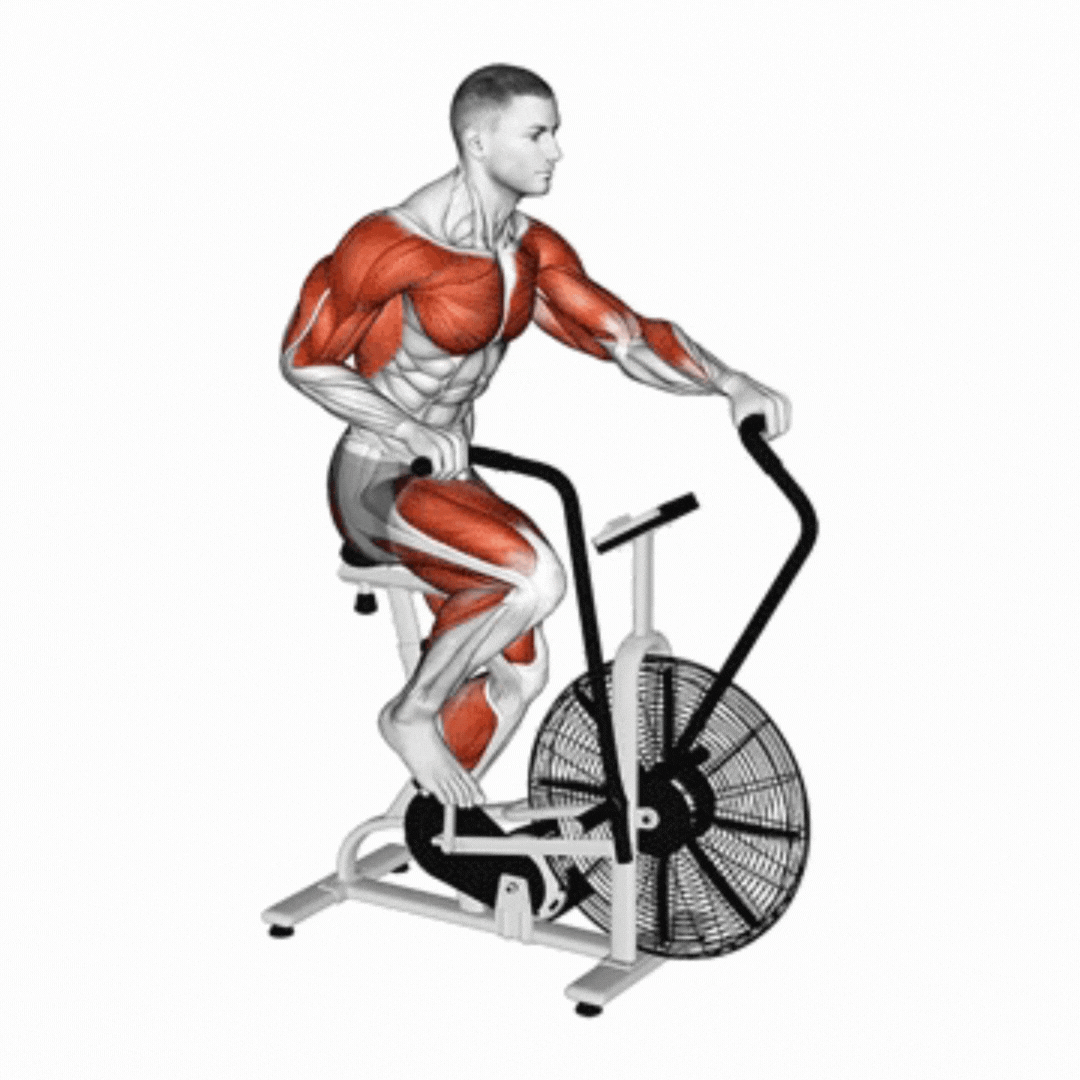
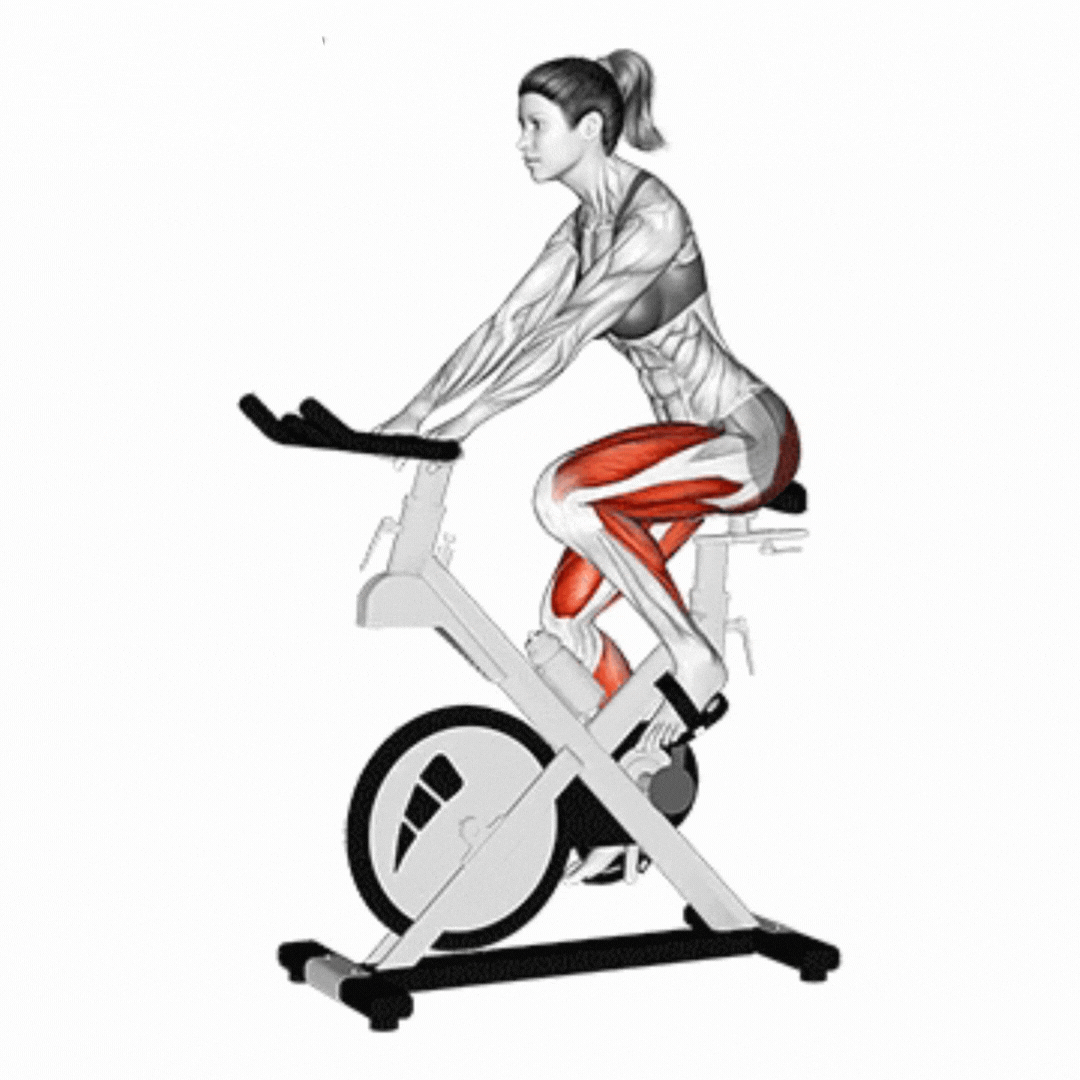
The stationary bike is a low-impact yet highly efficient cardio exercise. This activity strengthens the leg muscles while placing minimal stress on the knees and joints. It effectively targets the quadriceps, hamstrings, and glute muscles. It is suitable for both long-duration low-intensity and short-duration high-intensity training. The risk of injury is low, and it is also commonly used during rehabilitation. It is an excellent option for calorie burn and developing cardiovascular endurance.
Stationary Bike Running How-To Guide
- 1
Adjust the seat height so that your knee is slightly bent when the pedal is at its lowest point
- 2
Place your feet on the pedals and tighten the straps
- 3
Set the resistance to a low level to start
- 4
Begin pedaling at a steady tempo, keeping your back slightly leaned forward
- 5
Gradually increase the resistance according to your desired intensity
- 6
Continue at a steady tempo for the set duration, then reduce the resistance in the final minute for a cool-down
Key Points
- ✓Adjust the seat to the proper height so that knees remain slightly bent
- ✓Keep your back straight and your shoulders relaxed
- ✓Press the pedals with the entire sole of your foot, avoiding heel-only contact
- ✓Choose a consistent tempo and resistance level
Common Mistakes
- ✗Setting the seat too high or too low — this causes knee and lower back pain
- ✗Hunching your back — this increases the risk of lower back injury
- ✗Using too little resistance — this prevents an effective workout
- ✗Letting your feet slip off the pedals — this reduces efficiency
Breathing
Breathe in and out in a steady, rhythmic manner. Exhale during exertion and inhale during rest.
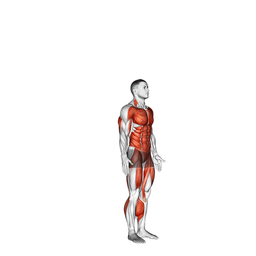
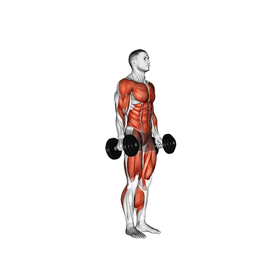
Muscle Activation
Safety
Precautions
- Those with kneecap problems should work with low resistance
- Those with heart conditions should get a medical check-up
- Those with herniated discs should pay attention to their seated posture
- Medical clearance should be obtained during pregnancy
Safety Tips
- Adjust the seat and handlebar height to fit your body
- Start warming up at low resistance and increase gradually
- Avoid fully locking out your knees while pedaling
- Stay hydrated regularly during the exercise
Frequently Asked Questions
Which muscles does Stationary Bike Running work?
Stationary Bike Running primarily works these muscles: Quadriceps, Hamstrings, Glutes, Calves. It also engages: Hip flexors.
Is Stationary Bike Running suitable for beginners?
Stationary Bike Running is a Beginner level exercise. Learning difficulty: Easy.
Can Stationary Bike Running be done at home?
Stationary Bike Running usually requires gym equipment, so it can be hard to do at home.
What are common mistakes when doing Stationary Bike Running?
One of the most common mistakes: Setting the seat too high or too low — this causes knee and lower back pain
How many sets and reps for Stationary Bike Running?
Recommended: 3-5 sets and 20-45 minutes reps.
- ✓Provides cardiovascular conditioning with low impact on joints
- ✓Strengthens the leg muscles
- ✓Increases calorie burn
- ✓Develops long-duration endurance