.gif)
Description
The Stability Ball Rollout is an advanced exercise performed using a stability ball (Swiss ball) that intensely targets the entire core, especially the rectus abdominis and transversus abdominis. Kneeling on the floor, you place your forearms on the ball and then extend your body as you roll the ball forward. This movement is based on the anti-extension principle (preventing the lower back from arching) and pushes the isometric contraction of the core to its maximum. It also activates the shoulders and triceps. It is considered a much more effective core exercise than classic crunches. Popular in powerlifting and functional training, when performed correctly, it provides significant improvements in upper abdominal hypertrophy, core stabilization, and overall athletic performance. It is similar to the ab wheel rollout but safer for the lower back.
Stability Ball Rollout How-To Guide
- 1
Kneel on the floor facing the stability ball.
- 2
Place your forearms (elbows bent at 90 degrees) on the ball.
- 3
Keep your hands firm on the ball, with your torso upright in the starting position.
- 4
Brace your core muscles; do not push your hips toward the ball.
- 5
Roll the ball forward in a controlled manner.
- 6
As your body extends, your hips should form a straight line (do not let your lower back sag).
- 7
Extend as far as possible (arms and torso reaching maximum extension).
- 8
Contract your abdominal muscles to pull the ball back (to the starting position).
- 9
Keep your core tight throughout the movement; do not arch your lower back.
Key Points
- ✓Establish a solid kneeling starting position.
- ✓Your body should form a straight line throughout the movement.
- ✓Never let your lower back sag (anti-extension).
- ✓Keep your core constantly engaged.
- ✓Maintain a slow and controlled tempo.
Common Mistakes
- ✗Letting the lower back sag - a serious risk for lower back injury.
- ✗Reaching too far forward - dangerous if core control is insufficient.
- ✗Performing the movement too fast - leads to a loss of control.
- ✗Rolling the ball too far forward - makes pulling it back difficult.
- ✗Pushing the hips toward the ball - breaks the proper form.
Breathing
Inhale and brace your core as you roll forward, exhale as you pull back.
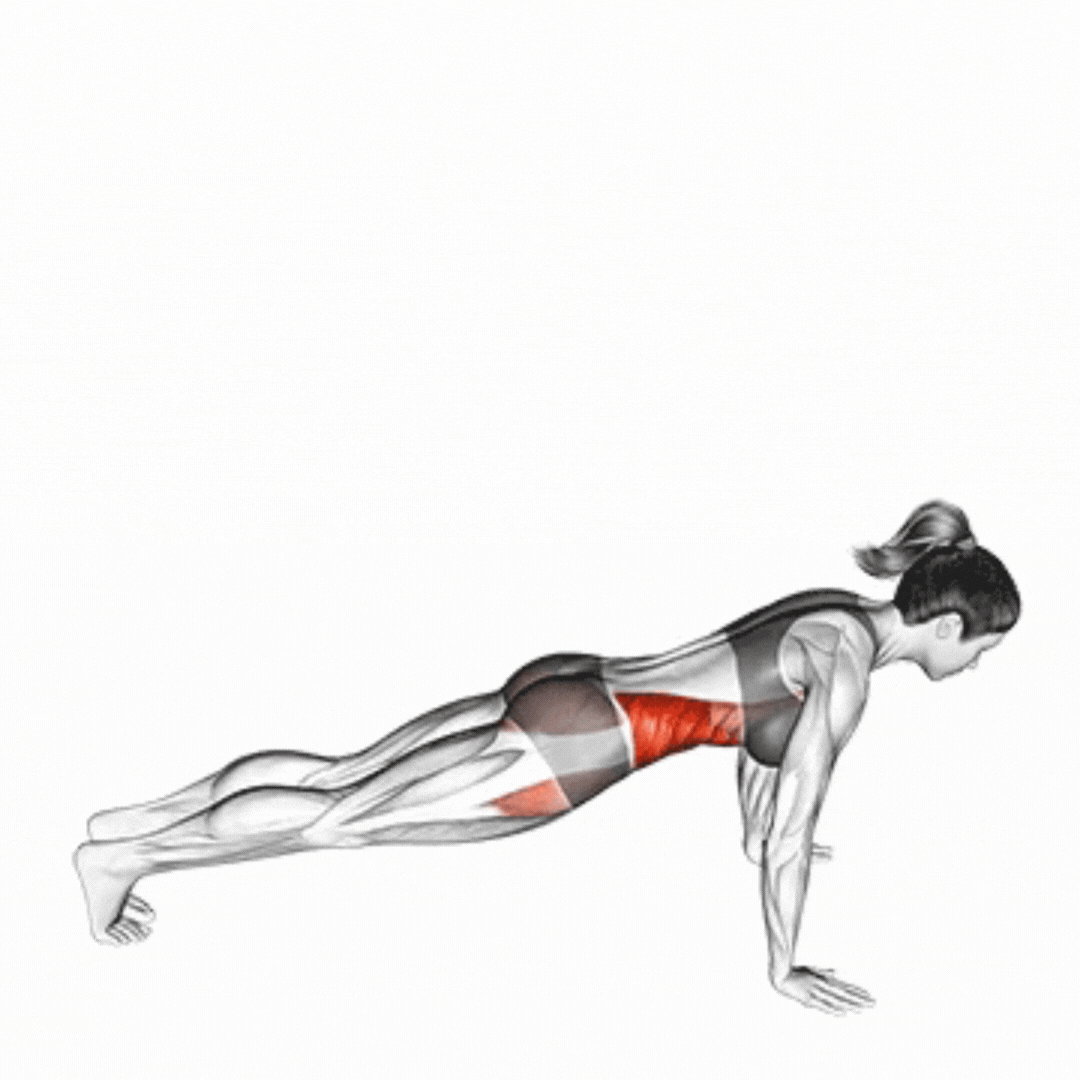
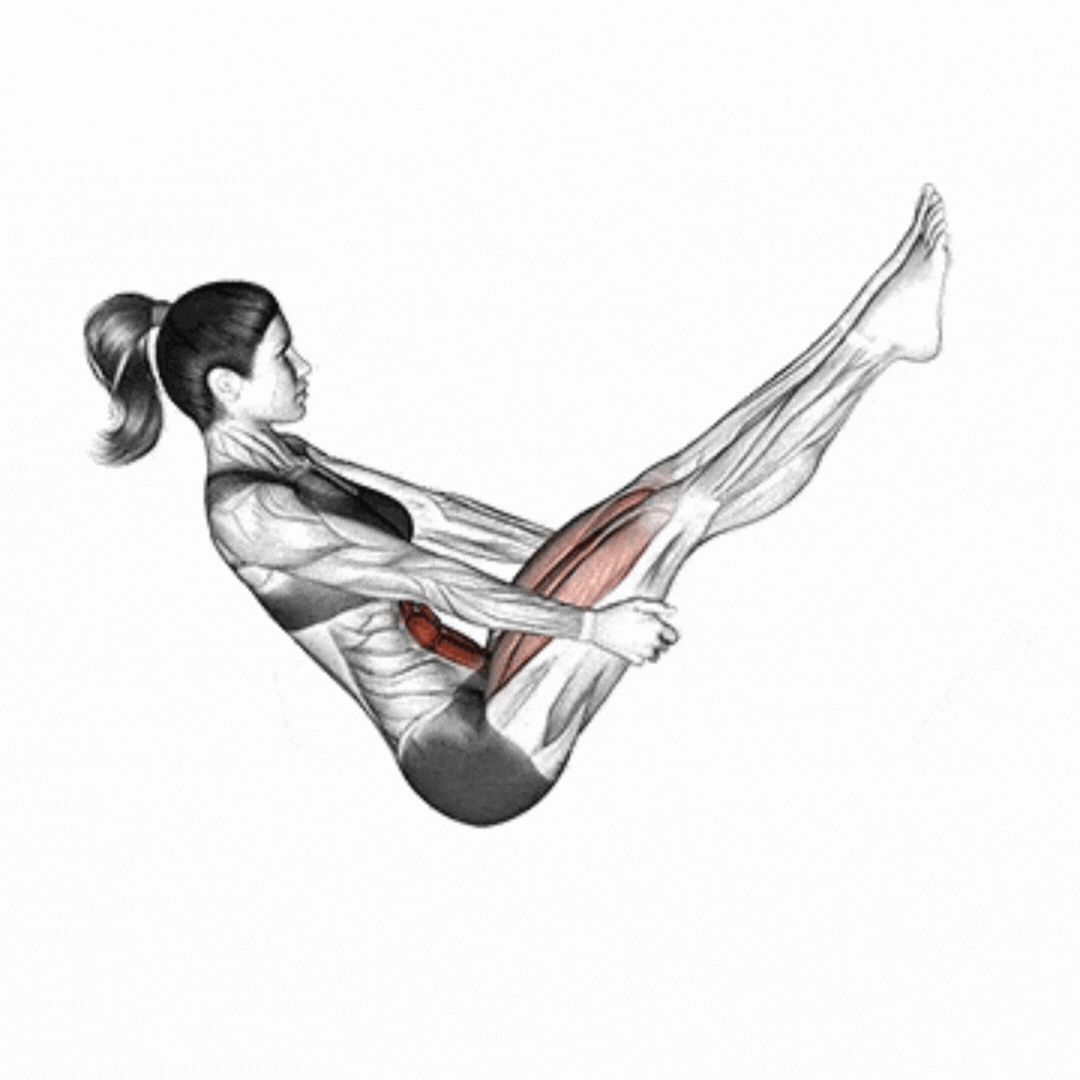
Muscle Activation
Safety
Precautions
- Individuals with acute lower back pain or a herniated disc should avoid this.
- People with spinal disc issues should not perform this.
- Those with acute shoulder injuries should exercise caution.
Safety Tips
- Master the classic plank technique first.
- Ensure the stability ball is sturdy and properly inflated.
- Perform on a soft surface (to protect your knees).
- Start with a small range of motion and progress gradually.
- Stop the movement immediately if your lower back begins to sag.
Frequently Asked Questions
Which muscles does Stability Ball Rollout work?
Stability Ball Rollout primarily works these muscles: Üst Karın, Karın kasları. It also engages: Transversus abdominis, Core kasları, Omuz, Triceps, Latissimus dorsi.
Is Stability Ball Rollout suitable for beginners?
Stability Ball Rollout is a Advanced level exercise. Learning difficulty: Hard.
Can Stability Ball Rollout be done at home?
Yes, Stability Ball Rollout can easily be done at home.
What are common mistakes when doing Stability Ball Rollout?
One of the most common mistakes: Letting the lower back sag - a serious risk for lower back injury.
How many sets and reps for Stability Ball Rollout?
Recommended: 3-4 sets and 8-12 reps.
- ✓Intensely works the entire core region.
- ✓Maximizes anti-extension core strength.
- ✓Activates the upper abs and transversus abdominis.
- ✓Much more effective than classic crunches.
- ✓Improves shoulder stabilization.
- ✓Contributes to overall athletic performance.
- ✓Serves as a great alternative to the ab wheel rollout.