BifitBifit
HomeExercisesBecome a Coach
Log In
HOMEEXERCISESBECOME A COACHLOG IN

Language

Legal

Terms of UsePrivacy PolicyDelete Account
BifitBifit

A modern and user-friendly mobile app that makes life easier for fitness enthusiasts. Tracking your workouts and progress is our priority.

Quick Links

  • Home
  • Exercises
  • Become a Coach
  • Download · Google Play
  • Download · App Store

Legal

  • Privacy Policy
  • Terms of Use
  • Support
  • Account Deletion

© 2026 Bifit. All rights reserved.

Designed for a healthy lifestyle

HomeExercisesSmith Machine Rack Pull

Smith Machine Rack Pull

Glutes
Glutes
Intermediate
Compound
3-5Set
5-8Reps
120sRest
3-1-2-0Tempo
Smith Machine Rack Pull
Animation

Description

The Smith Machine Rack Pull is a more controlled variation of the traditional rack pull, performed using a Smith machine with a fixed bar path. The bar is started from a specific height (usually at knee level), focusing on the top half of the deadlift. The fixed path of the Smith machine eliminates balance issues, making the movement safer and more controlled. It intensely targets the gluteus maximus, lower back, hamstrings, and trapezius muscles. It is ideal for increasing lockout strength in the deadlift and achieving full hip extension at the top position. It can also be used as a transitional exercise to learn the traditional rack pull. It is included as a deadlift variation in the training programs of powerlifters and strength athletes. The fixed bar path provides additional safety for athletes with a history of lower back injuries.

Step-by-Step Instructions

  1. 1

    Set the bar of the Smith machine to knee level or just slightly below.

  2. 2

    Approach the bar, position your feet shoulder-width apart, with the bar just in front of your calves.

  3. 3

    Hinge at the hips by pushing them back, keeping your knees slightly bent.

  4. 4

    Grip the bar shoulder-width apart with an overhand grip (palms facing your body).

  5. 5

    Keep your chest up, your back straight, and brace your core.

  6. 6

    Unlock the bar from the Smith machine.

  7. 7

    Drive through your heels and squeeze your glutes to lift the bar upwards.

  8. 8

    At the top position, your hips should be in full extension, shoulders pulled back, and traps contracted.

  9. 9

    Lower the bar back to the starting position in a controlled manner.

  10. 10

    Keep your back straight and core engaged throughout the movement.

Key Points

  • ✓The starting bar height should be at knee level.
  • ✓The movement should come from a hip hinge, not the lower back.
  • ✓Keep your back straight and shoulders pulled back.
  • ✓At the top position, achieve full hip extension and contract your traps.
  • ✓The Smith machine bar path is fixed; keep your torso close to the bar.

Common Mistakes

  • ✗Rounding the back - a serious risk for lower back injury.
  • ✗Hyperextending at the top - damages the spine.
  • ✗Bending the knees excessively and turning it into a squat - fails to engage the target muscles.
  • ✗Lowering the bar without control - causes joint stress.
  • ✗Compromising form with too much weight - technique must be prioritized.
  • ✗Placing the feet incorrectly, given the fixed path of the Smith machine bar.

Breathing

Inhale and brace your core as you hinge down, and exhale forcefully as you stand up. On heavy sets, reset your breathing between each rep.

Muscle Activation

glutes0%
lower back0%
traps0%
erector spinae0%
upper back0%
hamstrings0%
forearms0%
core0%

Safety

Precautions

  • Individuals with acute lower back pain or a herniated disc should avoid this.
  • Those with disc problems should seek medical clearance.
  • Individuals with shoulder injuries should proceed with caution.
  • Patients with high blood pressure must pay close attention to breath control.

Safety Tips

  • Learn and test the locking mechanism of the Smith machine.
  • Practice your form with light weight first, increasing the load gradually.
  • Always keep your core braced to maintain a straight back.
  • Adjust your foot position correctly, as the Smith bar path is fixed.
  • Check your form by looking in a mirror or working with a coach.
  • Using a lifting belt can be beneficial for heavy sets.

Frequently Asked Questions

Which muscles does Smith Machine Rack Pull work?

Smith Machine Rack Pull primarily works these muscles: Gluteus maximus, Alt sırt, Trapez. It also engages: Hamstring, Üst sırt, Erector spinae, Core kasları, Ön kol.

Is Smith Machine Rack Pull suitable for beginners?

Smith Machine Rack Pull is a Intermediate level exercise. Learning difficulty: Moderate.

Can Smith Machine Rack Pull be done at home?

Smith Machine Rack Pull usually requires gym equipment, so it can be hard to do at home.

What are common mistakes when doing Smith Machine Rack Pull?

One of the most common mistakes: Rounding the back - a serious risk for lower back injury.

How many sets and reps for Smith Machine Rack Pull?

Recommended: 3-5 sets and 5-8 reps.
Related Exercises

Exercises targeting similar muscle groups

Glutes Exercises
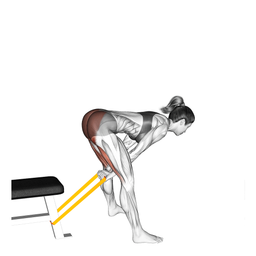
Band Standing Hip Extension

Band Standing Hip Extension

Glutes

Lever Standing Hip Extension

Lever Standing Hip Extension

Glutes

Glute Kickback Machine

Glute Kickback Machine

Glutes

Bent Leg Kickbacks

Bent Leg Kickbacks

Glutes

Cable Donkey Kickback

Cable Donkey Kickback

Glutes

Cable Hip Abduction

Cable Hip Abduction

Glutes

Exercise Information

DifficultyIntermediate
Movement TypeCompound
FocusStrength
Injury RiskMedium
Set3-5
Reps5-8
Rest120 seconds
Tempo3-1-2-0
Spotter RequiredYes
Home / Gym
NoYes
Effectiveness4.3 / 5
Popularity6.0 / 10
Learning DifficultyModerate

Equipment

Smith machine

Primary Muscles

Gluteus maximusAlt sırtTrapez

Secondary Muscles

HamstringÜst sırtErector spinaeCore kaslarıÖn kol

Benefits

  • ✓Increases deadlift lockout strength.
  • ✓Intensely develops the gluteus maximus and lower back muscles.
  • ✓Increases trapezius and upper back thickness.
  • ✓Eliminates instability issues thanks to the fixed bar path.
  • ✓An ideal transitional exercise for learning the traditional rack pull.
  • ✓Allows for safe exposure to heavy loads.
  • ✓Contributes to posterior chain strength development.

Goals

StrengthMuscle Gain
Back to All Exercises
Smith Machine Rack Pull
Animation

Description

The Smith Machine Rack Pull is a more controlled variation of the traditional rack pull, performed using a Smith machine with a fixed bar path. The bar is started from a specific height (usually at knee level), focusing on the top half of the deadlift. The fixed path of the Smith machine eliminates balance issues, making the movement safer and more controlled. It intensely targets the gluteus maximus, lower back, hamstrings, and trapezius muscles. It is ideal for increasing lockout strength in the deadlift and achieving full hip extension at the top position. It can also be used as a transitional exercise to learn the traditional rack pull. It is included as a deadlift variation in the training programs of powerlifters and strength athletes. The fixed bar path provides additional safety for athletes with a history of lower back injuries.

Step-by-Step Instructions

  1. 1

    Set the bar of the Smith machine to knee level or just slightly below.

  2. 2

    Approach the bar, position your feet shoulder-width apart, with the bar just in front of your calves.

  3. 3

    Hinge at the hips by pushing them back, keeping your knees slightly bent.

  4. 4

    Grip the bar shoulder-width apart with an overhand grip (palms facing your body).

  5. 5

    Keep your chest up, your back straight, and brace your core.

  6. 6

    Unlock the bar from the Smith machine.

  7. 7

    Drive through your heels and squeeze your glutes to lift the bar upwards.

  8. 8

    At the top position, your hips should be in full extension, shoulders pulled back, and traps contracted.

  9. 9

    Lower the bar back to the starting position in a controlled manner.

  10. 10

    Keep your back straight and core engaged throughout the movement.

Key Points

  • ✓The starting bar height should be at knee level.
  • ✓The movement should come from a hip hinge, not the lower back.
  • ✓Keep your back straight and shoulders pulled back.
  • ✓At the top position, achieve full hip extension and contract your traps.
  • ✓The Smith machine bar path is fixed; keep your torso close to the bar.

Common Mistakes

  • ✗Rounding the back - a serious risk for lower back injury.
  • ✗Hyperextending at the top - damages the spine.
  • ✗Bending the knees excessively and turning it into a squat - fails to engage the target muscles.
  • ✗Lowering the bar without control - causes joint stress.
  • ✗Compromising form with too much weight - technique must be prioritized.
  • ✗Placing the feet incorrectly, given the fixed path of the Smith machine bar.

Breathing

Inhale and brace your core as you hinge down, and exhale forcefully as you stand up. On heavy sets, reset your breathing between each rep.

Back to All Exercises

Related Exercises

Exercises targeting similar muscle groups

Glutes Exercises
Band Standing Hip Extension

Band Standing Hip Extension

Glutes

Lever Standing Hip Extension

Lever Standing Hip Extension

Glutes

Glute Kickback Machine

Glute Kickback Machine

Glutes

Bent Leg Kickbacks

Bent Leg Kickbacks

Glutes

Cable Donkey Kickback

Cable Donkey Kickback

Glutes

Cable Hip Abduction

Cable Hip Abduction

Glutes