.gif)
Description
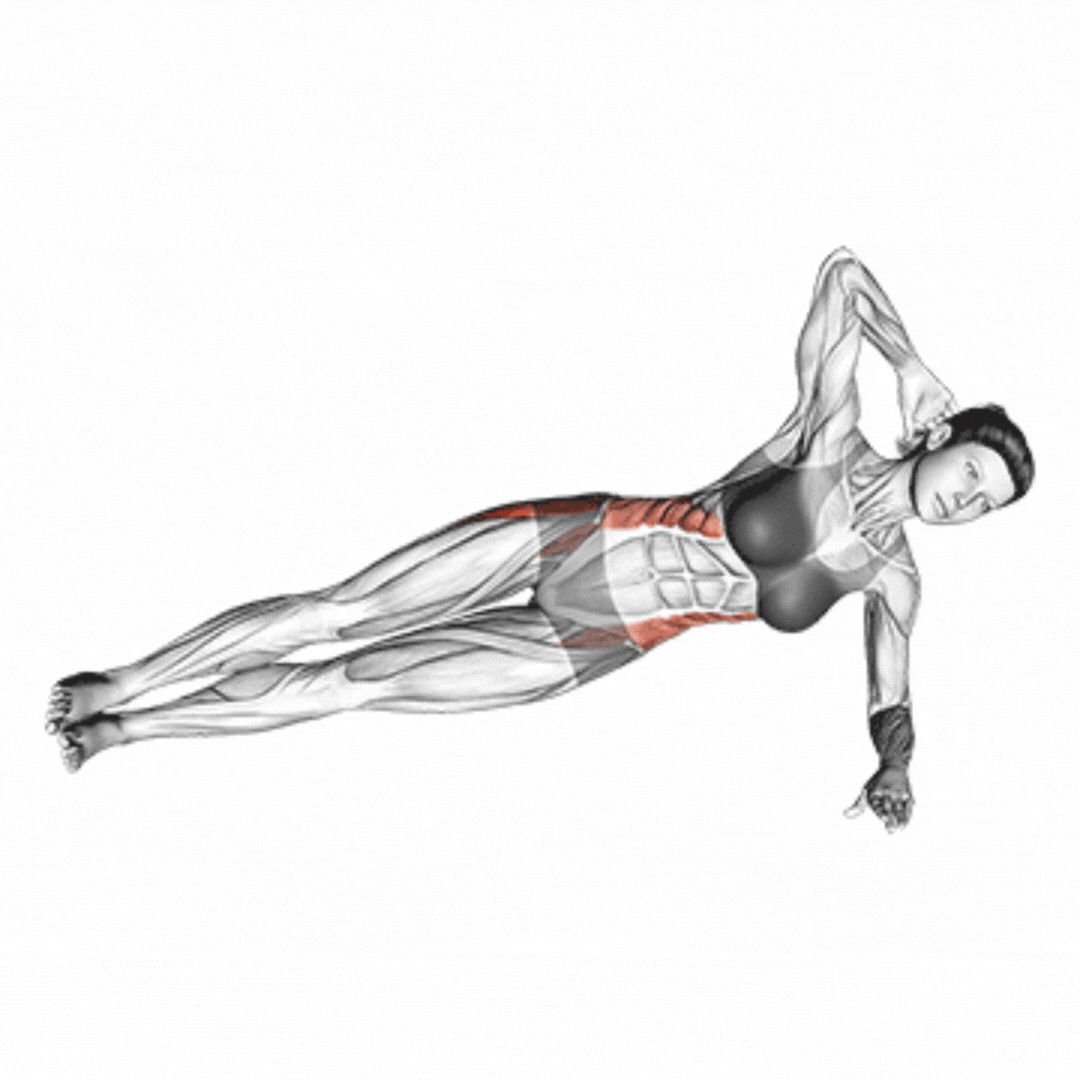
Side-Plank is a fundamental isometric exercise targeting the oblique muscles and the lateral side of the core region. This movement develops lateral stabilization by supporting the body on one arm and one side. It works the side abdominal muscles, hip muscles, and shoulder stabilizers simultaneously. Being a static movement, it minimizes joint stress and increases core endurance. Working both sides equally is important for symmetrical muscle development and postural balance. It can be adapted to every fitness level from beginners to advanced athletes and has modifications available.
Side-Plank How-To Guide
- 1
Lie on your side, place your elbow directly under your shoulder
- 2
Stack your feet or position them one in front of the other
- 3
Lift your hips, your body should form a straight line
- 4
Continue to squeeze your abdominal muscles and hips
- 5
Hold the position for 20-60 seconds and breathe deeply
- 6
Switch to the other side and work symmetrically
Key Points
- ✓Your elbow should be positioned directly under the shoulder, forearm should fully contact the ground
- ✓Keep your torso in a straight line by stacking your feet or placing them one behind the other
- ✓Keep your hips elevated, the body should form a straight line from head to toe
- ✓Maintain torso stability by keeping abdominal and glute muscles active
- ✓Keep your head aligned with your spine, avoid bending your neck
Common Mistakes
- ✗Dropping of the hips - core activation is lost and lateral stress is placed on the spine
- ✗Lifting hips too high - shoulder muscles work excessively instead of oblique muscles and form breaks down
- ✗Incorrect elbow positioning - causes compression and pain in the shoulder joint
- ✗Holding breath - muscle endurance decreases, blood pressure rises and performance drops
- ✗Rotating torso forward or backward - deviation from target muscles and torsional load on the spine
Breathing
Breathe regularly and rhythmically while maintaining the position, never hold your breath.
Muscle Activation
Safety
Precautions
- Those with lower back injuries should be careful
- Use support if there are shoulder problems
- Those with balance issues can use wall support
Safety Tips
- The body should form a straight line, don't drop your hips
- Ensure the supporting arm sits properly on the shoulder
- Don't forget to squeeze your abdominal muscles and glutes
- Start with short durations initially, gradually increase time
Frequently Asked Questions
Which muscles does Side-Plank work?
Side-Plank primarily works these muscles: Obliques, Abdominals. It also engages: Shoulders, Glutes, Quadriceps.
Is Side-Plank suitable for beginners?
Side-Plank is a Beginner level exercise. Learning difficulty: Easy.
Can Side-Plank be done at home?
Yes, Side-Plank can easily be done at home.
What are common mistakes when doing Side-Plank?
One of the most common mistakes: Dropping of the hips - core activation is lost and lateral stress is placed on the spine
How many sets and reps for Side-Plank?
Recommended: 2-3 sets and 15-25 reps.
- ✓Isolates the oblique muscles and lateral core
- ✓Develops core stabilization and balance
- ✓Supports lower back health
- ✓Corrects body alignment