.gif)
Description
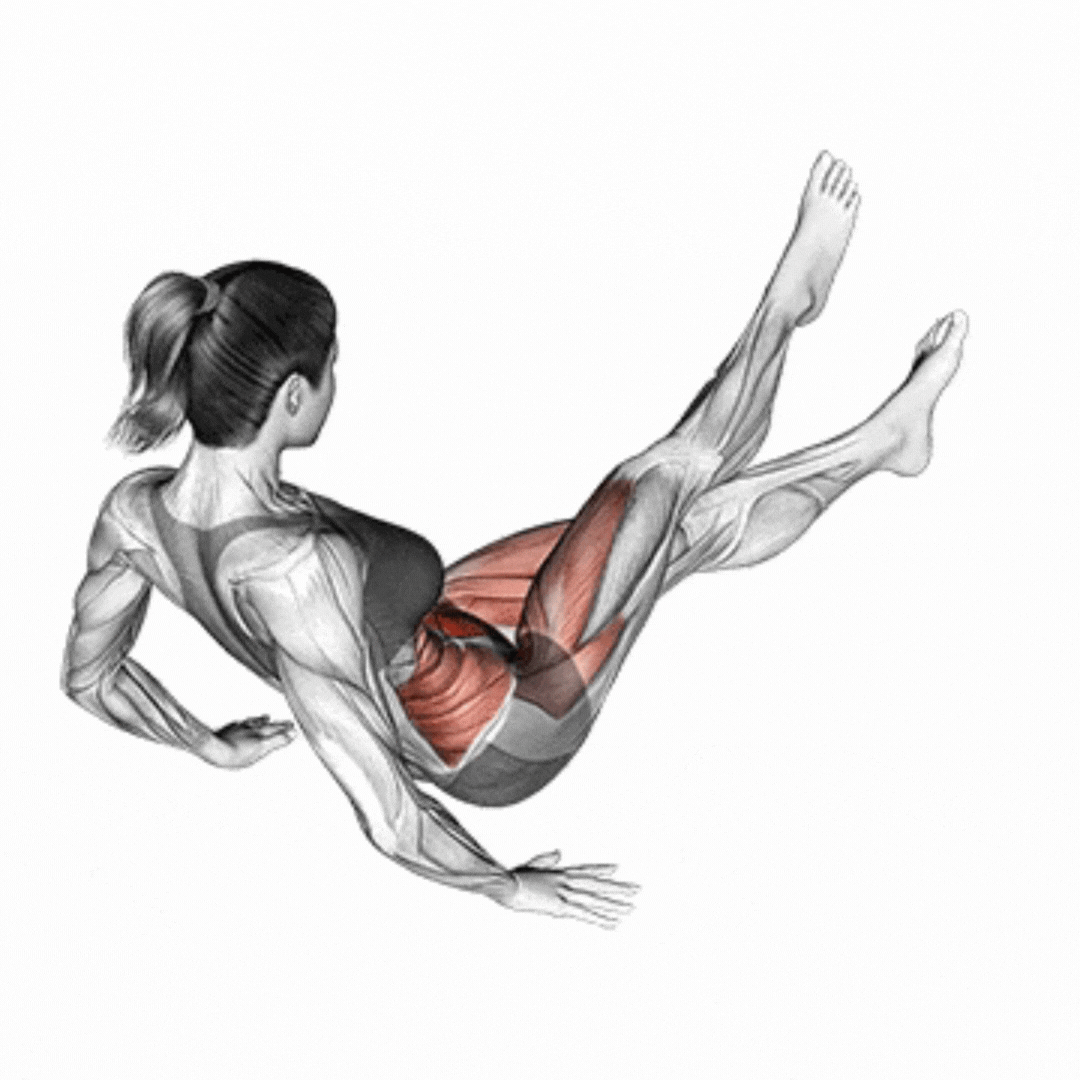
Reverse Plank is an isometric core exercise performed by keeping your body straight on your hands and heels with your face looking up at the ceiling. This movement specifically strengthens the lower back muscles, glutes, hamstrings, and posterior chain while also improving shoulder flexibility. Working in the opposite direction of the classic plank movement, it targets muscle groups in the back of the body. It is extremely beneficial for posture correction for those who work at a desk for long periods. It is a versatile exercise that simultaneously develops shoulder, wrist, and hip mobility. When practiced regularly, it contributes to reducing lower back pain and increasing overall core endurance.
Reverse Plank How-To Guide
- 1
Sit on the ground, extend your legs forward and place your hands behind your hips shoulder-width apart, with fingertips pointing forward
- 2
Lift your hips off the ground, pushing your body up to form a straight line from head to heels
- 3
Prevent your hips from dropping by squeezing your glutes and core muscles, keep your chest open
- 4
Hold this position for 20-40 seconds, continue to breathe deeply and regularly
- 5
When time is up, lower your hips to the ground in a controlled manner, rest and repeat
Key Points
- ✓Place your hands on the ground at shoulder level in a supine position
- ✓Lift your hips off the ground to create a straight line with your body
- ✓Your fingers should point toward your feet
- ✓Draw your shoulder blades together
- ✓Keep your head in a neutral position, don't tilt it back excessively
Common Mistakes
- ✗Letting the hips sag down - reduces the effectiveness of the movement
- ✗Locking the elbows - puts stress on elbow joints
- ✗Bringing shoulders toward ears - creates neck tension
- ✗Throwing head back excessively - risk of neck injury
Breathing
Breathe deeply and regularly while holding the position. Be careful to exhale as you squeeze your abdominal muscles.
Muscle Activation
Safety
Precautions
- Those with wrist injuries should avoid
- Those with lower back pain should be careful
- If you have shoulder problems, get doctor's approval
- Pregnant women should not perform this movement
Safety Tips
- Don't drop hips, body should be in a straight line
- Don't strain neck, direct your gaze to the ceiling
- Hands should be under shoulders
- Keep duration short at the beginning
Frequently Asked Questions
Which muscles does Reverse Plank work?
Reverse Plank primarily works these muscles: Abdominals, Glutes. It also engages: Shoulders, Triceps, Lower back.
Is Reverse Plank suitable for beginners?
Reverse Plank is a Intermediate level exercise. Learning difficulty: Easy.
Can Reverse Plank be done at home?
Yes, Reverse Plank can easily be done at home.
What are common mistakes when doing Reverse Plank?
One of the most common mistakes: Letting the hips sag down - reduces the effectiveness of the movement
How many sets and reps for Reverse Plank?
Recommended: 3-4 sets and 15-25 reps.
- ✓Strengthens posterior chain muscles
- ✓Improves shoulder and lower back stabilization
- ✓Activates glute and hamstring muscles
- ✓Helps with posture correction