BifitBifit
HomeExercisesBecome a Coach
Log In
HOMEEXERCISESBECOME A COACHLOG IN

Language

Legal

Terms of UsePrivacy PolicyDelete Account
BifitBifit

A modern and user-friendly mobile app that makes life easier for fitness enthusiasts. Tracking your workouts and progress is our priority.

Quick Links

  • Home
  • Exercises
  • Become a Coach
  • Download · Google Play
  • Download · App Store

Legal

  • Privacy Policy
  • Terms of Use
  • Support
  • Account Deletion

© 2026 Bifit. All rights reserved.

Designed for a healthy lifestyle

HomeExercisesResistance Band Squat

Resistance Band Squat

Legs
Quads
Beginner
Compound
3-4Set
12-20Reps
45sRest
2-1-2-0Tempo
Resistance Band Squat
Animation

Description

The Resistance Band Squat is a classic squat variation performed using a resistance band, primarily targeting the quadriceps, gluteus maximus, and hamstrings. The band is placed under the feet, and the ends are held with the hands or resting on the shoulders. This provides accommodating resistance throughout the movement, maximizing glute activation at the top position. It is highly practical as an alternative to iron equipment for home workouts and is easy to use while traveling. Due to reduced stress on the joints, it is a safe option for beginners and individuals in rehabilitation. It is also an excellent exercise for learning the squat movement pattern. When performed regularly, lower body strength, posture, and functional performance improve significantly.

Step-by-Step Instructions

  1. 1

    Place the middle of the resistance band under your feet, keeping them shoulder-width apart.

  2. 2

    Hold both ends of the band with your hands and bring them up to shoulder level, or rest them on your shoulders.

  3. 3

    Palms can face your body, and elbows should be kept pointing forward.

  4. 4

    Brace your core, keep your back straight, and keep your chest up.

  5. 5

    Lower yourself in a controlled manner by pushing your hips back and bending your knees.

  6. 6

    Descend until your thighs are parallel to the floor, ensuring your knees track in the same direction as your toes.

  7. 7

    Push through your heels and squeeze your quadriceps and glutes to stand back up.

  8. 8

    The band's resistance is highest at the top position; bring your hips to full extension.

  9. 9

    The band must remain secure and not slip from under your feet throughout the movement.

Key Points

  • ✓The band must be centered under your feet.
  • ✓The movement should initiate from the hips, not the knees.
  • ✓Keep your back straight, chest up, and core braced.
  • ✓Knees should track in the same direction as your toes.
  • ✓Push through your heels to stand up.
  • ✓Bring your hips to full extension at the top position.

Common Mistakes

  • ✗Lifting the heels off the ground - indicates poor ankle mobility.
  • ✗Letting the knees cave in (valgus) - creates joint stress.
  • ✗Letting the band slip from under the feet - disrupts movement balance.
  • ✗Rounding the back - strains the lower back.
  • ✗Inadequate range of motion - prevents full muscle engagement.
  • ✗Using a band that is too light - provides insufficient resistance.

Breathing

Inhale and brace your core as you lower down, and exhale as you stand back up.

Muscle Activation

quads0%
glutes0%
hamstrings0%
core0%
adductors0%
erector spinae0%
calves0%

Safety

Precautions

  • Individuals with acute knee injuries should exercise caution.
  • Individuals with acute lower back pain must pay close attention to form.
  • Individuals with hip joint conditions should limit their range of motion.

Safety Tips

  • Ensure the band is intact and not frayed.
  • Center the band under your feet to prevent the risk of slipping.
  • Learn to perform a bodyweight squat first.
  • Use a band with an appropriate resistance level.
  • Check your form by looking in a mirror or working with a trainer.
  • Stop the exercise if your form breaks down.

Frequently Asked Questions

Which muscles does Resistance Band Squat work?

Resistance Band Squat primarily works these muscles: Quadriceps, Gluteus maximus. It also engages: Hamstring, Adductor, Core kasları, Erector spinae, Kalf.

Is Resistance Band Squat suitable for beginners?

Resistance Band Squat is a Beginner level exercise. Learning difficulty: Easy.

Can Resistance Band Squat be done at home?

Yes, Resistance Band Squat can easily be done at home.

What are common mistakes when doing Resistance Band Squat?

One of the most common mistakes: Lifting the heels off the ground - indicates poor ankle mobility.

How many sets and reps for Resistance Band Squat?

Recommended: 3-4 sets and 12-20 reps.
Related Exercises

Exercises targeting similar muscle groups

Legs Exercises
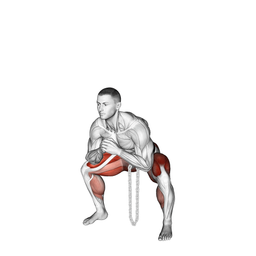
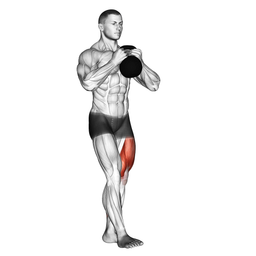
Dumbbell Goblet Curtsey Lunge

Dumbbell Goblet Curtsey Lunge

Quads

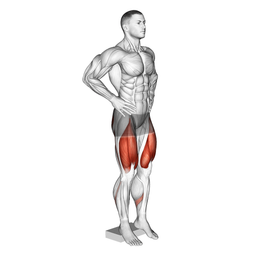
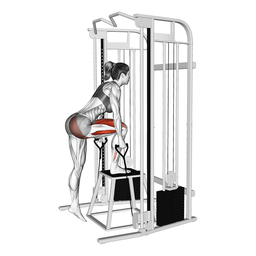
Belt Squat

Belt Squat

Quads

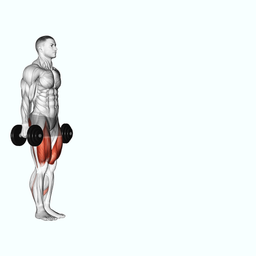
Smith Machine Squat

Smith Machine Squat

Quads

Hack Squat Musculature

Hack Squat Musculature

Quads

Reverse Hack Squat

Reverse Hack Squat

Hamstrings

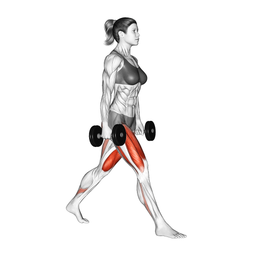
Bodyweight Lunge

Bodyweight Lunge

Quads

Exercise Information

DifficultyBeginner
Movement TypeCompound
FocusHypertrophy
Injury RiskLow
Set3-4
Reps12-20
Rest45 seconds
Tempo2-1-2-0
Spotter RequiredNo
Home / Gym
YesYes
Effectiveness3.8 / 5
Popularity7.0 / 10
Learning DifficultyEasy

Equipment

resistance band

Primary Muscles

QuadricepsGluteus maximus

Secondary Muscles

HamstringAdductorCore kaslarıErector spinaeKalf

Benefits

  • ✓Teaches the squat movement pattern in a joint-friendly way.
  • ✓Develops the quadriceps and glutes using accommodating resistance.
  • ✓Provides maximum glute activation at the top position.
  • ✓Offers a practical alternative for home workouts.
  • ✓Ideal for rehabilitation and beginners.
  • ✓Improves posture.
  • ✓Practical for travel workouts.

Goals

Muscle GainEndurance
Back to All Exercises
Resistance Band Squat
Animation

Description

The Resistance Band Squat is a classic squat variation performed using a resistance band, primarily targeting the quadriceps, gluteus maximus, and hamstrings. The band is placed under the feet, and the ends are held with the hands or resting on the shoulders. This provides accommodating resistance throughout the movement, maximizing glute activation at the top position. It is highly practical as an alternative to iron equipment for home workouts and is easy to use while traveling. Due to reduced stress on the joints, it is a safe option for beginners and individuals in rehabilitation. It is also an excellent exercise for learning the squat movement pattern. When performed regularly, lower body strength, posture, and functional performance improve significantly.

Step-by-Step Instructions

  1. 1

    Place the middle of the resistance band under your feet, keeping them shoulder-width apart.

  2. 2

    Hold both ends of the band with your hands and bring them up to shoulder level, or rest them on your shoulders.

  3. 3

    Palms can face your body, and elbows should be kept pointing forward.

  4. 4

    Brace your core, keep your back straight, and keep your chest up.

  5. 5

    Lower yourself in a controlled manner by pushing your hips back and bending your knees.

  6. 6

    Descend until your thighs are parallel to the floor, ensuring your knees track in the same direction as your toes.

  7. 7

    Push through your heels and squeeze your quadriceps and glutes to stand back up.

  8. 8

    The band's resistance is highest at the top position; bring your hips to full extension.

  9. 9

    The band must remain secure and not slip from under your feet throughout the movement.

Key Points

  • ✓The band must be centered under your feet.
  • ✓The movement should initiate from the hips, not the knees.
  • ✓Keep your back straight, chest up, and core braced.
  • ✓Knees should track in the same direction as your toes.
  • ✓Push through your heels to stand up.
  • ✓Bring your hips to full extension at the top position.

Common Mistakes

  • ✗Lifting the heels off the ground - indicates poor ankle mobility.
  • ✗Letting the knees cave in (valgus) - creates joint stress.
  • ✗Letting the band slip from under the feet - disrupts movement balance.
  • ✗Rounding the back - strains the lower back.
  • ✗Inadequate range of motion - prevents full muscle engagement.
  • ✗Using a band that is too light - provides insufficient resistance.

Breathing

Inhale and brace your core as you lower down, and exhale as you stand back up.

Back to All Exercises

Related Exercises

Exercises targeting similar muscle groups

Legs Exercises
Dumbbell Goblet Curtsey Lunge

Dumbbell Goblet Curtsey Lunge

Quads

Belt Squat

Belt Squat

Quads

Smith Machine Squat

Smith Machine Squat

Quads

Hack Squat Musculature

Hack Squat Musculature

Quads

Reverse Hack Squat

Reverse Hack Squat

Hamstrings

Bodyweight Lunge

Bodyweight Lunge

Quads