.gif)
Description
Lying Side Hip Abduction is a classic glute exercise performed by lifting the top leg while in a side-lying position, specifically isolating the gluteus medius muscle. The gluteus medius is an important muscle responsible for hip stability and maintaining pelvic balance. Strengthening this muscle significantly improves balance during walking, running, and single-leg stances. Performing the movement while lying on the side allows gravity to create resistance against the leg. Since it requires no equipment, it is frequently used in home workouts and rehabilitation programs. It is an ideal exercise for improving hip symmetry, shaping the side glute dips, and preventing knee pain. As a unilateral exercise, it is also effective in correcting muscle imbalances.
Lying Side Hip Abduction How-To Guide
- 1
Lie on your right side, bend your bottom leg to 90 degrees, and keep your top leg straight.
- 2
Rest your head on your right arm or support it with your bottom arm.
- 3
Place your left hand in front of your hips to stabilize your torso.
- 4
Your torso should form a straight line, without leaning forward or backward.
- 5
Engage your core muscles and lift your top (left) leg straight up.
- 6
Lift the leg up to 45 degrees, focusing on performing the movement with the gluteus medius.
- 7
Hold at the top position for 1-2 seconds and squeeze your side glute muscle.
- 8
Lower your leg in a controlled manner, but repeat without letting it touch the bottom leg.
- 9
After completing the target number of repetitions, switch to the other side.
Key Points
- ✓The top leg must remain straight throughout the movement; do not bend it at the knee.
- ✓The torso must be stable and in a straight line; do not shift forward or backward.
- ✓The movement should initiate from the hip; the toes should not point upward.
- ✓Do not lift the leg too high; 45 degrees is sufficient.
- ✓Perform the movement slowly and with control; do not use momentum.
Common Mistakes
- ✗Lifting the leg too high - engages the hip flexors and disengages the gluteus medius.
- ✗Leaning the torso backward - shifts the movement to the TFL, breaking target muscle isolation.
- ✗Tilting the hips backward - reduces movement quality.
- ✗Pointing the toes upward - increases TFL activation.
- ✗Performing the movement too fast - results in a loss of muscle control.
Breathing
Exhale and squeeze the gluteus medius as you lift the leg up, and inhale in a controlled manner as you lower it.
Muscle Activation
Safety
Precautions
- Individuals with acute hip pain should exercise caution.
- Those with herniated discs should pay close attention to torso stability.
- Individuals with shoulder injuries should adjust their head support position.
- Pregnant women may experience discomfort during the third trimester.
Safety Tips
- Perform the exercise on a soft mat.
- Execute the movement slowly and with control.
- Start with a light tempo first; you can add weight later (e.g., ankle weights).
- Touch the side of your hip with one hand to feel the gluteus medius working.
- Stop the exercise if your form breaks down.
Frequently Asked Questions
Which muscles does Lying Side Hip Abduction work?
Lying Side Hip Abduction primarily works these muscles: Gluteus medius. It also engages: Gluteus minimus, Tensor fasciae latae, Core kasları, Oblik kaslar.
Is Lying Side Hip Abduction suitable for beginners?
Lying Side Hip Abduction is a Beginner level exercise. Learning difficulty: Easy.
Can Lying Side Hip Abduction be done at home?
Yes, Lying Side Hip Abduction can easily be done at home.
What are common mistakes when doing Lying Side Hip Abduction?
One of the most common mistakes: Lifting the leg too high - engages the hip flexors and disengages the gluteus medius.
How many sets and reps for Lying Side Hip Abduction?
Recommended: 3-4 sets and 12-20 reps.
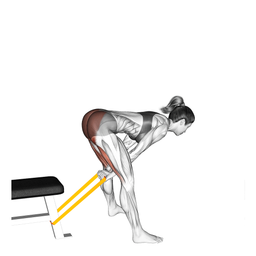
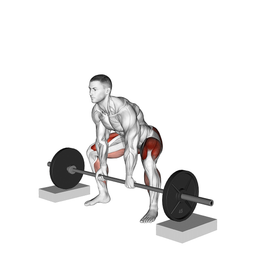
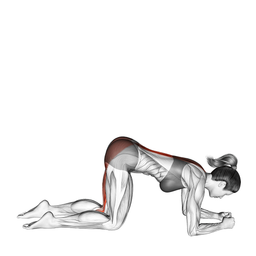
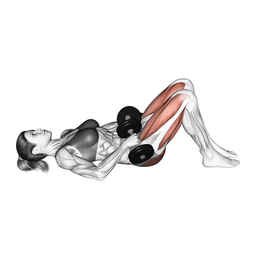
- ✓Isolates and develops the gluteus medius muscle.
- ✓Improves pelvic stability and balance.
- ✓Enhances the shape of the side glutes.
- ✓Prevents knee pain and protects the knees.
- ✓Improves walking and running mechanics.
- ✓Corrects muscle imbalances.
- ✓Ideal for rehabilitation.