.gif)
Description
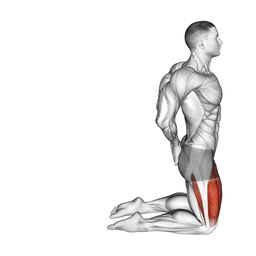
The Kneeling Squat is a squat variation performed on the knees that specifically isolates the gluteus maximus and quadriceps muscles. Unlike the classic squat, the movement does not use the full ROM of the ankle and knee joints, which ensures that the entire load of the movement is placed on the glutes and quadriceps. It is frequently used by powerlifters for glute strength development and sticking point training. At the same time, it places minimal stress on the lower back because the torso is in an upright position. It offers an alternative to the classic squat for athletes with limited hip joint mobility or insufficient ankle flexibility. When performed regularly, it provides improvements especially in glute hypertrophy, lockout strength, and the hip hinge pattern. The knees should be protected with a soft cushion or mat.
Kneeling Squat How-To Guide
- 1
Kneel on a soft mat or cushion with your knees hip-width apart.
- 2
Your toes can be positioned flat on the floor or tucked under.
- 3
Place the barbell from the squat rack on your shoulders in a high bar position (set the rack low).
- 4
Alternatively, you can load the movement with a light kettlebell or dumbbell.
- 5
Brace your core, keep your back straight, and keep your chest up.
- 6
Sit back toward your heels with a hinge movement by pushing your hips back.
- 7
Your hips should go back far enough to touch your heels (depending on your flexibility).
- 8
Push back to the starting position by squeezing your glutes and quadriceps.
- 9
Bring your hips to full extension at the top position, keeping your torso upright.
- 10
Keep your upper body upright throughout the movement; do not lean forward.
Key Points
- ✓A cushion or mat must be placed under the knees.
- ✓The movement should come from the hip hinge.
- ✓The torso must be kept upright, without leaning forward.
- ✓Push your hips back toward your heels.
- ✓The glutes must be fully squeezed at the top position.
- ✓Keep your back straight and core braced.
Common Mistakes
- ✗Leaning the torso forward - breaks glute isolation.
- ✗Lack of soft support under the knees - causes joint stress and pain.
- ✗Insufficient range of motion - prevents full muscle engagement.
- ✗Rounding the back - strains the lower back.
- ✗Over-arching the lower back - increases the risk of hyperextension.
- ✗Using too much weight and breaking form - leads to loss of control.
Breathing
Inhale and brace your core as you sit back, and exhale as you return to the starting position.
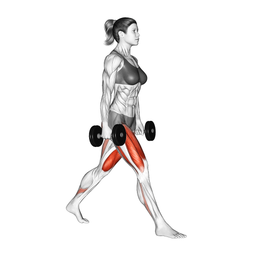
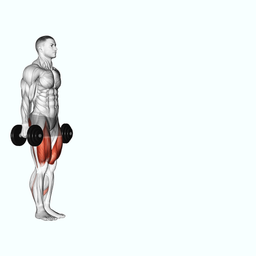
Muscle Activation
Safety
Precautions
- Individuals with acute knee injuries should avoid this exercise.
- Those with patellar tendon issues should avoid this movement.
- Individuals with acute lower back pain should pay strict attention to form control.
- Pregnant women should be cautious during their third trimester.
Safety Tips
- Place a soft mat or cushion under your knees; never perform this on bare knees.
- Practice the form with bodyweight first.
- Start with a light load and increase the weight gradually.
- Maintain a straight back at all times.
- Check your form by looking in a mirror or working with a trainer.
- Stop the exercise immediately if you feel any knee pain.
Frequently Asked Questions
Which muscles does Kneeling Squat work?
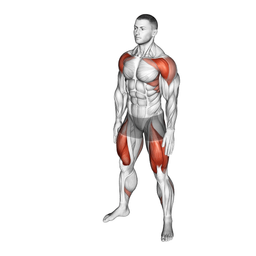
Kneeling Squat primarily works these muscles: Gluteus maximus, Quadriceps. It also engages: Hamstring, Core kasları, Erector spinae, Adductor.
Is Kneeling Squat suitable for beginners?
Kneeling Squat is a Intermediate level exercise. Learning difficulty: Moderate.
Can Kneeling Squat be done at home?
Yes, Kneeling Squat can easily be done at home.
What are common mistakes when doing Kneeling Squat?
One of the most common mistakes: Leaning the torso forward - breaks glute isolation.
How many sets and reps for Kneeling Squat?
Recommended: 3-4 sets and 8-12 reps.
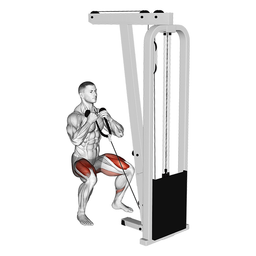
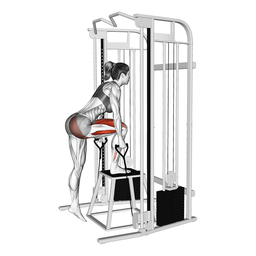
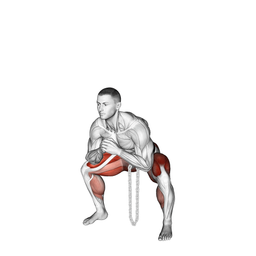
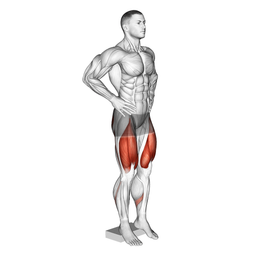
- ✓Isolates and develops the gluteus maximus muscle.
- ✓Provides an additional stimulus for quadriceps development.
- ✓Increases hip hinge and lockout strength.
- ✓Places minimal stress on the lower back.
- ✓Improves powerlifting performance.
- ✓Offers an alternative movement for glute hypertrophy.
- ✓Serves as a classic squat alternative if ankle flexibility is insufficient.