BifitBifit
HomeExercisesBecome a Coach
Log In
HOMEEXERCISESBECOME A COACHLOG IN

Language

Legal

Terms of UsePrivacy PolicyDelete Account
BifitBifit

A modern and user-friendly mobile app that makes life easier for fitness enthusiasts. Tracking your workouts and progress is our priority.

Quick Links

  • Home
  • Exercises
  • Become a Coach
  • Download · Google Play
  • Download · App Store

Legal

  • Privacy Policy
  • Terms of Use
  • Support
  • Account Deletion

© 2026 Bifit. All rights reserved.

Designed for a healthy lifestyle

HomeExercisesKettlebell Sumo Squat

Kettlebell Sumo Squat

Legs
Inner Thigh
Beginner
Compound
3-4Set
10-15Reps
60sRest
2-1-2-0Tempo
Kettlebell Sumo Squat
Animation

Description

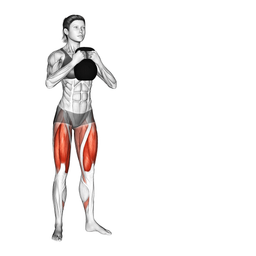
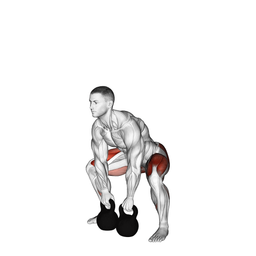
The Kettlebell Sumo Squat is a squat variation performed with a wide stance that intensely targets the inner thigh (adductor) muscles. It is performed by holding a kettlebell with both hands in front of the chest in a goblet position or hanging between the legs. Unlike a traditional squat, the feet are positioned much wider than shoulder-width apart with the toes pointing outward. This stance loads the hip joint from a different angle, more intensely activating the adductors, gluteus medius, and quadriceps. At the same time, the torso remains more upright, reducing stress on the lower back. It is ideal for inner thigh development, hip mobility, and functional lower body strength. Thanks to the compact nature of the kettlebell, it is practical for home workouts. It offers a safe alternative to the barbell sumo squat for athletes with lower back issues.

Step-by-Step Instructions

  1. 1

    Step your feet much wider than shoulder-width apart, with your toes pointing outward at a 30-45 degree angle.

  2. 2

    Hold the kettlebell with both hands at chest level in a goblet position, or let it hang between your legs.

  3. 3

    Engage your core, keep your back straight, and keep your chest up.

  4. 4

    Lower yourself by pushing your hips back, ensuring your knees track in the same direction as your toes.

  5. 5

    Descend until your thighs are parallel to the floor, keeping your torso upright.

  6. 6

    Push through your heels and squeeze your adductors, glutes, and quadriceps to stand back up.

  7. 7

    Fully extend your hips at the top position.

  8. 8

    Keep your knees pushed out throughout the movement; do not let them cave in.

  9. 9

    Adjust your stance wide enough to feel the tension in your inner thigh muscles.

Key Points

  • ✓Your stance should be significantly wider than shoulder-width.
  • ✓Toes should be pointed outward at a 30-45 degree angle.
  • ✓Knees must track in the same direction as your toes and not cave inward.
  • ✓Keep your torso upright; the sumo stance provides a depth advantage.
  • ✓Keep the kettlebell close to your body.
  • ✓Generate power by pushing through your heels.

Common Mistakes

  • ✗Letting the knees cave in - creates joint stress and disengages the adductors.
  • ✗Not taking a wide enough stance - shifts the target muscle pattern.
  • ✗Rounding the back - increases the risk of lower back injury.
  • ✗Not pointing the toes outward - limits hip rotation.
  • ✗Pushing through the toes instead of the heels - disrupts power transfer.
  • ✗Holding the kettlebell too low - compromises posture.

Breathing

Inhale and brace your core as you lower down, exhale as you stand back up.

Muscle Activation

adductors0%
glutes0%
quads0%
gluteus medius0%
hamstrings0%
core0%
calves0%

Safety

Precautions

  • Individuals with acute knee injuries should exercise caution.
  • Those with hip joint issues should limit their stance width.
  • People with adductor injuries should avoid this exercise.
  • Individuals with acute lower back pain must pay strict attention to form.

Safety Tips

  • Learn the sumo squat with bodyweight first.
  • Start with a light kettlebell.
  • Adjust your stance width according to your flexibility.
  • Keep your knees tracking in the same direction as your toes.
  • Check your knee alignment by looking in a mirror.
  • Stop the exercise if your form breaks down.

Frequently Asked Questions

Which muscles does Kettlebell Sumo Squat work?

Kettlebell Sumo Squat primarily works these muscles: Adductor, Quadriceps, Gluteus maximus. It also engages: Hamstring, Gluteus medius, Core kasları, Kalf.

Is Kettlebell Sumo Squat suitable for beginners?

Kettlebell Sumo Squat is a Beginner level exercise. Learning difficulty: Easy.

Can Kettlebell Sumo Squat be done at home?

Yes, Kettlebell Sumo Squat can easily be done at home.

What are common mistakes when doing Kettlebell Sumo Squat?

One of the most common mistakes: Letting the knees cave in - creates joint stress and disengages the adductors.

How many sets and reps for Kettlebell Sumo Squat?

Recommended: 3-4 sets and 10-15 reps.
Related Exercises

Exercises targeting similar muscle groups

Legs Exercises
Dumbbell Goblet Curtsey Lunge

Dumbbell Goblet Curtsey Lunge

Quads

Belt Squat

Belt Squat

Quads

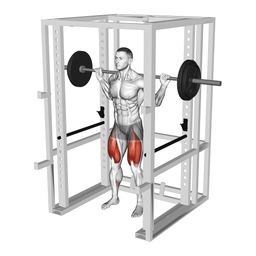
Smith Machine Squat

Smith Machine Squat

Quads

Hack Squat Musculature

Hack Squat Musculature

Quads

Reverse Hack Squat

Reverse Hack Squat

Hamstrings

Bodyweight Lunge

Bodyweight Lunge

Quads

Exercise Information

DifficultyBeginner
Movement TypeCompound
FocusHypertrophy
Injury RiskLow
Set3-4
Reps10-15
Rest60 seconds
Tempo2-1-2-0
Spotter RequiredNo
Home / Gym
YesYes
Effectiveness4.0 / 5
Popularity7.0 / 10
Learning DifficultyEasy

Equipment

kettlebell

Primary Muscles

AdductorQuadricepsGluteus maximus

Secondary Muscles

HamstringGluteus mediusCore kaslarıKalf

Benefits

  • ✓Isolates and develops the inner thigh (adductor) muscles.
  • ✓Increases hip mobility and range of motion.
  • ✓Strengthens the quadriceps and glutes simultaneously.
  • ✓Places minimal stress on the lower back.
  • ✓Builds functional lower body strength.
  • ✓Improves sumo squat and conventional deadlift performance.
  • ✓Develops mobility in a wide squat stance.
  • ✓Provides a practical alternative for home workouts.

Goals

Muscle GainStrength
Back to All Exercises
Kettlebell Sumo Squat
Animation

Description

The Kettlebell Sumo Squat is a squat variation performed with a wide stance that intensely targets the inner thigh (adductor) muscles. It is performed by holding a kettlebell with both hands in front of the chest in a goblet position or hanging between the legs. Unlike a traditional squat, the feet are positioned much wider than shoulder-width apart with the toes pointing outward. This stance loads the hip joint from a different angle, more intensely activating the adductors, gluteus medius, and quadriceps. At the same time, the torso remains more upright, reducing stress on the lower back. It is ideal for inner thigh development, hip mobility, and functional lower body strength. Thanks to the compact nature of the kettlebell, it is practical for home workouts. It offers a safe alternative to the barbell sumo squat for athletes with lower back issues.

Step-by-Step Instructions

  1. 1

    Step your feet much wider than shoulder-width apart, with your toes pointing outward at a 30-45 degree angle.

  2. 2

    Hold the kettlebell with both hands at chest level in a goblet position, or let it hang between your legs.

  3. 3

    Engage your core, keep your back straight, and keep your chest up.

  4. 4

    Lower yourself by pushing your hips back, ensuring your knees track in the same direction as your toes.

  5. 5

    Descend until your thighs are parallel to the floor, keeping your torso upright.

  6. 6

    Push through your heels and squeeze your adductors, glutes, and quadriceps to stand back up.

  7. 7

    Fully extend your hips at the top position.

  8. 8

    Keep your knees pushed out throughout the movement; do not let them cave in.

  9. 9

    Adjust your stance wide enough to feel the tension in your inner thigh muscles.

Key Points

  • ✓Your stance should be significantly wider than shoulder-width.
  • ✓Toes should be pointed outward at a 30-45 degree angle.
  • ✓Knees must track in the same direction as your toes and not cave inward.
  • ✓Keep your torso upright; the sumo stance provides a depth advantage.
  • ✓Keep the kettlebell close to your body.
  • ✓Generate power by pushing through your heels.

Common Mistakes

  • ✗Letting the knees cave in - creates joint stress and disengages the adductors.
  • ✗Not taking a wide enough stance - shifts the target muscle pattern.
  • ✗Rounding the back - increases the risk of lower back injury.
  • ✗Not pointing the toes outward - limits hip rotation.
  • ✗Pushing through the toes instead of the heels - disrupts power transfer.
  • ✗Holding the kettlebell too low - compromises posture.

Breathing

Inhale and brace your core as you lower down, exhale as you stand back up.

Back to All Exercises

Related Exercises

Exercises targeting similar muscle groups

Legs Exercises
Dumbbell Goblet Curtsey Lunge

Dumbbell Goblet Curtsey Lunge

Quads

Belt Squat

Belt Squat

Quads

Smith Machine Squat

Smith Machine Squat

Quads

Hack Squat Musculature

Hack Squat Musculature

Quads

Reverse Hack Squat

Reverse Hack Squat

Hamstrings

Bodyweight Lunge

Bodyweight Lunge

Quads