BifitBifit
HomeExercisesBecome a Coach
Log In
HOMEEXERCISESBECOME A COACHLOG IN

Language

Legal

Terms of UsePrivacy PolicyDelete Account
BifitBifit

A modern and user-friendly mobile app that makes life easier for fitness enthusiasts. Tracking your workouts and progress is our priority.

Quick Links

  • Home
  • Exercises
  • Become a Coach
  • Download · Google Play
  • Download · App Store

Legal

  • Privacy Policy
  • Terms of Use
  • Support
  • Account Deletion

© 2026 Bifit. All rights reserved.

Designed for a healthy lifestyle

HomeExercisesKettlebell Single Leg Deadlift

Kettlebell Single Leg Deadlift

Legs
Hamstrings
Advanced
Compound
3-4Set
6-10Reps
75sRest
3-1-2-0Tempo
Kettlebell Single Leg Deadlift
Animation

Description

The Kettlebell Single Leg Deadlift is an advanced compound exercise performed on one leg with a kettlebell, targeting the hamstrings, gluteus maximus, and core muscles. Because it is performed on a single leg, it significantly improves balance, coordination, and proprioception. It provides more intense hamstring activation compared to a bilateral deadlift since the entire body weight is supported by one leg. It also increases anti-rotation core strength and corrects unilateral muscle imbalances. For athletes, it enhances single-leg functions such as sprinting, jumping, and changing directions, while reducing the risk of injury. It is frequently used in post-injury rehabilitation programs as well. Thanks to the compact nature of the kettlebell, it is a practical option for home workouts.

Step-by-Step Instructions

  1. 1

    Hold a single kettlebell in one hand by your side (usually the hand opposite to the working leg).

  2. 2

    Stand with your feet hip-width apart and shift your weight onto one leg (the working leg).

  3. 3

    Slightly bend the knee of your working leg and lift your other leg slightly off the ground.

  4. 4

    Engage your core, keep your back straight, and pull your shoulders back.

  5. 5

    Hinge at the hips by pushing them back, leaning forward, and lowering the kettlebell toward the floor.

  6. 6

    Simultaneously extend your back leg straight behind you, forming a straight line from your torso to your back leg.

  7. 7

    Lower yourself until you feel a stretch in your hamstrings; your torso should be parallel or close to parallel to the floor.

  8. 8

    Drive through the heel of your working leg and squeeze your glutes and hamstrings to return to the starting position.

  9. 9

    Complete the desired number of repetitions, then repeat the same movement with the other leg.

Key Points

  • ✓The movement should come from a hip hinge, not from the lower back.
  • ✓The knee of the working leg should remain slightly bent and stable.
  • ✓The torso and back leg should remain in a straight line throughout the movement.
  • ✓The back must be kept straight and never rounded.
  • ✓The hips should remain parallel to the floor and not tilt to the side (anti-rotation).

Common Mistakes

  • ✗Opening the hips to the side - breaks movement symmetry and prevents even hamstring engagement.
  • ✗Rounding the back - poses a serious risk for lower back injury.
  • ✗Bending the working knee too much - turns the movement into a squat.
  • ✗Not lifting the back leg off the ground or lifting it too high - causes instability.
  • ✗Choosing a kettlebell that is too heavy - compromises form on a single leg.
  • ✗Performing the movement too fast - leads to loss of balance and increases injury risk.

Breathing

Inhale and brace your core as you hinge forward, and exhale as you return to the starting position. Breath control is critical for balance.

Muscle Activation

hamstrings0%
glutes0%
core0%
lower back0%
gluteus medius0%
erector spinae0%
calves0%
adductors0%

Safety

Precautions

  • Individuals with acute lower back pain or a herniated disc should exercise caution.
  • Those with hamstring injuries should limit their range of motion.
  • Individuals with balance issues should start by holding onto a supportive surface.
  • Those with acute knee injuries should avoid this exercise.
  • Patients with high blood pressure should be careful.

Safety Tips

  • Learn the movement pattern without a kettlebell first.
  • Start with a light kettlebell to master your balance.
  • You can perform it supported initially by holding onto a wall or bench.
  • Check your form by looking in a mirror or working with a trainer.
  • Stop the movement and reduce the weight if your form breaks down.
  • Better balance is achieved barefoot or with minimalist shoes.

Frequently Asked Questions

Which muscles does Kettlebell Single Leg Deadlift work?

Kettlebell Single Leg Deadlift primarily works these muscles: Hamstring, Gluteus maximus. It also engages: Alt sırt, Core kasları, Gluteus medius, Erector spinae, Kalf, Adductor.

Is Kettlebell Single Leg Deadlift suitable for beginners?

Kettlebell Single Leg Deadlift is a Advanced level exercise. Learning difficulty: Hard.

Can Kettlebell Single Leg Deadlift be done at home?

Yes, Kettlebell Single Leg Deadlift can easily be done at home.

What are common mistakes when doing Kettlebell Single Leg Deadlift?

One of the most common mistakes: Opening the hips to the side - breaks movement symmetry and prevents even hamstring engagement.

How many sets and reps for Kettlebell Single Leg Deadlift?

Recommended: 3-4 sets and 6-10 reps.
Related Exercises

Exercises targeting similar muscle groups

Legs Exercises
Dumbbell Goblet Curtsey Lunge

Dumbbell Goblet Curtsey Lunge

Quads

Belt Squat

Belt Squat

Quads

Smith Machine Squat

Smith Machine Squat

Quads

Hack Squat Musculature

Hack Squat Musculature

Quads

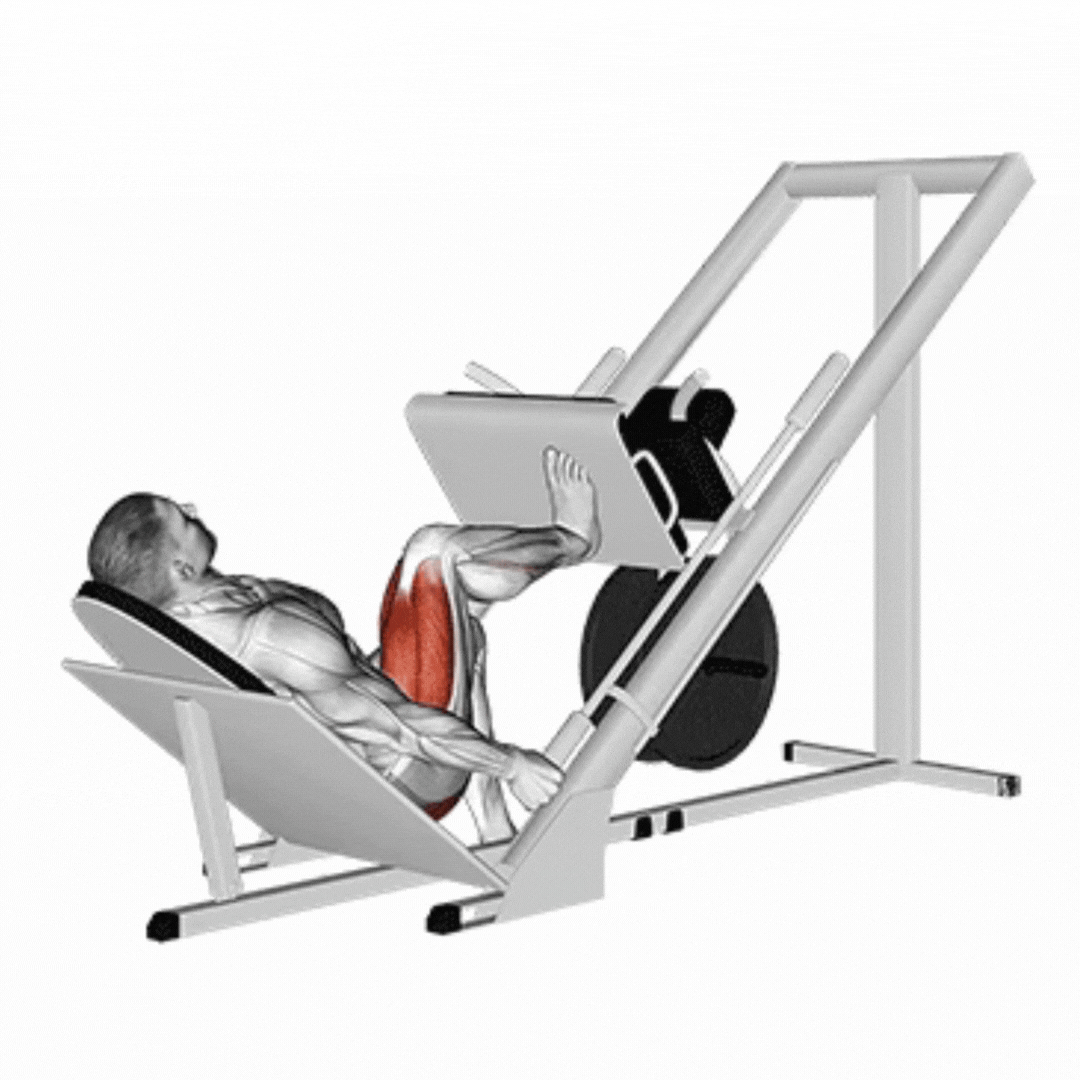
Reverse Hack Squat

Reverse Hack Squat

Hamstrings

Bodyweight Lunge

Bodyweight Lunge

Quads

Exercise Information

DifficultyAdvanced
Movement TypeCompound
FocusStrength
Injury RiskMedium
Set3-4
Reps6-10
Rest75 seconds
Tempo3-1-2-0
Spotter RequiredNo
Home / Gym
YesYes
Effectiveness4.4 / 5
Popularity7.0 / 10
Learning DifficultyHard

Equipment

kettlebell

Primary Muscles

HamstringGluteus maximus

Secondary Muscles

Alt sırtCore kaslarıGluteus mediusErector spinaeKalfAdductor

Benefits

  • ✓Intensely targets the hamstring muscles on a single leg.
  • ✓Isolates and develops the gluteus maximus.
  • ✓Significantly improves balance and coordination.
  • ✓Corrects unilateral muscle imbalances.
  • ✓Increases anti-rotation core strength.
  • ✓Directly enhances athletic performance (sprinting, jumping).
  • ✓Reduces the risk of hamstring injuries.
  • ✓Improves proprioception and joint stability.

Goals

StrengthMuscle Gain
Back to All Exercises
Kettlebell Single Leg Deadlift
Animation

Description

The Kettlebell Single Leg Deadlift is an advanced compound exercise performed on one leg with a kettlebell, targeting the hamstrings, gluteus maximus, and core muscles. Because it is performed on a single leg, it significantly improves balance, coordination, and proprioception. It provides more intense hamstring activation compared to a bilateral deadlift since the entire body weight is supported by one leg. It also increases anti-rotation core strength and corrects unilateral muscle imbalances. For athletes, it enhances single-leg functions such as sprinting, jumping, and changing directions, while reducing the risk of injury. It is frequently used in post-injury rehabilitation programs as well. Thanks to the compact nature of the kettlebell, it is a practical option for home workouts.

Step-by-Step Instructions

  1. 1

    Hold a single kettlebell in one hand by your side (usually the hand opposite to the working leg).

  2. 2

    Stand with your feet hip-width apart and shift your weight onto one leg (the working leg).

  3. 3

    Slightly bend the knee of your working leg and lift your other leg slightly off the ground.

  4. 4

    Engage your core, keep your back straight, and pull your shoulders back.

  5. 5

    Hinge at the hips by pushing them back, leaning forward, and lowering the kettlebell toward the floor.

  6. 6

    Simultaneously extend your back leg straight behind you, forming a straight line from your torso to your back leg.

  7. 7

    Lower yourself until you feel a stretch in your hamstrings; your torso should be parallel or close to parallel to the floor.

  8. 8

    Drive through the heel of your working leg and squeeze your glutes and hamstrings to return to the starting position.

  9. 9

    Complete the desired number of repetitions, then repeat the same movement with the other leg.

Key Points

  • ✓The movement should come from a hip hinge, not from the lower back.
  • ✓The knee of the working leg should remain slightly bent and stable.
  • ✓The torso and back leg should remain in a straight line throughout the movement.
  • ✓The back must be kept straight and never rounded.
  • ✓The hips should remain parallel to the floor and not tilt to the side (anti-rotation).

Common Mistakes

  • ✗Opening the hips to the side - breaks movement symmetry and prevents even hamstring engagement.
  • ✗Rounding the back - poses a serious risk for lower back injury.
  • ✗Bending the working knee too much - turns the movement into a squat.
  • ✗Not lifting the back leg off the ground or lifting it too high - causes instability.
  • ✗Choosing a kettlebell that is too heavy - compromises form on a single leg.
  • ✗Performing the movement too fast - leads to loss of balance and increases injury risk.

Breathing

Inhale and brace your core as you hinge forward, and exhale as you return to the starting position. Breath control is critical for balance.

Back to All Exercises

Related Exercises

Exercises targeting similar muscle groups

Legs Exercises
Dumbbell Goblet Curtsey Lunge

Dumbbell Goblet Curtsey Lunge

Quads

Belt Squat

Belt Squat

Quads

Smith Machine Squat

Smith Machine Squat

Quads

Hack Squat Musculature

Hack Squat Musculature

Quads

Reverse Hack Squat

Reverse Hack Squat

Hamstrings

Bodyweight Lunge

Bodyweight Lunge

Quads