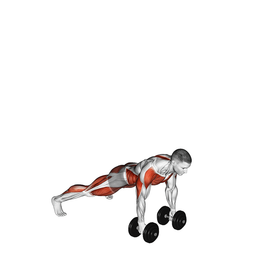
BifitBifit
HomeExercisesBecome a Coach
Log In
HOMEEXERCISESBECOME A COACHLOG IN

Language

Legal

Terms of UsePrivacy PolicyDelete Account
BifitBifit

A modern and user-friendly mobile app that makes life easier for fitness enthusiasts. Tracking your workouts and progress is our priority.

Quick Links

  • Home
  • Exercises
  • Become a Coach
  • Download · Google Play
  • Download · App Store

Legal

  • Privacy Policy
  • Terms of Use
  • Support
  • Account Deletion

© 2026 Bifit. All rights reserved.

Designed for a healthy lifestyle

HomeExercisesDumbbell Step Up

Dumbbell Step Up

Cardio
Cardio
Intermediate
Compound
3-4Set
8-12 (her bacak)Reps
60sRest
2-1-2-0Tempo
Dumbbell Step Up
Animation

Description

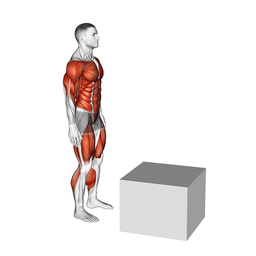
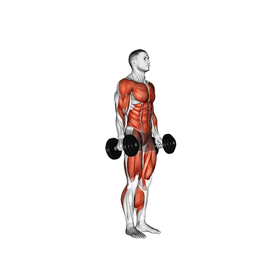
The Dumbbell Step Up is a functional exercise performed by stepping onto a platform or bench with one leg while holding dumbbells in both hands, building both strength and conditioning. Thanks to its unilateral nature, it intensely targets the quadriceps, glutes, and hamstrings while correcting strength imbalances between the legs. The added dumbbell load elevates the heart rate, increasing its cardiovascular effect; therefore, it is frequently used as a lower-body focused conditioning movement in MetCon and HIIT sessions. It also improves balance, coordination, and core stabilization. When performed regularly, it provides significant improvements in unilateral leg strength, hip stability, and functional athletic performance.

Step-by-Step Instructions

  1. 1

    Grab a dumbbell in each hand, letting your arms hang by your sides with a neutral grip.

  2. 2

    Stand tall in front of a sturdy, non-slip platform or bench (typically 30-50 cm high).

  3. 3

    Keep your back straight, shoulders pulled back, and core muscles engaged.

  4. 4

    Place one foot firmly on the platform, ensuring your entire foot is in contact with the surface.

  5. 5

    Drive powerfully through the heel of your elevated foot to lift your body upward.

  6. 6

    Once on the platform, plant both feet and bring your hips into full extension.

  7. 7

    Step back down with the same leg in a controlled manner to return to the starting position.

  8. 8

    Complete the target number of repetitions on one leg before switching to the other.

  9. 9

    Ensure your knee tracks in line with your toes throughout the movement and does not cave inward.

  10. 10

    Keep your torso upright and stable without swinging the dumbbells.

Key Points

  • ✓Plant your entire foot firmly on the platform.
  • ✓Drive through the heel of the elevated leg.
  • ✓Keep your knee tracking over your toes.
  • ✓Keep your torso upright and stable.
  • ✓Control the descent; do not drop or bounce.

Common Mistakes

  • ✗Pushing off with the bottom leg - reduces the workload on the target leg.
  • ✗Letting the knee cave inward - increases the risk of knee injury.
  • ✗Swinging to get up - using momentum leads to a breakdown in form.
  • ✗Choosing a platform that is too high - causes lower back compensation.
  • ✗Swinging the dumbbells - compromises shoulder and core stability.

Breathing

Exhale as you step up, inhale as you step down.

Muscle Activation

quadriceps0%
glutes0%
hamstrings0%
forearms0%
core0%
calves0%

Safety

Precautions

  • Individuals with acute knee injuries should exercise caution.
  • Individuals with acute lower back pain should exercise caution.
  • Those with balance issues should use a lower platform or hold onto a support.

Safety Tips

  • Use a sturdy, non-slip platform.
  • Start with a lower step height.
  • Learn the form using light dumbbells.
  • Ensure the knee tracks over the toes.
  • Stop the exercise if your form breaks down.

Frequently Asked Questions

Which muscles does Dumbbell Step Up work?

Dumbbell Step Up primarily works these muscles: Quadriceps, Kalça kasları. It also engages: Hamstring, Baldırlar, Core kasları, Ön Kol.

Is Dumbbell Step Up suitable for beginners?

Dumbbell Step Up is a Intermediate level exercise. Learning difficulty: Easy.

Can Dumbbell Step Up be done at home?

Yes, Dumbbell Step Up can easily be done at home.

What are common mistakes when doing Dumbbell Step Up?

One of the most common mistakes: Pushing off with the bottom leg - reduces the workload on the target leg.

How many sets and reps for Dumbbell Step Up?

Recommended: 3-4 sets and 8-12 (her bacak) reps.
Related Exercises

Exercises targeting similar muscle groups

Cardio Exercises
Row Machine

Row Machine

Cardio

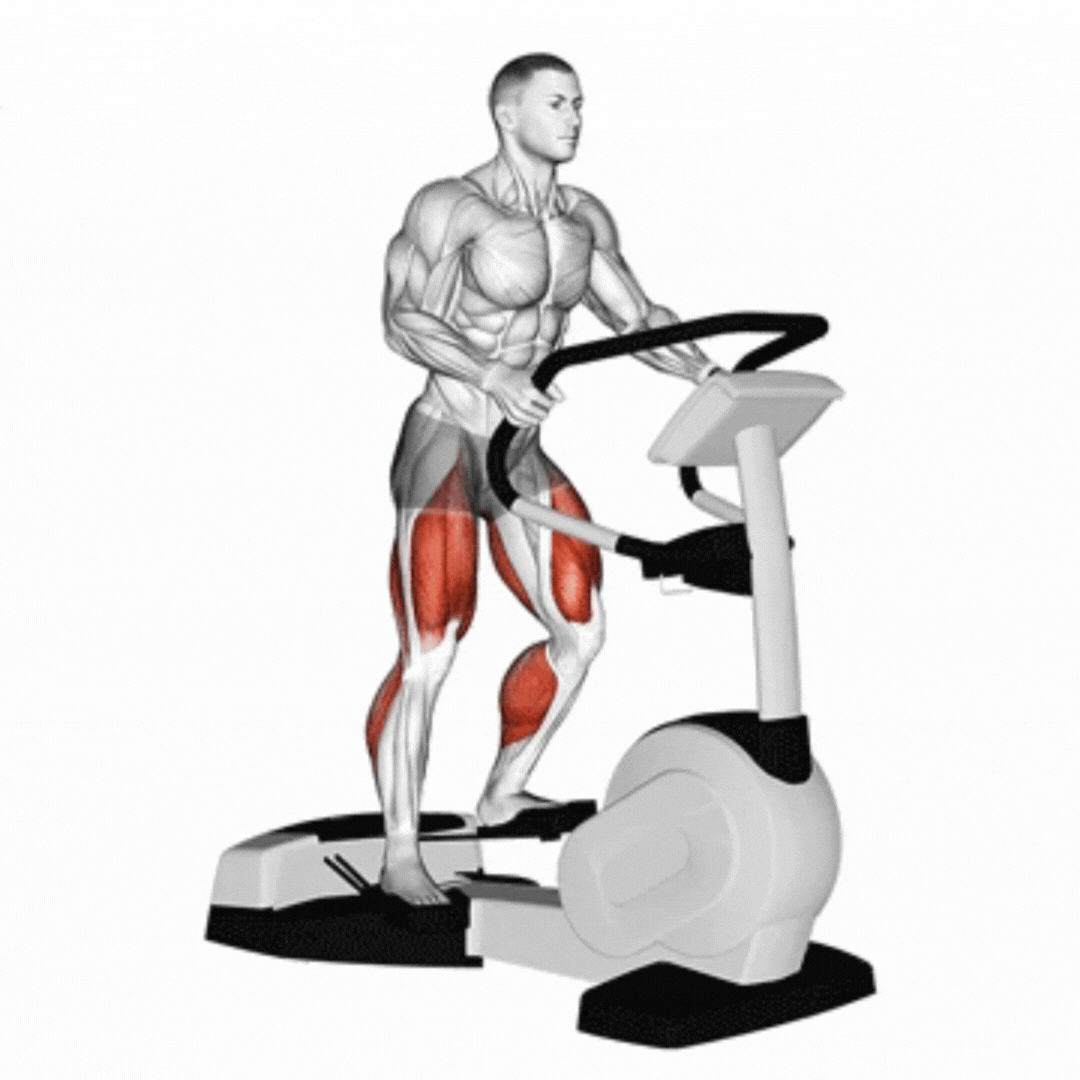
Elliptical Machine for Aerobic Exercises

Elliptical Machine for Aerobic Exercises

Cardio

Incline Treadmill

Incline Treadmill

Cardio

Hands Bike

Hands Bike

Cardio

Recumbent Exercise Bike

Recumbent Exercise Bike

Cardio

Assault AirBike

Assault AirBike

Cardio

Exercise Information

DifficultyIntermediate
Movement TypeCompound
FocusHypertrophy
Injury RiskLow
Set3-4
Reps8-12 (her bacak)
Rest60 seconds
Tempo2-1-2-0
Spotter RequiredNo
Home / Gym
YesYes
Effectiveness4.4 / 5
Popularity7.6 / 10
Learning DifficultyEasy

Equipment

dumbbellplyo box

Primary Muscles

QuadricepsKalça kasları

Secondary Muscles

HamstringBaldırlarCore kaslarıÖn Kol

Benefits

  • ✓Develops unilateral leg strength.
  • ✓Corrects strength imbalances between the legs.
  • ✓Increases hip and knee stability.
  • ✓Improves functional daily movement quality.
  • ✓Elevates heart rate, providing a cardiovascular effect.

Goals

Muscle GainStrengthEndurance
Back to All Exercises
Dumbbell Step Up
Animation

Description

The Dumbbell Step Up is a functional exercise performed by stepping onto a platform or bench with one leg while holding dumbbells in both hands, building both strength and conditioning. Thanks to its unilateral nature, it intensely targets the quadriceps, glutes, and hamstrings while correcting strength imbalances between the legs. The added dumbbell load elevates the heart rate, increasing its cardiovascular effect; therefore, it is frequently used as a lower-body focused conditioning movement in MetCon and HIIT sessions. It also improves balance, coordination, and core stabilization. When performed regularly, it provides significant improvements in unilateral leg strength, hip stability, and functional athletic performance.

Step-by-Step Instructions

  1. 1

    Grab a dumbbell in each hand, letting your arms hang by your sides with a neutral grip.

  2. 2

    Stand tall in front of a sturdy, non-slip platform or bench (typically 30-50 cm high).

  3. 3

    Keep your back straight, shoulders pulled back, and core muscles engaged.

  4. 4

    Place one foot firmly on the platform, ensuring your entire foot is in contact with the surface.

  5. 5

    Drive powerfully through the heel of your elevated foot to lift your body upward.

  6. 6

    Once on the platform, plant both feet and bring your hips into full extension.

  7. 7

    Step back down with the same leg in a controlled manner to return to the starting position.

  8. 8

    Complete the target number of repetitions on one leg before switching to the other.

  9. 9

    Ensure your knee tracks in line with your toes throughout the movement and does not cave inward.

  10. 10

    Keep your torso upright and stable without swinging the dumbbells.

Key Points

  • ✓Plant your entire foot firmly on the platform.
  • ✓Drive through the heel of the elevated leg.
  • ✓Keep your knee tracking over your toes.
  • ✓Keep your torso upright and stable.
  • ✓Control the descent; do not drop or bounce.

Common Mistakes

  • ✗Pushing off with the bottom leg - reduces the workload on the target leg.
  • ✗Letting the knee cave inward - increases the risk of knee injury.
  • ✗Swinging to get up - using momentum leads to a breakdown in form.
  • ✗Choosing a platform that is too high - causes lower back compensation.
  • ✗Swinging the dumbbells - compromises shoulder and core stability.

Breathing

Exhale as you step up, inhale as you step down.

Back to All Exercises

Related Exercises

Exercises targeting similar muscle groups

Cardio Exercises
Row Machine

Row Machine

Cardio

Elliptical Machine for Aerobic Exercises

Elliptical Machine for Aerobic Exercises

Cardio

Incline Treadmill

Incline Treadmill

Cardio

Hands Bike

Hands Bike

Cardio

Recumbent Exercise Bike

Recumbent Exercise Bike

Cardio

Assault AirBike

Assault AirBike

Cardio