.gif)
Description
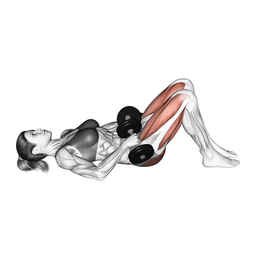
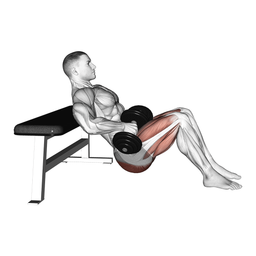
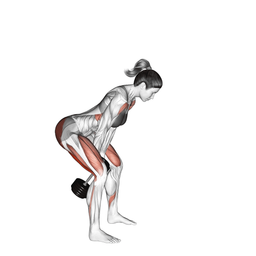
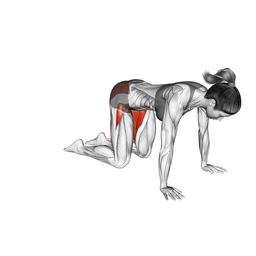
The Dumbbell Single Leg Glute Bridge is an advanced glute bridge variation that increases glute isolation through unilateral work and elevates intensity with dumbbell resistance. Because it is performed on one leg, each glute muscle is worked individually, helping to correct muscle imbalances. It also improves core stabilization and balance skills. It is more challenging than the standard dumbbell glute bridge because the body weight shifts to a single leg, resulting in higher glute activation compared to the bilateral version. For athletes, it is a critical exercise for increasing power in sprinting, jumping, and change-of-direction movements. It is also frequently used in post-injury rehabilitation as it helps correct asymmetrical hip strength.
Dumbbell Single Leg Glute Bridge How-To Guide
- 1
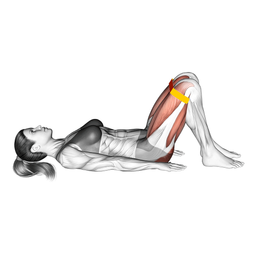
Lie flat on your back on the floor, bend your knees to 90 degrees, and plant your feet flat on the ground.
- 2
Place a dumbbell horizontally across your hips, slightly below the pelvic bone.
- 3
Grip the dumbbell firmly with both hands to keep it balanced.
- 4
Lift your right leg off the floor, bringing it to knee level or extending it toward the ceiling.
- 5
Drive through your left heel to lift your hips upward, squeezing your glutes maximally.
- 6
At the top position, your shoulders, hips, and left knee should form a straight line; hold and squeeze for 1-2 seconds.
- 7
Lower your hips in a controlled manner, but repeat the movement without letting them completely touch the floor.
- 8
After completing the desired number of repetitions, perform the same movement with the other leg.
Key Points
- ✓Initiate the movement by driving through the heel of the working leg.
- ✓The elevated leg should remain stable and aligned throughout the movement.
- ✓At the top position, your hips should be parallel to the floor and not tilt to the side.
- ✓Keep your core muscles tight to stabilize your torso.
- ✓Hold the dumbbell firmly with both hands to keep it balanced.
Common Mistakes
- ✗Tilting the hips to the side - leads to unilateral imbalance and potential injury.
- ✗Swinging the elevated leg - uses momentum and takes the tension off the target muscle.
- ✗Pushing through the toes instead of the heel - decreases glute activation.
- ✗Hyperextending the lower back - shifts the work from the glutes to the lower back.
- ✗Choosing a dumbbell that is too heavy - overloads the single leg and compromises form.
Breathing
Exhale and squeeze your glutes as you lift your hips upward, and inhale in a controlled manner as you lower them.
Muscle Activation
Safety
Precautions
- Individuals with acute lower back pain should exercise caution.
- Those with asymmetrical pain in the hip or pelvic region should consult a doctor.
- People with balance issues should perform the exercise on a supported surface.
- Individuals with sensitivity in the pelvic area should use a pad under the dumbbell.
Safety Tips
- Master the bodyweight single leg glute bridge before adding a dumbbell.
- Hold the dumbbell securely to prevent the risk of it slipping or falling.
- Place a towel or pad under the dumbbell for comfort.
- Keep your core tight throughout the movement to prevent your hips from tilting to the side.
- Start with a lighter weight and increase it only after mastering the form.
Frequently Asked Questions
Which muscles does Dumbbell Single Leg Glute Bridge work?
Dumbbell Single Leg Glute Bridge primarily works these muscles: Gluteus maximus. It also engages: Hamstring, Core kasları, Gluteus medius, Alt sırt.
Is Dumbbell Single Leg Glute Bridge suitable for beginners?
Dumbbell Single Leg Glute Bridge is a Intermediate level exercise. Learning difficulty: Moderate.
Can Dumbbell Single Leg Glute Bridge be done at home?
Yes, Dumbbell Single Leg Glute Bridge can easily be done at home.
What are common mistakes when doing Dumbbell Single Leg Glute Bridge?
One of the most common mistakes: Tilting the hips to the side - leads to unilateral imbalance and potential injury.
How many sets and reps for Dumbbell Single Leg Glute Bridge?
Recommended: 3-4 sets and 8-12 reps.
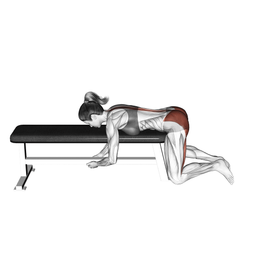
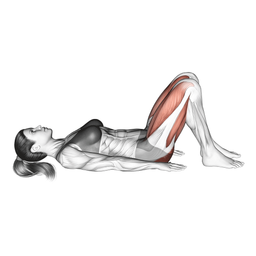
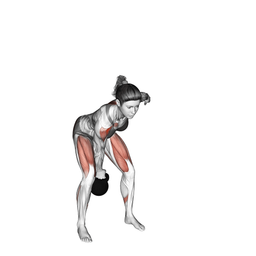
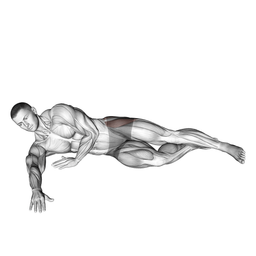
- ✓Corrects unilateral muscle imbalances.
- ✓Provides more intense glute isolation than the bilateral version.
- ✓Improves core stabilization and balance skills.
- ✓Builds functional strength for athletic performance.
- ✓Actively engages the gluteus medius.
- ✓Ideal for injury rehabilitation.