BifitBifit
HomeExercisesBecome a Coach
Log In
HOMEEXERCISESBECOME A COACHLOG IN

Language

Legal

Terms of UsePrivacy PolicyDelete Account
BifitBifit

A modern and user-friendly mobile app that makes life easier for fitness enthusiasts. Tracking your workouts and progress is our priority.

Quick Links

  • Home
  • Exercises
  • Become a Coach
  • Download · Google Play
  • Download · App Store

Legal

  • Privacy Policy
  • Terms of Use
  • Support
  • Account Deletion

© 2026 Bifit. All rights reserved.

Designed for a healthy lifestyle

HomeExercisesCable Step Up

Cable Step Up

Legs
Quads
Intermediate
Compound
3-4Set
8-12Reps
60sRest
2-1-2-0Tempo
Cable Step Up
Animation

Description

The Cable Step Up is a variation of the step-up exercise performed using a cable machine to add resistance. Because constant tension is applied via the cable, maximum load is placed on the quadriceps and glute muscles compared to a classic step-up. It also improves balance, coordination, and core stabilization. As a unilateral movement, it is highly effective for correcting muscle imbalances and enhancing functional athletic performance. The pulling direction of the cable helps keep the torso upright, reducing stress on the lower back. For athletes, it is a functional exercise that directly improves sprinting, stair climbing, and change-of-direction movements. When performed regularly, it provides significant improvements in lower body strength, balance, and daily life activities.

Step-by-Step Instructions

  1. 1

    Set the cable pulley to the lowest position and attach a handle to hold, or use a dip belt/waist strap.

  2. 2

    Place a step or sturdy platform facing the cable machine.

  3. 3

    Stand facing the cable, firmly grasping the handle or wearing the belt.

  4. 4

    Place one foot on top of the platform, ensuring your entire foot is flat and secure.

  5. 5

    Engage your core, keep your torso upright, and pull your shoulders back.

  6. 6

    Drive through the heel of your elevated foot and squeeze your quadriceps and glutes to push your body upward.

  7. 7

    Bring your trailing foot onto the platform or keep it suspended in the air for balance.

  8. 8

    Lower yourself back down in a controlled manner, maintaining the cable resistance.

  9. 9

    Complete the desired number of repetitions, then repeat the movement with the other leg.

Key Points

  • ✓The elevated foot must be planted fully and firmly on the platform.
  • ✓The movement should be driven by the working (top) leg; avoid pushing off too much with the bottom leg.
  • ✓Keep the torso upright; avoid leaning too far forward.
  • ✓The knee should track in the same direction as your toes.
  • ✓The descent must be controlled; lower yourself slowly instead of dropping to the floor.

Common Mistakes

  • ✗Pushing off with the bottom foot - reduces the workload on the target leg.
  • ✗Letting the top knee cave inward - creates joint stress.
  • ✗Leaning the torso too far forward - strains the lower back.
  • ✗Choosing a platform that is too high - requires excessive hip mobility.
  • ✗Descending too quickly - increases joint stress and injury risk.
  • ✗Setting the cable resistance incorrectly - makes the movement ineffective.

Breathing

Exhale as you step up and squeeze your quadriceps and glutes; inhale as you lower yourself down.

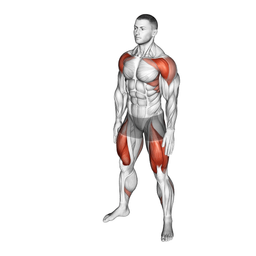
Muscle Activation

quads0%
glutes0%
gluteus medius0%
hamstrings0%
core0%
calves0%

Safety

Precautions

  • Individuals with acute knee injuries should exercise caution.
  • Those with balance issues should perform the exercise with support.
  • Individuals with hip joint discomfort should adjust the platform height accordingly.

Safety Tips

  • Adjust the platform height according to your mobility (typically 30-50 cm).
  • Master the bodyweight step-up before adding cable resistance.
  • Start with light cable resistance.
  • Check your knee alignment by looking in a mirror.
  • Ensure the platform is sturdy and will not slip.

Frequently Asked Questions

Which muscles does Cable Step Up work?

Cable Step Up primarily works these muscles: Quadriceps, Gluteus maximus. It also engages: Hamstring, Gluteus medius, Core kasları, Kalf.

Is Cable Step Up suitable for beginners?

Cable Step Up is a Intermediate level exercise. Learning difficulty: Moderate.

Can Cable Step Up be done at home?

Cable Step Up usually requires gym equipment, so it can be hard to do at home.

What are common mistakes when doing Cable Step Up?

One of the most common mistakes: Pushing off with the bottom foot - reduces the workload on the target leg.

How many sets and reps for Cable Step Up?

Recommended: 3-4 sets and 8-12 reps.
Related Exercises

Exercises targeting similar muscle groups

Legs Exercises
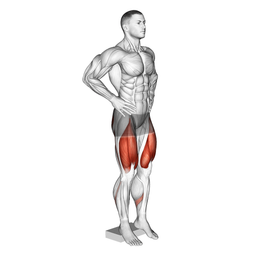
Dumbbell Goblet Curtsey Lunge

Dumbbell Goblet Curtsey Lunge

Quads

Belt Squat

Belt Squat

Quads

Smith Machine Squat

Smith Machine Squat

Quads

Hack Squat Musculature

Hack Squat Musculature

Quads

Reverse Hack Squat

Reverse Hack Squat

Hamstrings

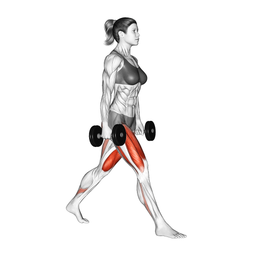
Bodyweight Lunge

Bodyweight Lunge

Quads

Exercise Information

DifficultyIntermediate
Movement TypeCompound
FocusHypertrophy
Injury RiskLow
Set3-4
Reps8-12
Rest60 seconds
Tempo2-1-2-0
Spotter RequiredNo
Home / Gym
NoYes
Effectiveness3.9 / 5
Popularity5.0 / 10
Learning DifficultyModerate

Equipment

cablebench

Primary Muscles

QuadricepsGluteus maximus

Secondary Muscles

HamstringGluteus mediusCore kaslarıKalf

Benefits

  • ✓Intensely targets the quadriceps and glutes on a single leg.
  • ✓Provides constant tension through the cable.
  • ✓Strengthens functional stepping mechanics.
  • ✓Improves balance and coordination.
  • ✓Activates the gluteus medius and hip stabilizers.
  • ✓Corrects unilateral muscle imbalances.
  • ✓Enhances athletic performance.
  • ✓Improves performance in daily life activities.

Goals

Muscle GainStrength
Back to All Exercises
Cable Step Up
Animation

Description

The Cable Step Up is a variation of the step-up exercise performed using a cable machine to add resistance. Because constant tension is applied via the cable, maximum load is placed on the quadriceps and glute muscles compared to a classic step-up. It also improves balance, coordination, and core stabilization. As a unilateral movement, it is highly effective for correcting muscle imbalances and enhancing functional athletic performance. The pulling direction of the cable helps keep the torso upright, reducing stress on the lower back. For athletes, it is a functional exercise that directly improves sprinting, stair climbing, and change-of-direction movements. When performed regularly, it provides significant improvements in lower body strength, balance, and daily life activities.

Step-by-Step Instructions

  1. 1

    Set the cable pulley to the lowest position and attach a handle to hold, or use a dip belt/waist strap.

  2. 2

    Place a step or sturdy platform facing the cable machine.

  3. 3

    Stand facing the cable, firmly grasping the handle or wearing the belt.

  4. 4

    Place one foot on top of the platform, ensuring your entire foot is flat and secure.

  5. 5

    Engage your core, keep your torso upright, and pull your shoulders back.

  6. 6

    Drive through the heel of your elevated foot and squeeze your quadriceps and glutes to push your body upward.

  7. 7

    Bring your trailing foot onto the platform or keep it suspended in the air for balance.

  8. 8

    Lower yourself back down in a controlled manner, maintaining the cable resistance.

  9. 9

    Complete the desired number of repetitions, then repeat the movement with the other leg.

Key Points

  • ✓The elevated foot must be planted fully and firmly on the platform.
  • ✓The movement should be driven by the working (top) leg; avoid pushing off too much with the bottom leg.
  • ✓Keep the torso upright; avoid leaning too far forward.
  • ✓The knee should track in the same direction as your toes.
  • ✓The descent must be controlled; lower yourself slowly instead of dropping to the floor.

Common Mistakes

  • ✗Pushing off with the bottom foot - reduces the workload on the target leg.
  • ✗Letting the top knee cave inward - creates joint stress.
  • ✗Leaning the torso too far forward - strains the lower back.
  • ✗Choosing a platform that is too high - requires excessive hip mobility.
  • ✗Descending too quickly - increases joint stress and injury risk.
  • ✗Setting the cable resistance incorrectly - makes the movement ineffective.

Breathing

Exhale as you step up and squeeze your quadriceps and glutes; inhale as you lower yourself down.

Back to All Exercises

Related Exercises

Exercises targeting similar muscle groups

Legs Exercises
Dumbbell Goblet Curtsey Lunge

Dumbbell Goblet Curtsey Lunge

Quads

Belt Squat

Belt Squat

Quads

Smith Machine Squat

Smith Machine Squat

Quads

Hack Squat Musculature

Hack Squat Musculature

Quads

Reverse Hack Squat

Reverse Hack Squat

Hamstrings

Bodyweight Lunge

Bodyweight Lunge

Quads