.gif)
Description
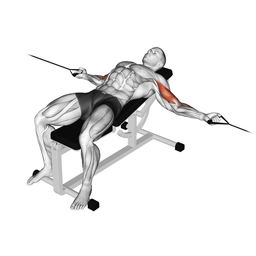
The Cable Lying Curl is a specialized exercise performed in a supine position on a cable machine, isolating the biceps from a unique angle. The lying position keeps the shoulders pinned back, which works the long head of the biceps brachii under maximum tension. It also prevents shoulder flexion, placing the entire load strictly on the biceps. Thanks to the continuous cable tension, maximum muscle activation is achieved throughout the movement. There is no stress on the lower back or spine. It can be performed lying on a bench or the floor. It offers a unique alternative to classic curl variations. When performed regularly, it provides significant improvements in biceps long head development, arm peak, and overall isolation quality.
Cable Lying Curl How-To Guide
- 1
Place a bench near the cable machine (under the cable).
- 2
Attach an EZ bar or a straight bar to the low pulley of the cable machine.
- 3
Lie flat on your back on the bench, with the cable positioned above your head.
- 4
Grasp the bar with both hands using an underhand (supinated) grip.
- 5
Keep your arms fully extended with your elbows in line with your shoulders.
- 6
Your upper arms must remain stationary throughout the movement.
- 7
Squeeze your biceps and curl the bar toward your forehead.
- 8
Maximally contract your biceps at the peak position.
- 9
Lower the bar back to the starting position in a controlled manner.
- 10
Only your elbows should bend throughout the movement.
Key Points
- ✓Maintain the supine (lying on your back) position.
- ✓Keep the upper arms stationary; only bend at the elbows.
- ✓Use a shoulder-width, underhand grip.
- ✓The cable should come from above the head.
- ✓Squeeze the biceps hard at the top of the movement.
Common Mistakes
- ✗Moving the upper arms - this breaks the isolation.
- ✗Inadequate range of motion - prevents full muscle engagement.
- ✗Selecting a weight that is too heavy - compromises form.
- ✗Swinging the weight - relies on momentum instead of muscle.
Breathing
Exhale as you curl the weight up, and inhale as you lower it.
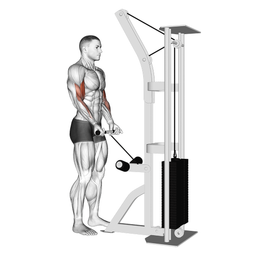
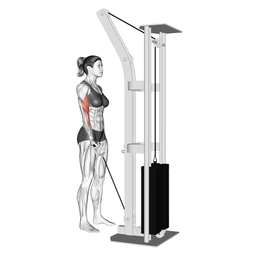
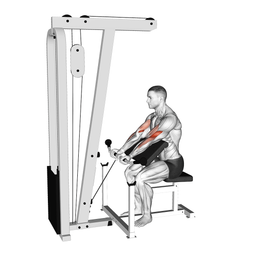
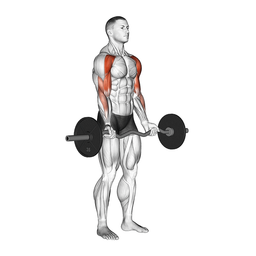
Muscle Activation
Safety
Precautions
- Individuals with acute elbow injuries should avoid this exercise.
Safety Tips
- Ensure the bench is stable.
- Start with a light weight.
- Stop the exercise if your form breaks down.
Frequently Asked Questions
Which muscles does Cable Lying Curl work?
Cable Lying Curl primarily works these muscles: Biceps. It also engages: Brachialis, Brachioradialis.
Is Cable Lying Curl suitable for beginners?
Cable Lying Curl is a Intermediate level exercise. Learning difficulty: Moderate.
Can Cable Lying Curl be done at home?
Cable Lying Curl usually requires gym equipment, so it can be hard to do at home.
What are common mistakes when doing Cable Lying Curl?
One of the most common mistakes: Moving the upper arms - this breaks the isolation.
How many sets and reps for Cable Lying Curl?
Recommended: 3-4 sets and 10-15 reps.
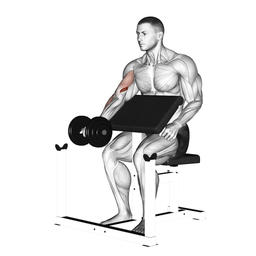
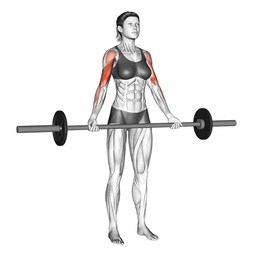
- ✓Provides maximum isolation for the long head of the biceps.
- ✓Provides continuous muscle tension.
- ✓Eliminates stress on the lower back and spine.
- ✓Ideal for developing the biceps peak.
- ✓Adds variety to your arm training routine.