.gif)
Description
The Block Pull Deadlift is a deadlift variation performed by lifting the barbell from an elevated platform (blocks). By shortening the range of motion, heavier loads can be lifted, and it specifically develops lockout strength at the top of the deadlift. It intensely targets the gluteus maximus, hamstrings, and erector spinae muscles. Due to the shorter range of motion, less stress is placed on the lower back, allowing for safe training with heavy loads. It is a commonly used accessory exercise in powerlifting and strength training. It is ideal for those looking to improve their deadlift performance.
Block Pull Deadlift How-To Guide
- 1
Place the barbell on blocks or an elevated platform (just below knee level).
- 2
Stand in front of the barbell with your feet shoulder-width apart.
- 3
Hinge at your hips and grip the barbell with an overhand or mixed grip.
- 4
Keep your back straight, lift your chest, and pull your shoulders back.
- 5
Take a deep breath, brace your core, and lift the barbell by pushing the floor away with your feet.
- 6
Thrust your hips forward to come to a fully upright position and squeeze your glutes.
- 7
Lower the barbell back to the blocks in a controlled manner.
Key Points
- ✓The barbell should start on the blocks, just below knee level.
- ✓Keep your back straight, chest up, and shoulders pulled back.
- ✓Lift using a hip hinge movement.
- ✓Fully squeeze the glutes at the lockout position.
- ✓The descent must be controlled; do not drop the barbell.
Common Mistakes
- ✗Rounding the back - serious risk of lower back injury.
- ✗Keeping the barbell far from the body - increases lower back stress.
- ✗Bending the knees too much - turns the movement into a squat.
- ✗Not completing the lockout - results in incomplete glute activation.
- ✗Using too much weight - compromises form.
Breathing
Take a deep breath before lifting to increase intra-abdominal pressure, and exhale during the lift. Inhale as you lower the weight.
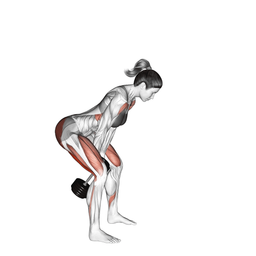
Muscle Activation
Safety
Precautions
- Individuals with a herniated disc must get a doctor's approval.
- Those with spinal issues should avoid this exercise.
- Individuals with hamstring injuries should be cautious.
- Those with insufficient grip strength should use lifting straps.
Safety Tips
- Always keep your back straight; never let it round.
- Keep the barbell close to your body.
- Choose an appropriate block height; it shouldn't be too low or too high.
- Increase the weight gradually; avoid ego lifting.
Frequently Asked Questions
Which muscles does Block Pull Deadlift work?
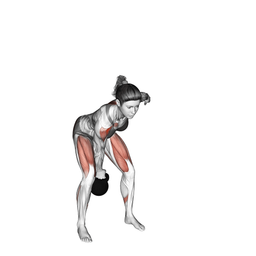
Block Pull Deadlift primarily works these muscles: Gluteus maximus, Hamstring, Erector spinae. It also engages: Quadriceps, Trapezius, Ön kol kasları.
Is Block Pull Deadlift suitable for beginners?
Block Pull Deadlift is a Intermediate level exercise. Learning difficulty: Moderate.
Can Block Pull Deadlift be done at home?
Block Pull Deadlift usually requires gym equipment, so it can be hard to do at home.
What are common mistakes when doing Block Pull Deadlift?
One of the most common mistakes: Rounding the back - serious risk of lower back injury.
How many sets and reps for Block Pull Deadlift?
Recommended: 3-5 sets and 3-6 reps.
- ✓Develops deadlift lockout strength.
- ✓Allows for safe training with heavier loads.
- ✓Strengthens the posterior chain muscles.
- ✓Increases grip strength.