.gif)
Description
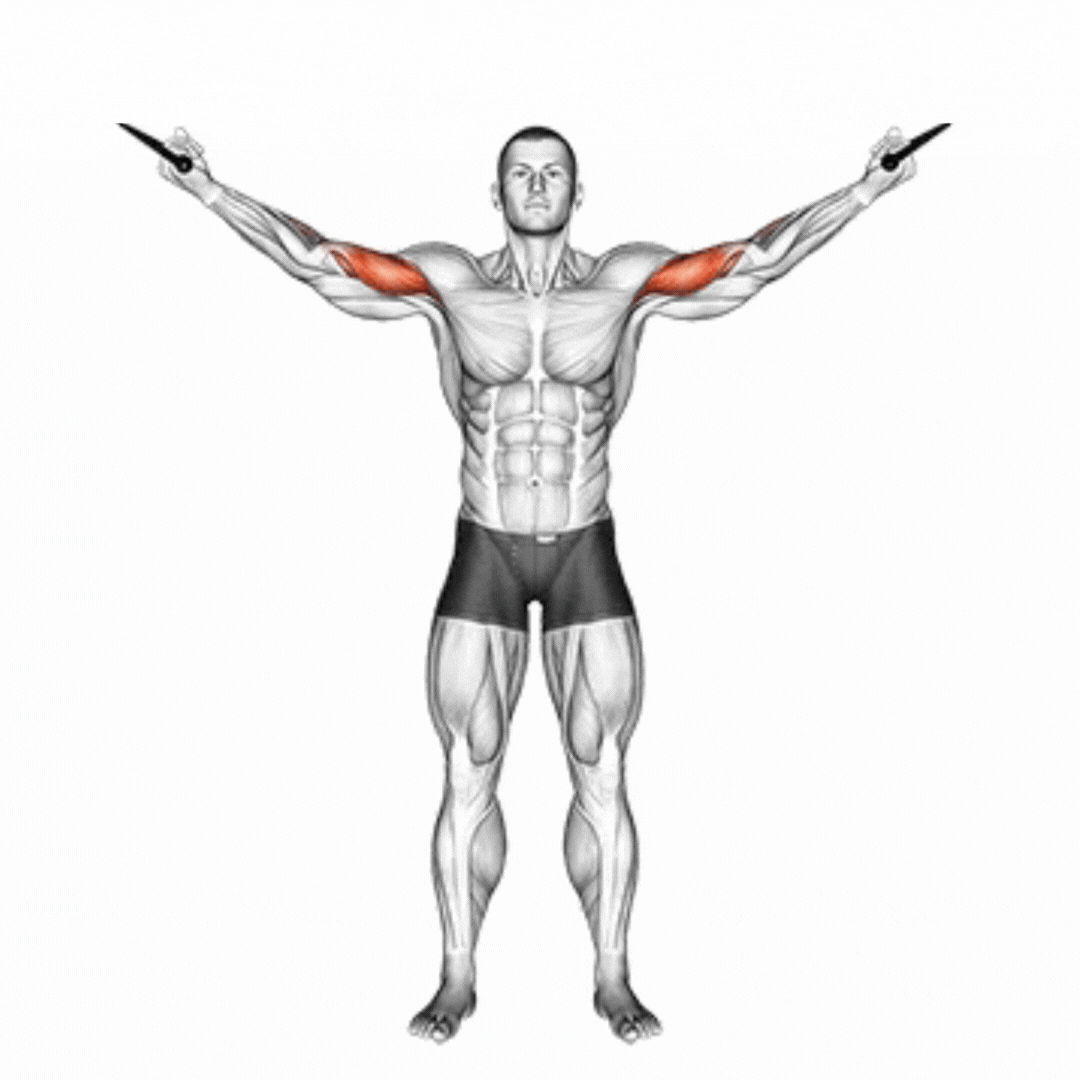
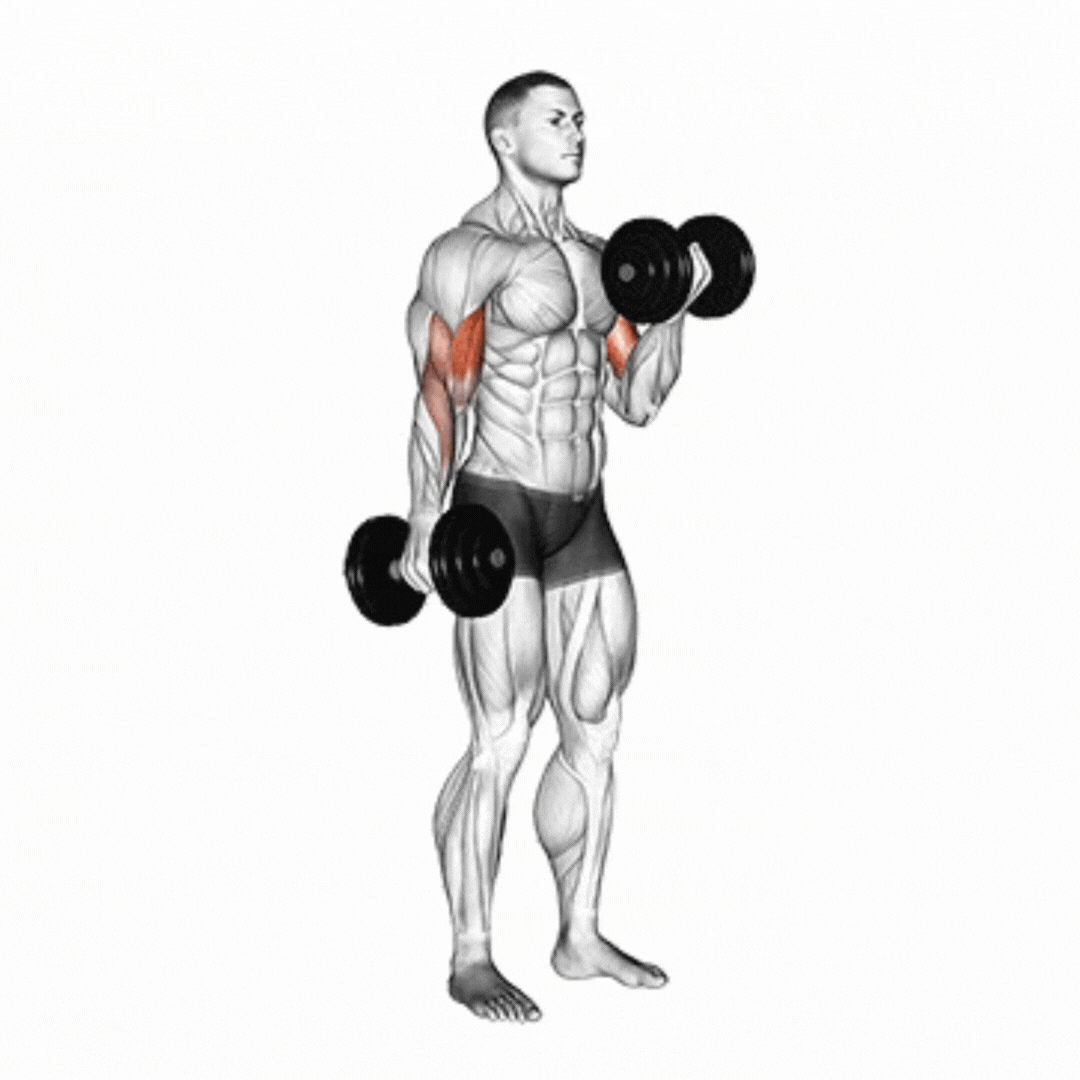
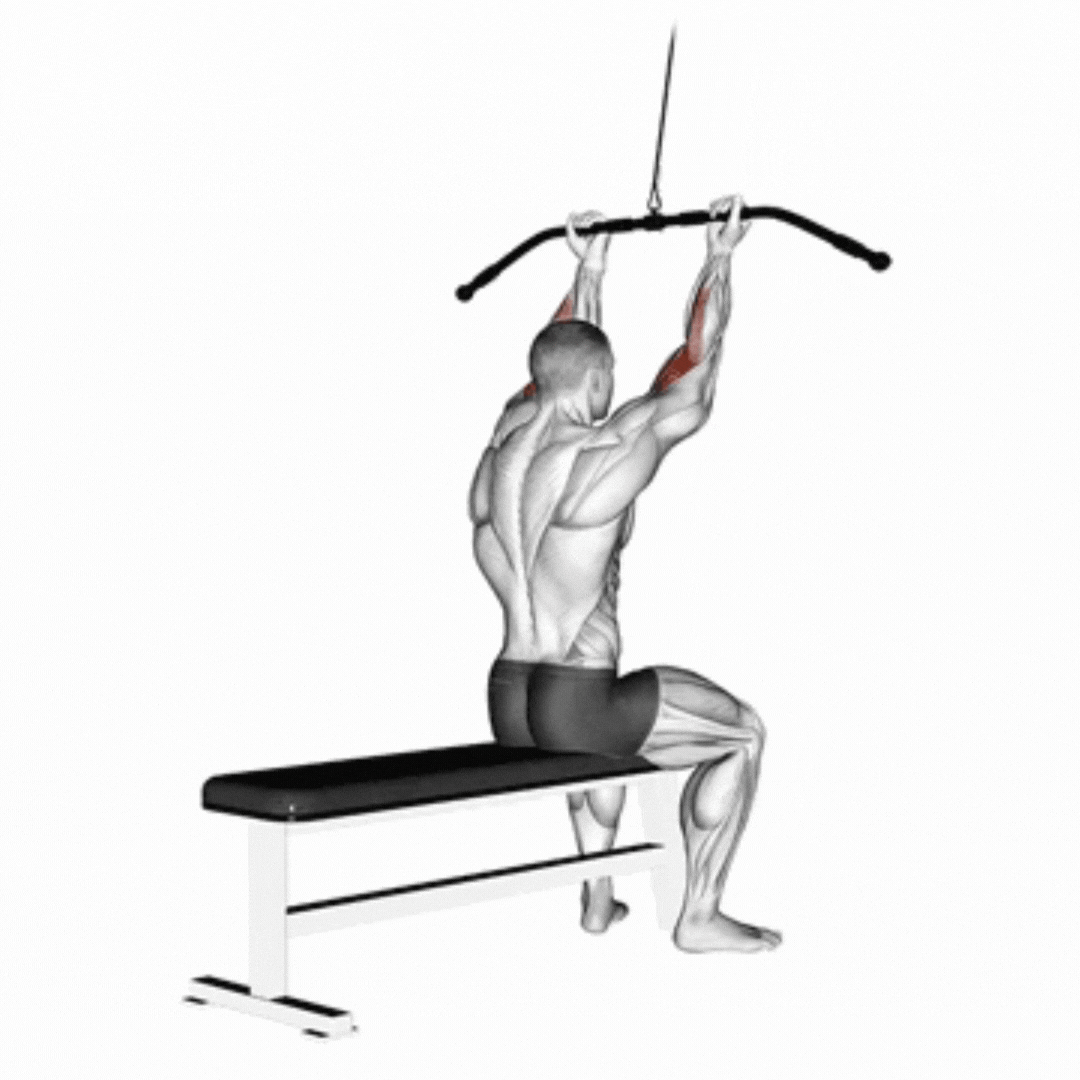
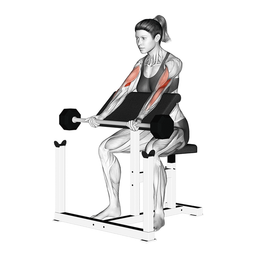
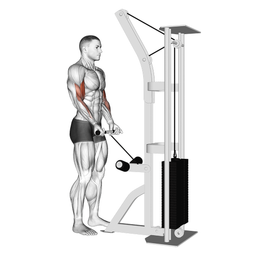
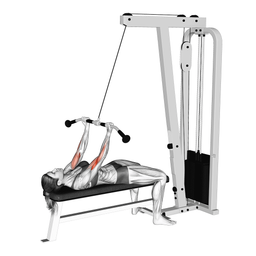
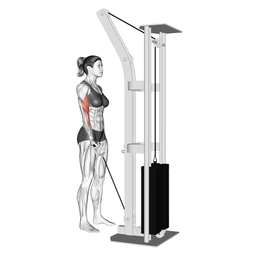
Bayesian Curl is an isolation exercise that maximally works the biceps muscles. This movement targets the lower portion of the biceps and the brachialis muscle, giving the arms a fuller appearance. Unlike standard curl movements, it changes the body angle to load muscle fibers from different angles. It creates continuous muscle stimulation by maintaining muscle tension at the point where the arm is fully extended. It is an effective arm development movement that can be suitable for both beginners and advanced athletes. When performed with a dumbbell, it offers the opportunity to work each arm separately and eliminates balance problems.
Bayesian Curl How-To Guide
- 1
Take the dumbbell in your hand and lie supine on the bench, with your head close to the end of the bench
- 2
Extend your arm behind your head to full extension, the elbow should not remain bent
- 3
While exhaling, bring the dumbbell to the front of your head in a controlled manner
- 4
Squeeze your biceps for 1-2 seconds at the top of the movement
- 5
Slowly return the weight to the starting position without losing muscle control
- 6
Keep your elbows fixed throughout the movement and only move your forearm
Key Points
- ✓Lean your back against the wall, bring your heels forward about 30 cm
- ✓Hold the dumbbell at front shoulder height at the start
- ✓Curl up with elbows close to the body
- ✓Hold contracted for 1-2 seconds at the top, then slowly lower
- ✓Your back should not separate from the wall, only the forearm should move
Common Mistakes
- ✗Separating the back from the wall - breaks isolation and leads to momentum use
- ✗Choosing too heavy weight - causes swinging movement
- ✗Moving elbows back and forth - works shoulder muscles instead of biceps
- ✗Doing the negative part of the movement too fast - reduces muscle development
- ✗Not doing full range of motion - lower biceps doesn't work fully
Breathing
Exhale while curling the weight up, inhale while lowering. Keep your breath under control while holding contracted at the top.
Muscle Activation
Safety
Precautions
- Those with forearm tendonitis should be careful
- If there is a history of biceps tendon injury, get doctor approval
- Those with wrist problems should reduce the weight
- Those with shoulder discomfort should pay attention to arm angle
Safety Tips
- Perform the movement slowly and controlled, do not use momentum
- Increase the weight gradually
- Keep the upper arm fixed, only the forearm should move
- Work in full range of motion, don't do half reps
Frequently Asked Questions
Which muscles does Bayesian Curl work?
Bayesian Curl primarily works these muscles: Biceps. It also engages: Forearms.
Is Bayesian Curl suitable for beginners?
Bayesian Curl is a Intermediate level exercise. Learning difficulty: Moderate.
Can Bayesian Curl be done at home?
Yes, Bayesian Curl can easily be done at home.
What are common mistakes when doing Bayesian Curl?
One of the most common mistakes: Separating the back from the wall - breaks isolation and leads to momentum use
How many sets and reps for Bayesian Curl?
Recommended: 3-4 sets and 10-15 reps.
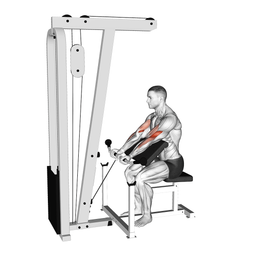
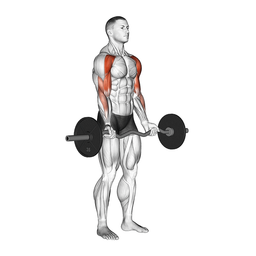
- ✓Develops biceps muscles with maximum stretch and contraction
- ✓Optimizes hypertrophy of the arm front muscles
- ✓Provides safe isolation by reducing joint stress
- ✓Develops mind-muscle connection by requiring balance and control