.gif)
Description
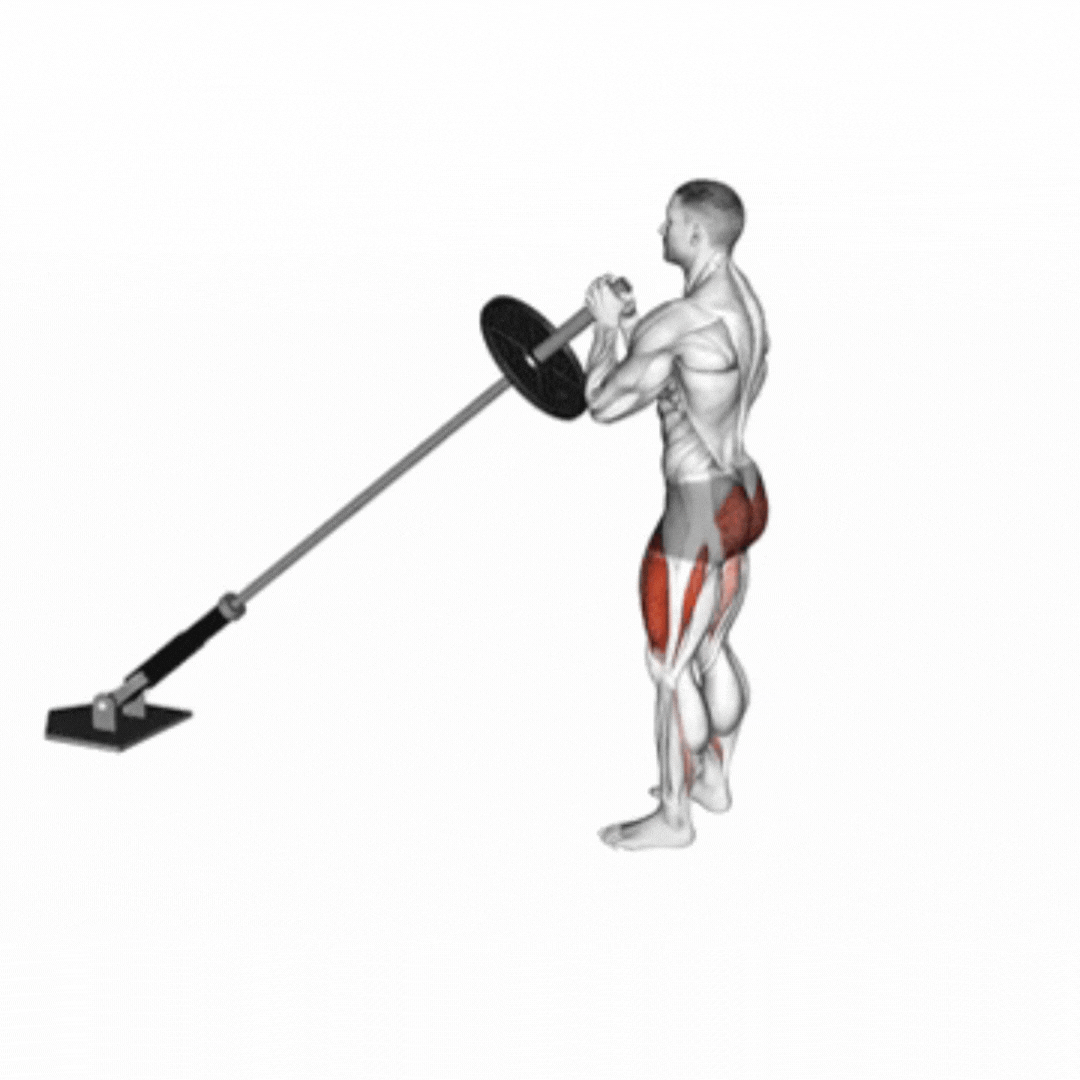
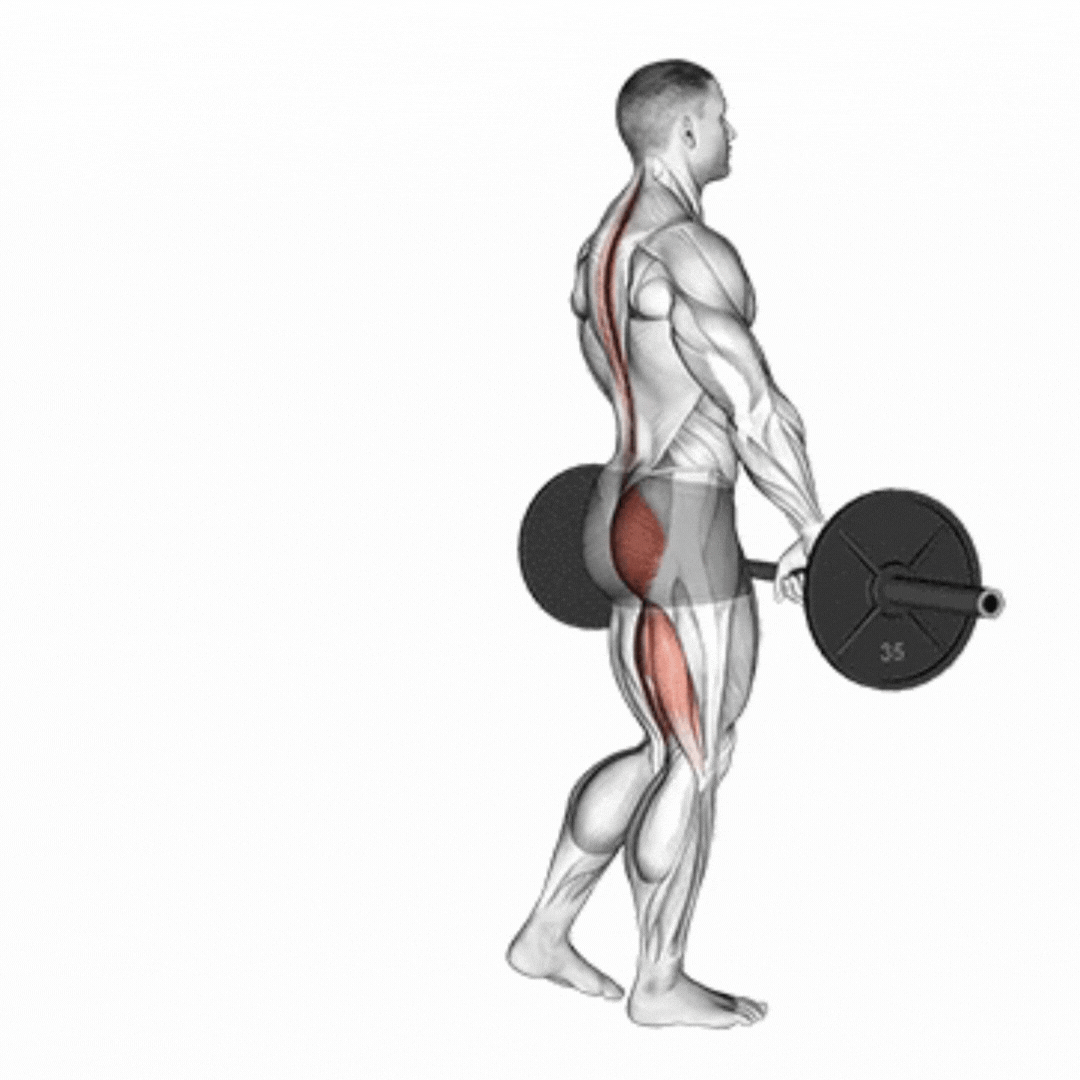
The Barbell Hack Squat is a classic leg exercise performed by holding the barbell behind the body, just behind the heels. Named after its inventor, Russian wrestler George Hackenschmidt, this movement is performed with a free barbell, unlike the machine version. While it intensely targets the quadriceps muscles, it also works the glutes, hamstrings, and calves. Because the bar is held behind the body, there is more load on the quadriceps compared to a traditional squat. At the same time, stress on the lower back is minimal because the bar is behind the torso. Combining pulling and pushing mechanics, this exercise also improves grip strength. It is used as an alternative in the quadriceps development programs of powerlifters and bodybuilders, and remains an important staple of old-school strength training.
Barbell Hack Squat How-To Guide
- 1
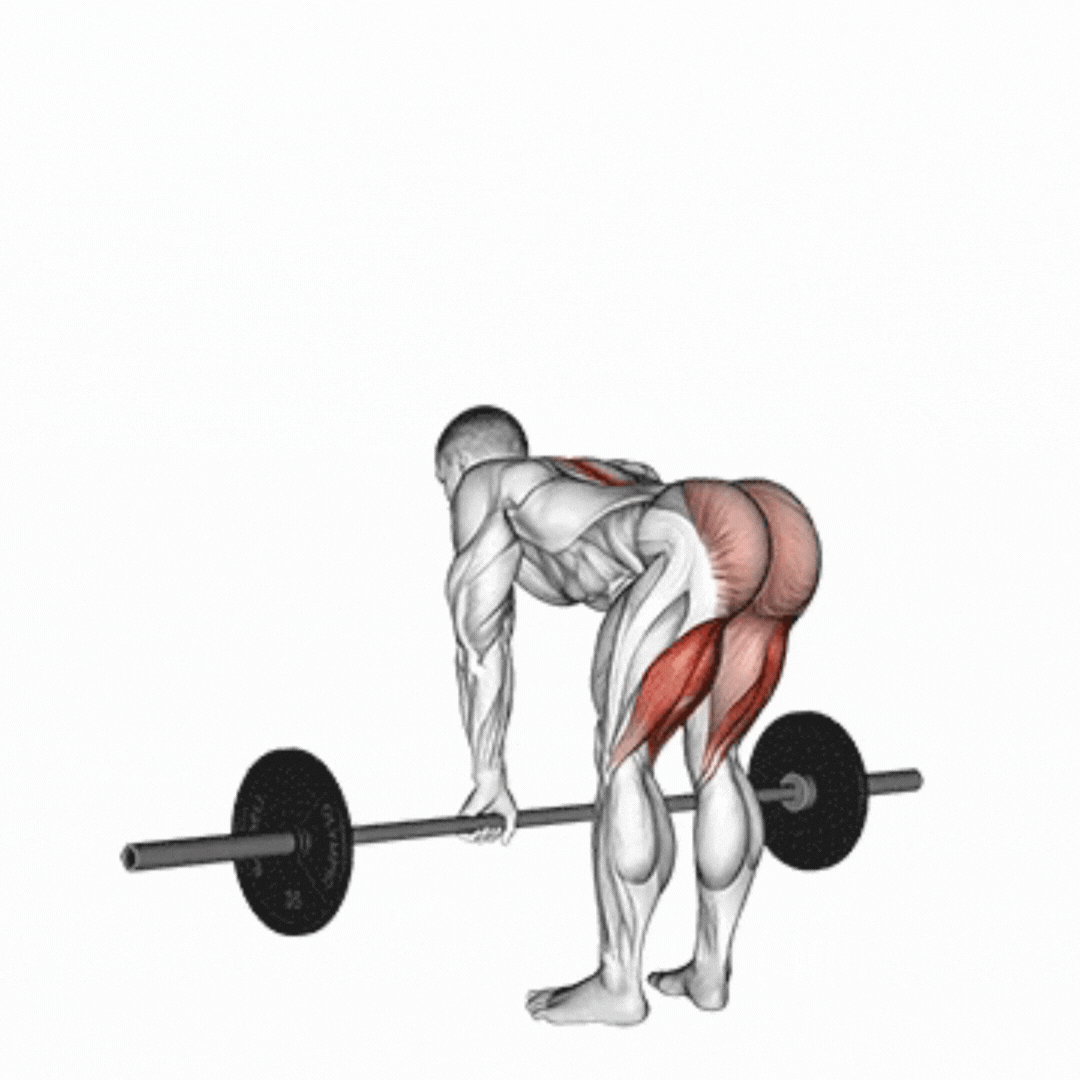
Place the barbell on the floor and stand with your feet shoulder-width apart; the bar should be just behind your heels.
- 2
Push your hips back, bend your knees, and grab the bar from the floor.
- 3
Use an overhand grip (palms facing backward) with your hands shoulder-width apart.
- 4
Keep the bar just behind your heels with your arms fully extended and straight.
- 5
Keep your chest up, pull your shoulders back, and brace your core.
- 6
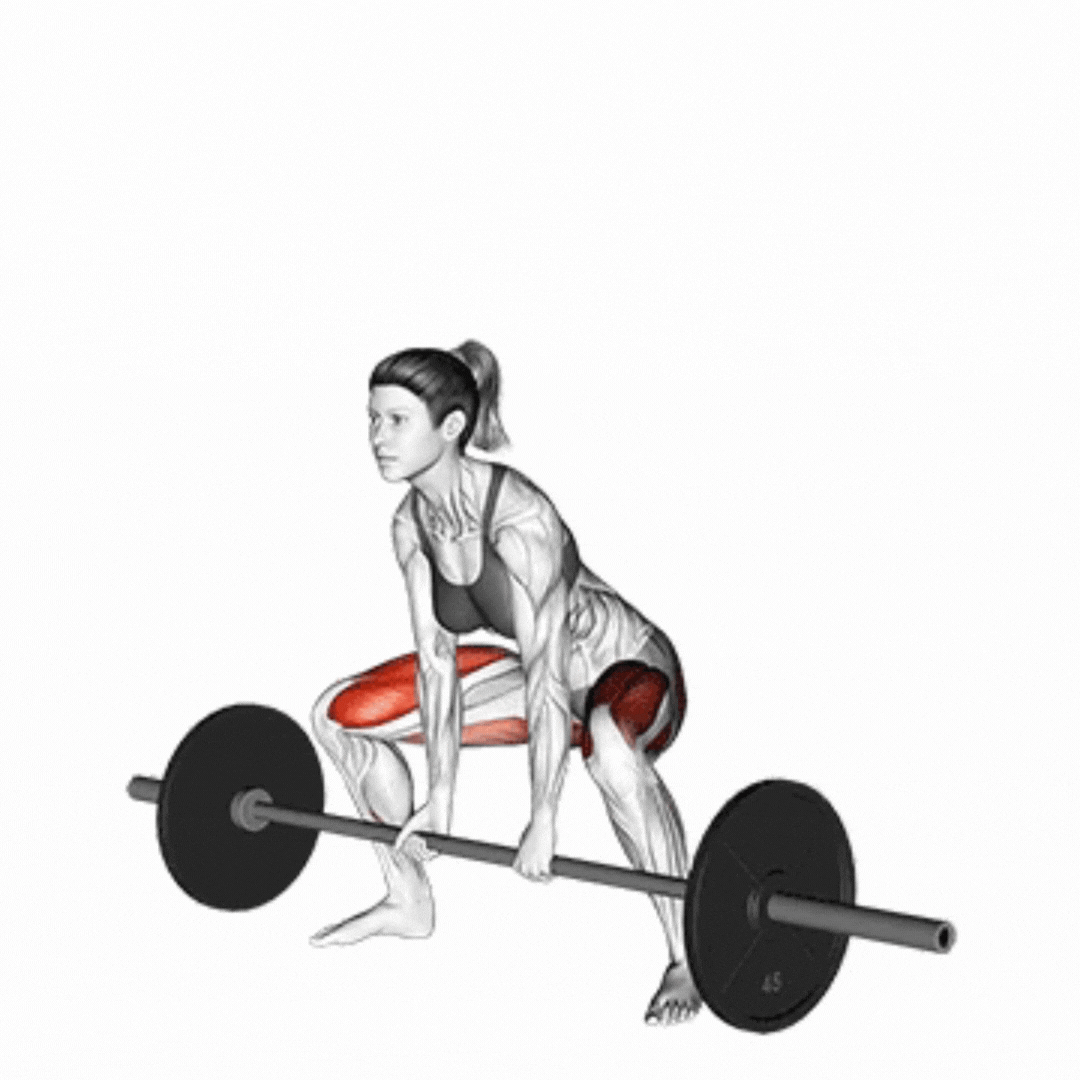
Lower yourself by bending your knees and pushing your hips back, keeping your weight on your heels.
- 7
Descend until your thighs are parallel to the floor, keeping your back straight.
- 8
Stand up by pressing powerfully through your heels and squeezing your quadriceps.
- 9
Bring your knees to full extension at the top position.
- 10
The bar should stay close to your heels throughout the entire movement.
Key Points
- ✓The bar must be positioned just behind your heels.
- ✓The movement follows squat mechanics; hips should be pushed back.
- ✓Power should be generated by pressing through the heels, not the toes.
- ✓Keep your back straight, chest up, and shoulders pulled back.
- ✓Maintain a tight grip; do not let the bar slip.
Common Mistakes
- ✗Moving the bar away from the heels - disrupts your center of balance.
- ✗Rounding the back - increases the risk of lower back injury.
- ✗Letting the knees cave in - creates unnecessary joint stress.
- ✗Breaking form with too heavy a load - causes grip failure.
- ✗Pressing on the toes instead of the heels - disrupts power transfer.
- ✗Leaning forward toward the bar - alters the intended movement pattern.
Breathing
Inhale and brace your core as you descend, and exhale powerfully as you stand back up.
Muscle Activation
Safety
Precautions
- Individuals with acute lower back pain or a herniated disc should be cautious.
- Those with knee injuries should limit their range of motion.
- People with wrist or shoulder problems should pay close attention to their grip.
- Individuals with high blood pressure should exercise caution.
Safety Tips
- Practice your form with a light load first, then gradually increase the weight.
- You can use lifting straps if your grip strength is a limiting factor.
- Ensure your heels do not leave the bar path.
- Check your form by looking in a mirror or working with a trainer.
- Stop the movement and reduce the weight immediately if your form breaks down.
Frequently Asked Questions
Which muscles does Barbell Hack Squat work?
Barbell Hack Squat primarily works these muscles: Quadriceps. It also engages: Gluteus maximus, Hamstring, Kalf, Trapez, Ön kol, Core kasları.
Is Barbell Hack Squat suitable for beginners?
Barbell Hack Squat is a Advanced level exercise. Learning difficulty: Hard.
Can Barbell Hack Squat be done at home?
Barbell Hack Squat usually requires gym equipment, so it can be hard to do at home.
What are common mistakes when doing Barbell Hack Squat?
One of the most common mistakes: Moving the bar away from the heels - disrupts your center of balance.
How many sets and reps for Barbell Hack Squat?
Recommended: 3-4 sets and 6-10 reps.
- ✓Intensely develops the quadriceps muscles.
- ✓Places minimal stress on the lower back.
- ✓Provides training variety as a classic strength movement.
- ✓Improves overall grip strength.
- ✓Provides an additional stimulus to the trapezius and upper back muscles.
- ✓Offers a great alternative for quadriceps symmetry and development.
- ✓Ideal for old-school strength and hypertrophy training.