BifitBifit
HomeExercisesBecome a Coach
Log In
HOMEEXERCISESBECOME A COACHLOG IN

Language

Legal

Terms of UsePrivacy PolicyDelete Account
BifitBifit

A modern and user-friendly mobile app that makes life easier for fitness enthusiasts. Tracking your workouts and progress is our priority.

Quick Links

  • Home
  • Exercises
  • Become a Coach
  • Download · Google Play
  • Download · App Store

Legal

  • Privacy Policy
  • Terms of Use
  • Support
  • Account Deletion

© 2026 Bifit. All rights reserved.

Designed for a healthy lifestyle

HomeExercisesAnderson Squat

Anderson Squat

Legs
Quads
Advanced
Compound
3-5Set
3-6Reps
180sRest
0-1-1-1Tempo
Anderson Squat
Animation

Description

The Anderson Squat is a specialized squat variation performed starting from the safety pins, involving only the concentric contraction without an eccentric phase. Named after the legendary powerlifter Paul Anderson, this movement teaches you to lift the weight from the hardest point of the squat (the bottom position) and develops the ability to generate explosive power from a dead stop. Unlike the classic squat, the stretch reflex cannot be used at the beginning of the movement because there is no eccentric phase, which places an extreme load on the quadriceps and glutes. It is ideal for powerlifters and strength athletes as sticking point training. It is also an excellent exercise for athletes looking to develop speed and explosiveness. At the same time, it helps improve squat form and increases bottom position stability.

Step-by-Step Instructions

  1. 1

    Adjust the safety pins of the squat rack to a height that matches the bottom position of your squat.

  2. 2

    Place the bar on the pins and load the weight.

  3. 3

    Get under the bar and position it on the upper part of your shoulders (high bar) or the middle part (low bar).

  4. 4

    Stand with your feet shoulder-width apart, toes pointing slightly outward.

  5. 5

    Brace your core, keep your back straight, and keep your chest up.

  6. 6

    Start in the bottom squat position with the bar resting on the pins.

  7. 7

    Stand up with an explosive movement by driving through your heels, ensuring your knees track in the same direction as your toes.

  8. 8

    Bring your hips to full extension at the top position, avoiding hyperextension.

  9. 9

    Lower the bar back onto the pins in a controlled manner.

  10. 10

    Pause briefly on the pins between each rep.

Key Points

  • ✓The pin height must be adjusted according to your bottom squat position.
  • ✓There is no eccentric phase; every rep must start explosively from the pins.
  • ✓Keep your back straight, chest up, and core braced.
  • ✓Generate power by driving through your heels.
  • ✓Knees should track in the same direction as your toes and must not cave inward.

Common Mistakes

  • ✗Rising slowly from the pins - fails to develop explosive power.
  • ✗Rounding the back - poses a serious risk of lower back injury.
  • ✗Breaking form with too much weight - makes it difficult to rise from the bottom position.
  • ✗Letting the knees cave inward - creates joint stress.
  • ✗Hyperextending at the top position - damages the spine.
  • ✗Setting the pin height incorrectly - turns the movement into one with an eccentric phase.

Breathing

Take a deep breath and brace your core before lifting off the pins, and exhale forcefully as you stand up.

Muscle Activation

quads0%
glutes0%
core0%
erector spinae0%
lower back0%
hamstrings0%
adductors0%

Safety

Precautions

  • Individuals with acute lower back pain or a herniated disc should not perform this.
  • Those with disc problems should get medical clearance.
  • Individuals with knee injuries should avoid this movement.
  • Patients with high blood pressure should be cautious.
  • Beginners who have not mastered squat technique should not perform this.

Safety Tips

  • Master the classic squat technique first.
  • Practice form with light loads and increase the weight gradually.
  • Adjust the pin height by measuring carefully.
  • The use of a spotter or safety bars is mandatory.
  • Using a lifting belt is recommended for heavy sets.
  • Work with a coach during your first attempts.

Frequently Asked Questions

Which muscles does Anderson Squat work?

Anderson Squat primarily works these muscles: Quadriceps, Gluteus maximus. It also engages: Hamstring, Alt sırt, Core kasları, Erector spinae, Adductor.

Is Anderson Squat suitable for beginners?

Anderson Squat is a Advanced level exercise. Learning difficulty: Hard.

Can Anderson Squat be done at home?

Anderson Squat usually requires gym equipment, so it can be hard to do at home.

What are common mistakes when doing Anderson Squat?

One of the most common mistakes: Rising slowly from the pins - fails to develop explosive power.

How many sets and reps for Anderson Squat?

Recommended: 3-5 sets and 3-6 reps.
Related Exercises

Exercises targeting similar muscle groups

Legs Exercises
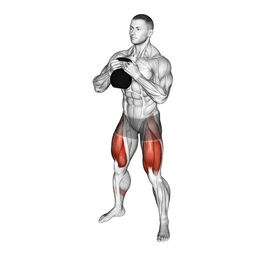
Dumbbell Goblet Curtsey Lunge

Dumbbell Goblet Curtsey Lunge

Quads

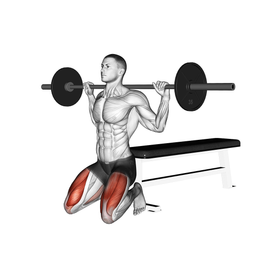
Belt Squat

Belt Squat

Quads

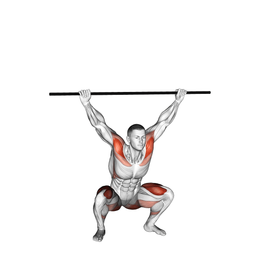
Smith Machine Squat

Smith Machine Squat

Quads

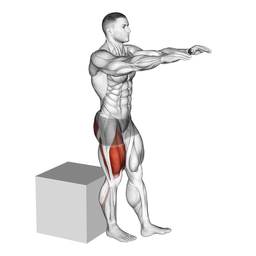
Hack Squat Musculature

Hack Squat Musculature

Quads

Reverse Hack Squat

Reverse Hack Squat

Hamstrings

Bodyweight Lunge

Bodyweight Lunge

Quads

Exercise Information

DifficultyAdvanced
Movement TypeCompound
FocusPower
Injury RiskHigh
Set3-5
Reps3-6
Rest180 seconds
Tempo0-1-1-1
Spotter RequiredYes
Home / Gym
NoYes
Effectiveness4.4 / 5
Popularity5.5 / 10
Learning DifficultyHard

Equipment

barbellsquat rack

Primary Muscles

QuadricepsGluteus maximus

Secondary Muscles

HamstringAlt sırtCore kaslarıErector spinaeAdductor

Benefits

  • ✓Teaches how to generate power from the sticking point of the squat.
  • ✓Develops explosive power and speed.
  • ✓Exposes the quadriceps and glutes to maximum load.
  • ✓Increases bottom position stability.
  • ✓Directly improves powerlifting performance.
  • ✓Improves core stabilization.
  • ✓Improves squat form.

Goals

PowerStrength
Back to All Exercises
Anderson Squat
Animation

Description

The Anderson Squat is a specialized squat variation performed starting from the safety pins, involving only the concentric contraction without an eccentric phase. Named after the legendary powerlifter Paul Anderson, this movement teaches you to lift the weight from the hardest point of the squat (the bottom position) and develops the ability to generate explosive power from a dead stop. Unlike the classic squat, the stretch reflex cannot be used at the beginning of the movement because there is no eccentric phase, which places an extreme load on the quadriceps and glutes. It is ideal for powerlifters and strength athletes as sticking point training. It is also an excellent exercise for athletes looking to develop speed and explosiveness. At the same time, it helps improve squat form and increases bottom position stability.

Step-by-Step Instructions

  1. 1

    Adjust the safety pins of the squat rack to a height that matches the bottom position of your squat.

  2. 2

    Place the bar on the pins and load the weight.

  3. 3

    Get under the bar and position it on the upper part of your shoulders (high bar) or the middle part (low bar).

  4. 4

    Stand with your feet shoulder-width apart, toes pointing slightly outward.

  5. 5

    Brace your core, keep your back straight, and keep your chest up.

  6. 6

    Start in the bottom squat position with the bar resting on the pins.

  7. 7

    Stand up with an explosive movement by driving through your heels, ensuring your knees track in the same direction as your toes.

  8. 8

    Bring your hips to full extension at the top position, avoiding hyperextension.

  9. 9

    Lower the bar back onto the pins in a controlled manner.

  10. 10

    Pause briefly on the pins between each rep.

Key Points

  • ✓The pin height must be adjusted according to your bottom squat position.
  • ✓There is no eccentric phase; every rep must start explosively from the pins.
  • ✓Keep your back straight, chest up, and core braced.
  • ✓Generate power by driving through your heels.
  • ✓Knees should track in the same direction as your toes and must not cave inward.

Common Mistakes

  • ✗Rising slowly from the pins - fails to develop explosive power.
  • ✗Rounding the back - poses a serious risk of lower back injury.
  • ✗Breaking form with too much weight - makes it difficult to rise from the bottom position.
  • ✗Letting the knees cave inward - creates joint stress.
  • ✗Hyperextending at the top position - damages the spine.
  • ✗Setting the pin height incorrectly - turns the movement into one with an eccentric phase.

Breathing

Take a deep breath and brace your core before lifting off the pins, and exhale forcefully as you stand up.

Back to All Exercises

Related Exercises

Exercises targeting similar muscle groups

Legs Exercises
Dumbbell Goblet Curtsey Lunge

Dumbbell Goblet Curtsey Lunge

Quads

Belt Squat

Belt Squat

Quads

Smith Machine Squat

Smith Machine Squat

Quads

Hack Squat Musculature

Hack Squat Musculature

Quads

Reverse Hack Squat

Reverse Hack Squat

Hamstrings

Bodyweight Lunge

Bodyweight Lunge

Quads