.gif)
Açıklama
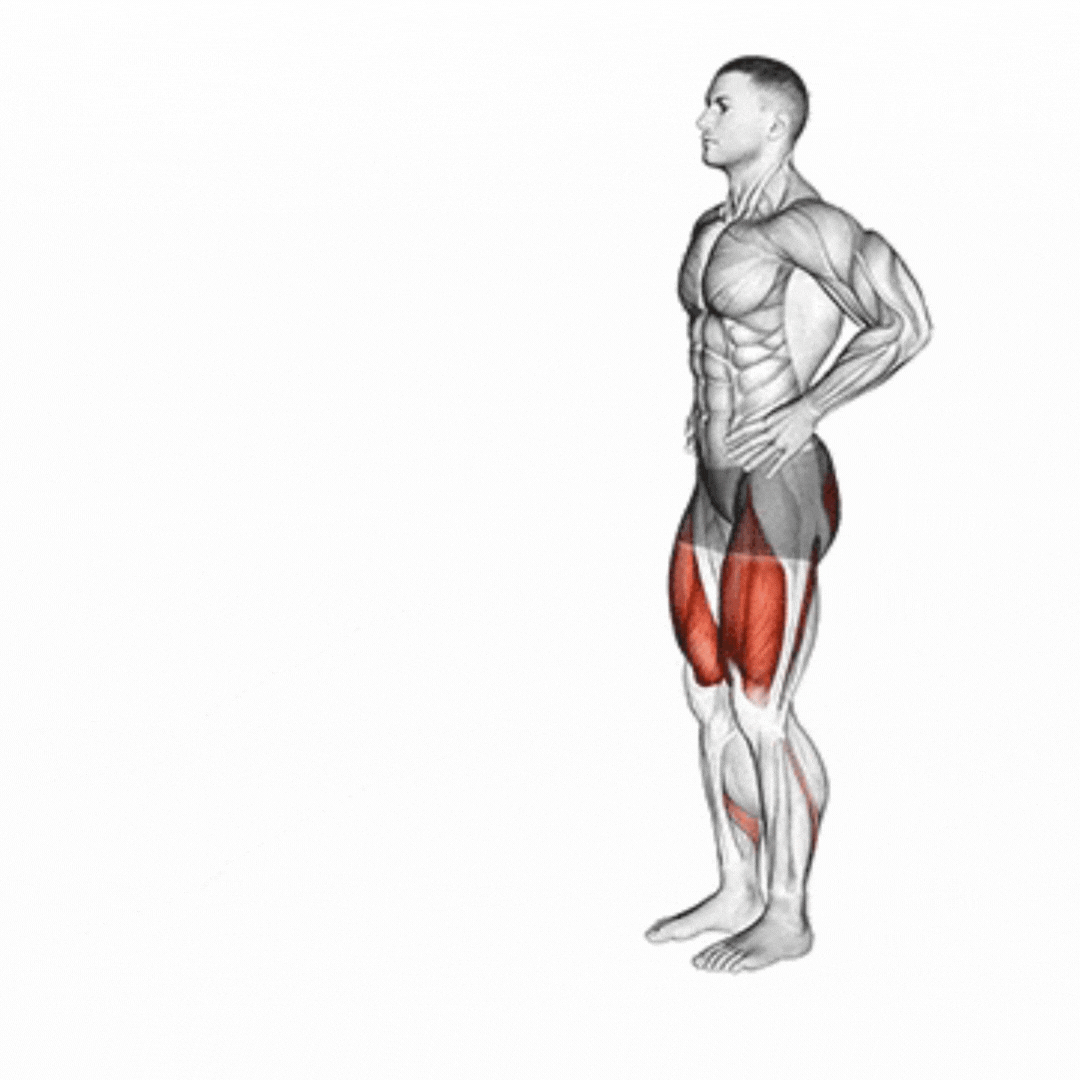
The Heel Elevated Squat is a squat variation performed by elevating the heels 2-5 cm, specifically designed to maximally target the quadriceps. Elevation is achieved by placing plates, a wedge, or using squat shoes under the heels. This height eliminates ankle mobility limitations and allows for a deeper squat. As a result, the torso remains upright, the glutes and hamstrings are less involved, and the load is shifted entirely onto the quadriceps. It is frequently used by bodybuilders to enhance quad detail and emphasize the teardrop muscle (vastus medialis). It also improves knee stability and strengthens the muscles surrounding the knee. It can be performed with bodyweight, dumbbells, or a barbell. When done regularly, it provides significant improvements in anterior thigh hypertrophy, quadriceps definition, and squat depth.
Adım Adım Talimatlar
- 1
Place a weight plate (2.5-5 kg), a wedge, or wear squat shoes under your heels.
- 2
Position your feet shoulder-width apart or slightly narrower, with your toes pointing forward.
- 3
Start with your bodyweight, or load the movement using dumbbells or a barbell.
- 4
Depending on the load, extend your arms in front of you or position the bar on your shoulders.
- 5
Brace your core, keep your back straight, and keep your chest up.
- 6
Lower yourself in a controlled manner by pushing your hips back and bending your knees.
- 7
Squat deep until your thighs are parallel to the floor or lower, keeping your torso upright.
- 8
Allow your knees to track forward; they may pass your toes (this is safe due to the heel elevation).
- 9
Push powerfully through your heels and squeeze your quadriceps to stand back up.
- 10
Bring your knees to full extension at the top position.
- 11
Keep your heels on the wedge/plate throughout the entire movement.
Önemli Noktalar
- ✓Heels should be elevated 2-5 cm (using plates, a wedge, or squat shoes).
- ✓Feet should be positioned shoulder-width apart or slightly narrower.
- ✓Maintain an upright torso position throughout the movement.
- ✓Knees should track forward to allow for a deep squat.
- ✓Squat deep (full ROM) to fully engage the quadriceps.
- ✓Drive through your heels to stand up.
Yaygın Hatalar
- ✗Leaning the torso too far forward - breaks quadriceps isolation and engages the glutes.
- ✗Letting the knees cave inward - creates joint stress.
- ✗Insufficient range of motion - prevents full quadriceps engagement.
- ✗Inadequate or excessive heel height - affects balance.
- ✗Lifting the heels off the wedge - compromises the movement.
- ✗Breaking form with too much weight - can lead to a loss of balance.
Nefes Kontrolü
Inhale and brace your core as you lower down, exhale as you stand back up.
Kas Aktivasyonu
Güvenlik
Dikkat Edilmesi Gerekenler
- Individuals with acute knee injuries or chondromalacia should exercise caution.
- Those with patellar tendon issues should limit the range of motion.
- Individuals with acute lower back pain must pay close attention to form control.
- Those with balance issues should perform the exercise with support.
Güvenlik İpuçları
- Practice your form with bodyweight first.
- Adjust the heel height according to your flexibility.
- Use a sturdy wedge/plate; it must be completely stable.
- Limit the range of motion if you experience knee pain.
- Check your knee alignment by looking in a mirror.
- Squat shoes are ideal for long-term use.
İlgili Egzersizler
Benzer kas grubunu çalıştıran egzersizler
Egzersiz Bilgisi
Ekipman
Birincil Kaslar
İkincil Kaslar
Faydalar
- ✓Maximally activates the quadriceps in an isolated manner.
- ✓Ideal for developing the vastus medialis (VMO).
- ✓Enhances quadriceps detail and defines the teardrop muscle.
- ✓Eliminates ankle mobility limitations.
- ✓Improves knee stability (by strengthening the VMO).
- ✓Increases squat depth.
- ✓Promotes an upright torso position, protecting the lower back.
- ✓Serves as a detail-oriented exercise for bodybuilders.